The Golden Dawn Titles of All 78 Cards
Every card's old formal name, and what it means in plain words.
What These Titles Are
In the late 1800s the Hermetic Order of the Golden Dawn gave every tarot card a long formal title. The Three of Swords is called The Lord of Sorrow. The Seven of Pentacles is The Lord of Success Unfulfilled. These names are old and carefully chosen. They name what is in charge in each card. This page lists all 78 titles and explains them in ordinary words. You can bookmark it and return whenever you pull a card. The titles describe what the cards are about. They do not tell you what will happen next.
Where They Come From
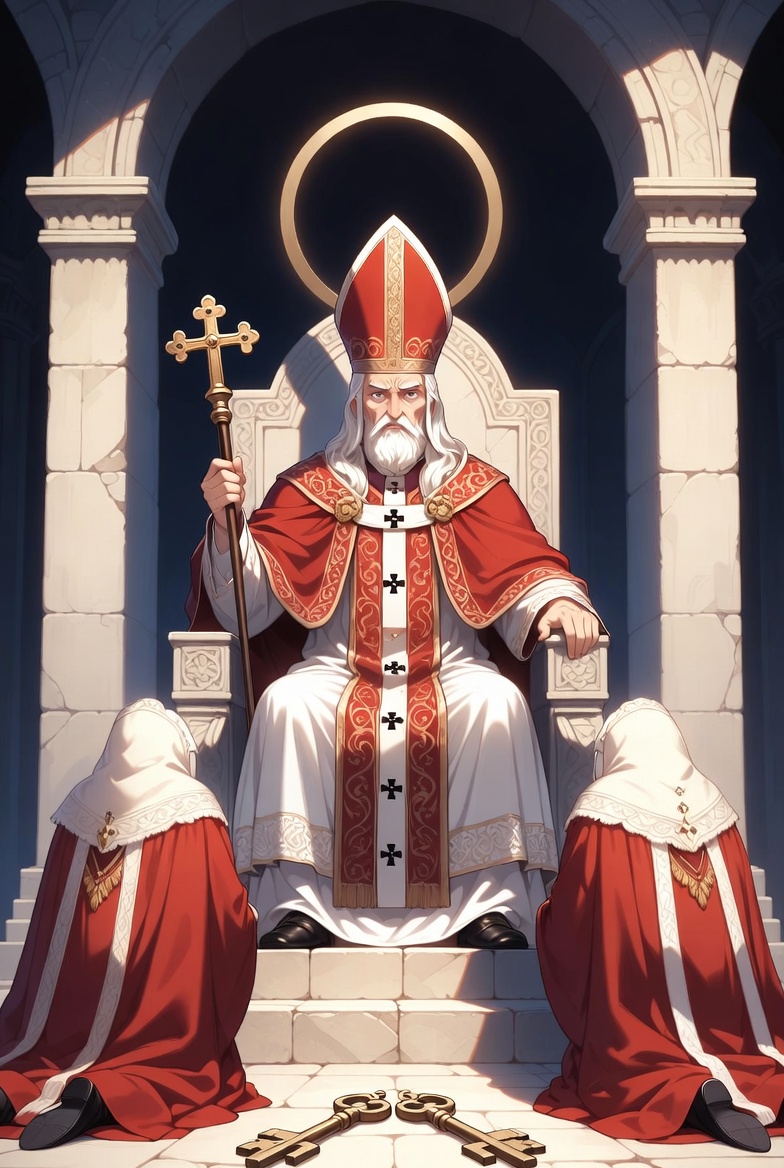
The Hermetic Order of the Golden Dawn was founded in London in 1888. The titles come from the Order's private instruction paper on tarot, known as Book T. It is usually credited mainly to Samuel Liddell MacGregor Mathers, one of the founders. Book T stayed private to members until Israel Regardie, a former member, published the Order's papers in the late 1930s. He was criticised for breaking his oath of secrecy.
Aleister Crowley's Thoth deck, painted by Lady Frieda Harris, prints short versions of many titles on its numbered cards, such as Dominion and Sorrow, and reworded some. This site's deck follows Golden Dawn naming and astrology, though it does not print the titles on the cards.
Book T also uses older names for a few cards: The Foolish Man for the Fool, Fortitude for Strength, The Wheel of Fate for the Wheel of Fortune, The Blasted Tower for the Tower, and The Universe for the World. You will meet those names in other sources.
Each card's astrology and element from the same system:
Tarot correspondences: a complete referencearrow_forwardHow to Read a Title
"Lord of" sounds grand, yet it is simple. It names what is in charge in that card. The Lord of Sorrow means sorrow is running the card. The phrase has nothing to do with men or rank. It applies to every reader.
The numbered cards' titles often work as a one-line summary once you see this. The Major Arcana and court titles are more like poetry. They are Victorian and ceremonial. Some of these titles are old poetry, and their meaning isn't always certain.
Some titles sound frightening, such as Despair and Cruelty or Ruin. They name a feeling or a moment in the card. They do not predict anything for the reader. If a title unsettles you, the scary-card post on this site is there for that.
When a card or a title has frightened you:
I pulled a scary card and can’t stop thinking about itarrow_forwardA Practice: Read the Old Title
A small way to use this page.
Pull one card
Any card from your deck.
Find its old title
Look it up on this page.
Ask where that thing is in charge
Think about your week.
Today's card: ___. Its old title: ___. Where that is in charge in my week: ___.
The Major Arcana
These are the 22 Major Arcana titles from Book T.
The Fool: The Spirit of Aether#
Aether is an old word for a fifth element once thought to fill the sky above the air. The spirit of aether points to a free, unbound start with nothing holding it back.
The Magician: The Magus of Power#
Magus is an old word for a magician or wise man. The magus of power is the skilled will that can shape results through intention and tools.
The High Priestess: The Priestess of the Silver Star#
Silver is the Moon's traditional metal, and the Order linked this card to the Moon. The priestess of the silver star holds quiet inner knowledge that needs no words.
The Empress: The Daughter of the Mighty Ones#
Mighty Ones is a poetic way of saying great powers or gods. Their daughter suggests abundant growth and creativity spreading in every direction.
The Emperor: Sun of the Morning, Chief among the Mighty#
Sun of the Morning means sunrise, and the Order linked this card to Aries, the first sign of the zodiac. Chief among the mighty places authority and structure at the start.
The Hierophant: The Magus of the Eternal#
Magus means a wise man or magician. The Eternal is what does not change, so this is the teacher of long-standing tradition turned into ritual.
The Lovers: The Children of the Voice; the Oracles of the Mighty Gods#
An oracle is a person through whom the gods were believed to speak. The children of the voice suggest a big choice that feels like a calling.
The Chariot: The Child of the Powers of the Waters; the Lord of the Triumph of Light#
Powers of the Waters come from the Order linking this card to Cancer, a water sign. Triumph means a victory parade, so its lord controls opposing forces to achieve the win.
Strength: The Daughter of the Flaming Sword#
The Order linked this card to Leo, a fire sign, which fits the flaming sword. The daughter of the flaming sword shows gentleness that can handle fierce energy with patience.
The Hermit: The Magus of the Voice of Power; the Prophet of the Eternal#
A prophet is someone who speaks what they have come to understand. As magus of the voice of power, this one shares wisdom found first in solitude.
Wheel of Fortune: The Lord of the Forces of Life#
Forces of Life are the things that keep turning and changing. The lord of the forces of life is the wheel that keeps the cycles of fate and luck moving.
Justice: The Daughter of the Lords of Truth; the Ruler of the Balance#
The Balance means the scales of fair measure. The ruler of the balance, daughter of the lords of truth, stands for truth and for actions having results.
The Hanged Man: The Spirit of the Mighty Waters#
Mighty Waters come from the Order linking this card to the element of water. The spirit of the mighty waters points to a pause and surrender that shifts the perspective.
Death: The Child of the Great Transformers; the Lord of the Gates of Death#
Great Transformers are the forces that change things. Gates of Death are a way through from one place to another, so the lord of the gates of death oversees endings and the transitions that follow.
Temperance: The Daughter of the Reconcilers; the Bringer-Forth of Life#
Reconcilers are those who bring opposites together. Bringer-Forth of Life is one who brings life into being, pointing to everyday balance and patient mixing.
The Devil: The Lord of the Gates of Matter; the Child of the Forces of Time#
Gates of Matter are the doorway into the physical world of bodies and things. The lord of the gates of matter is about the pull of the material and the bonds that feel fixed.
The Tower: The Lord of the Hosts of the Mighty#
Hosts is an old word for armies, and the Order linked this card to Mars, the planet of war. The lord of the hosts of the mighty brings sudden upheaval when false foundations fall.
The Star: The Daughter of the Firmament; the Dweller between the Waters#
Firmament is an old word for the sky, pictured as a dome. The daughter of the firmament, dwelling between the waters, brings quiet hope and renewal.
The Moon: The Ruler of Flux and Reflux; the Child of the Sons of the Mighty#
Flux and reflux mean the rise and fall of the tides. As ruler of that, this title fits a card of shifting moods, illusions and fears that come and go.
The Sun: The Lord of the Fire of the World#
The fire of the world is the bright energy that lights everything clearly. The lord of the fire of the world points to open joy, vitality and success that shine without needing permission.
Judgement: The Spirit of the Primal Fire#
Primal Fire is the first fire. The spirit of the primal fire is the awakening call that brings reckoning and the chance of rebirth.
The World: The Great One of the Night of Time#
Night of Time is a poetic image of a huge stretch of time. The great one of the night of time marks the completion of a long cycle and the wholeness that follows.
The Aces
These are the four Ace titles from Book T. Root of the Powers means the source of the suit's element, the root everything else in the suit grows from.
Ace of Wands: The Root of the Powers of Fire#
The root of fire is the first spark of inspiration and new potential waiting to catch.
Ace of Cups: The Root of the Powers of Water#
The root of water is the first opening of the heart and fresh feelings.
Ace of Swords: The Root of the Powers of Air#
The root of air is the first sharp clarity and breakthrough of truth.
Ace of Pentacles: The Root of the Powers of Earth#
The root of earth is the first solid ground of opportunity and material chance.
The Wands
These are the Wands titles from Two to Ten.
Two of Wands: The Lord of Dominion#
Dominion is the rule you already hold over a small patch. The title asks how far you want that control to reach.
Three of Wands: The Lord of Established Strength#
Strength that is already in place opens the way to reach further and expand.
Four of Wands: The Lord of Perfected Work#
Work finished properly leads to celebration, homecoming and harmony among people.
Five of Wands: The Lord of Strife#
Strife fills the scene when everyone fights for the floor and competes for space.
Six of Wands: The Lord of Victory#
Victory arrives with recognition and confidence on the return from a successful effort.
Seven of Wands: The Lord of Valour#
Valour is the courage to hold the high ground and stand firm against those who push.
Eight of Wands: The Lord of Swiftness#
Swiftness takes over when everything moves at once and messages or progress fly forward.
Nine of Wands: The Lord of Great Strength#
Great strength is the resilience to persist one more time, wary yet still able to endure.
Ten of Wands: The Lord of Oppression#
Oppression is the heavy weight of too much responsibility that has become exhausting to carry.
The Cups
These are the Cups titles from Two to Ten.
Two of Cups: The Lord of Love#
Love here is the mutual attraction and connection that forms a partnership between two people.
Three of Cups: The Lord of Abundance#
Abundance appears as joy shared among friends, multiplying through celebration and community.
Four of Cups: The Lord of Blended Pleasure#
Pleasure blended with something less sweet leaves the offered cup unnoticed amid quiet discontent.
Five of Cups: The Lord of Loss in Pleasure#
Loss in pleasure is the grief over spilled enjoyment, while some cups still remain standing.
Six of Cups: The Lord of Pleasure#
Pleasure returns as innocent gifts and nostalgia from the past offered in the present.
Seven of Cups: The Lord of Illusionary Success#
Illusionary success is the many visions of what might be chosen, none of them real yet.
Eight of Cups: The Lord of Abandoned Success#
Abandoned success is the choice to walk away from what was built in order to seek further.
Nine of Cups: The Lord of Material Happiness#
Material happiness is the contentment of a wish fulfilled in comfort and a pleasant life.
Ten of Cups: The Lord of Perfected Success#
Perfected success is the harmony of family and fulfillment that feels complete.
The Swords
These are the Swords titles from Two to Ten.
Two of Swords: The Lord of Peace Restored#
Peace restored is the temporary truce that holds while a decision remains unmade.
Three of Swords: The Lord of Sorrow#
Sorrow is the real heartbreak and painful truth that sits in charge of the moment.
Four of Swords: The Lord of Rest from Strife#
Rest from strife is the stillness and recovery that follow after conflict has ended.
Five of Swords: The Lord of Defeat#
Defeat is the hollow result when winning one way costs you something else.
Six of Swords: The Lord of Earned Success#
Earned success is the recovery that comes from moving away from the storm.
Seven of Swords: The Lord of Unstable Effort#
Unstable effort is the cunning and partial honesty that may not hold under pressure.
Eight of Swords: The Lord of Shortened Force#
Shortened force is the restriction created when fixed ideas form a mental cage.
Nine of Swords: The Lord of Despair and Cruelty#
Despair and cruelty name the harsh night thoughts, including the cruelty we turn on ourselves.
Ten of Swords: The Lord of Ruin#
Ruin is the complete ending and rock bottom of defeat that has arrived.
The Pentacles
These are the Pentacles titles from Two to Ten.
Two of Pentacles: The Lord of Harmonious Change#
Harmonious change is the balance kept while juggling and adapting as things shift.
Three of Pentacles: The Lord of Material Works#
Material works are the skilled building and making of real things done together with others.
Four of Pentacles: The Lord of Earthly Power#
Earthly power is control over money and belongings held so tightly that growth is blocked.
Five of Pentacles: The Lord of Material Trouble#
Material trouble is the hardship and isolation of need, with the light of help visible nearby.
Six of Pentacles: The Lord of Material Success#
Material success is the practical gain that allows generosity to flow both ways.
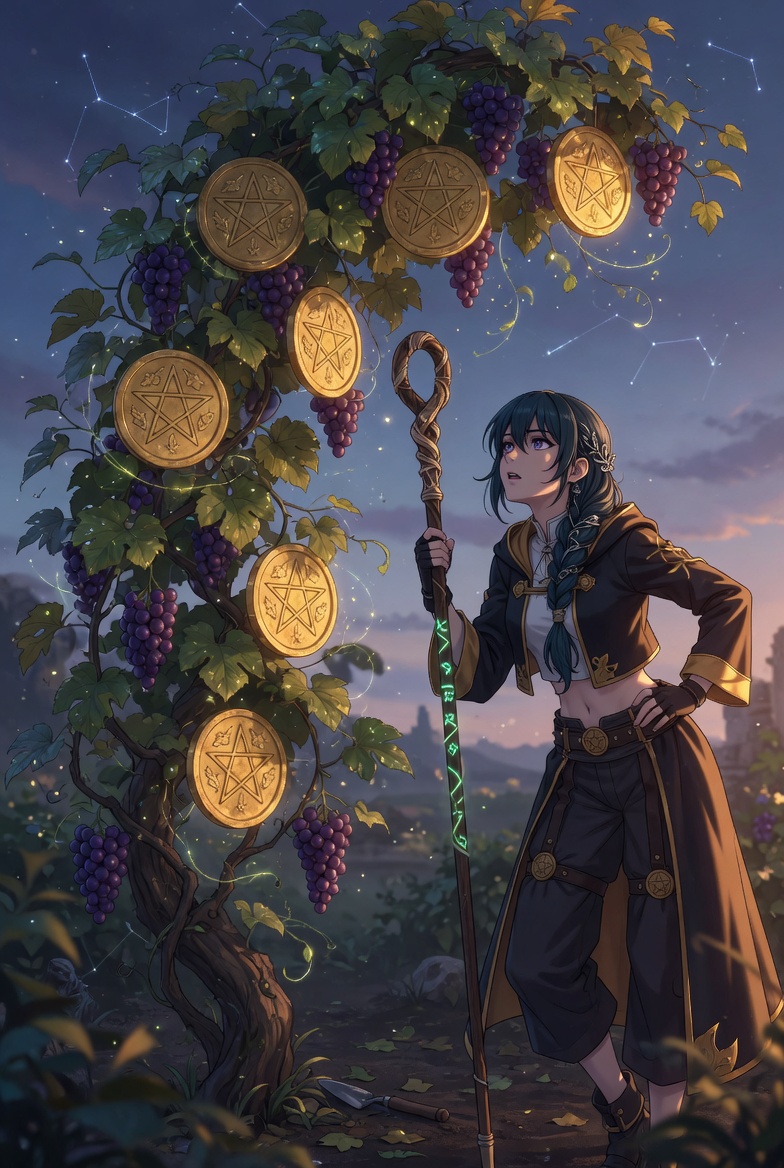
Seven of Pentacles: The Lord of Success Unfulfilled#
Success unfulfilled is the patient wait while the harvest of long-term investment is not yet ready.
Eight of Pentacles: The Lord of Prudence#
Prudence is the careful good sense of mastering a skill through repeated diligent practice.
Nine of Pentacles: The Lord of Material Gain#
Material gain is the abundance and independence earned through one's own refined work.
Ten of Pentacles: The Lord of Wealth#
Wealth is the material security and inheritance that can be passed forward to family.
The Court Cards
Book T files the Prince under King and the Princess under Knave. This site treats its Prince as the Knight of Rider-Waite decks and its Knight as the King. Modern readers don't all match the courts between decks in the same way.
Queens sit on thrones, which means settled power. Princes ride chariots, which means power in motion. Knights are lords and kings of their element. Princesses each receive a flower, the rose for Fire and Earth and the lotus for Water and Air, though the titles do not say why. The spirits of an element are the beings the Order imagined living in it, and hosts is an old word for armies.
These are the 16 court card titles from Book T.
Princess of Wands: The Princess of the Shining Flame; the Rose of the Palace of Fire#
The shining flame brings fresh enthusiasm and adventure that arrives and changes the room.
Prince of Wands: The Prince of the Chariot of Fire#
The chariot of fire carries bold, fast action mixed with charm and a touch of risk.
Queen of Wands: The Queen of the Thrones of Flame#
The thrones of flame hold confident leadership and warm passion that does not hold back.
Knight of Wands: The Lord of the Flame and the Lightning; the King of the Spirits of Fire#
The flame and the lightning, with the spirits of fire, mark mastery of fire and of the self through experience.
Princess of Cups: The Princess of the Waters; the Lotus of the Palace of the Floods#
The waters and the lotus of the palace of the floods suggest the start of intuition and sensitive creativity.
Prince of Cups: The Prince of the Chariot of the Waters#
The chariot of the waters brings a deep, unnamed feeling that arrives with romantic charm.
Queen of Cups: The Queen of the Thrones of the Waters#
The thrones of the waters hold calm emotional depth and compassionate nurture.
Knight of Cups: The Lord of the Waves and the Waters; the King of the Hosts of the Sea#
The waves and the waters, with the hosts of the sea, mark emotional mastery and compassionate authority.
Princess of Swords: The Princess of the Rushing Winds; the Lotus of the Palace of Air#
The rushing winds and the lotus of the palace of air bring a sharp, curious mind that seeks the truth directly.
Prince of Swords: The Prince of the Chariot of the Winds#
The chariot of the winds carries rapid, precise thought driven by ambition.
Queen of Swords: The Queen of the Thrones of Air#
The thrones of air hold clear independence and directness drawn from long experience.
Knight of Swords: The Lord of the Winds and the Breezes; the King of the Spirits of Air#
The winds and the breezes, with the spirits of air, mark intellectual mastery and firm decisiveness.
Princess of Pentacles: The Princess of the Echoing Hills; the Rose of the Palace of Earth#
The echoing hills and the rose of the palace of earth suggest careful, practical study of new weight and potential.
Prince of Pentacles: The Prince of the Chariot of Earth#
The chariot of earth carries slow, deliberate progress that is methodical and reliable.
Queen of Pentacles: The Queen of the Thrones of Earth#
The thrones of earth hold practical nurture and abundance that is carefully tended.
Knight of Pentacles: The Lord of the Wide and Fertile Land; the King of the Spirits of Earth#
The wide and fertile land, with the spirits of earth, marks dependable mastery of the material world.
Every court card in full, as a person, a mood and as advice:
Court cards: the complete referencearrow_forwardThese names are more than a hundred years old. They still help describe what ordinary weeks can feel like when a card appears. You can return to them whenever you want the old title to give a clear way to think about what is in charge.
See which old title turns up for you today:
Pull a free online tarot readingarrow_forward