
Here’s a scene every tarot reader knows. A first-timer turns their card, sees a skeleton in armour, reads the word at the bottom, and their face does something complicated. Then comes the question, asked lightly to hide that it isn’t light: “that doesn’t mean… actual death, does it?”
No. It doesn’t, and it never has. This post is the full answer. What the card actually shows (the image is far kinder than its reputation). What it means in real readings. Why experienced readers are often quietly pleased when it appears. And the one genuinely uncomfortable thing it does ask of you, which has nothing to do with mortality and everything to do with honesty. If you searched this at speed with your heart going: breathe. You pulled one of the deck’s most hopeful cards. It’s just wearing armour. (And if the card is still riding along hours later, the scary-card first aid is built for exactly tonight.)
What the Card Actually Shows
Slow down on the classic image and it starts contradicting its own reputation immediately. Yes, a skeleton rides a white horse. But look at what it carries: not a scythe, a banner, and on the banner a white rose, the old symbol of purity and promise. Look at the pace: the horse walks. Nothing about the scene is a chase. And look at the corner most people miss: between two distant towers, the sun is on the horizon. The traditional readings call it rising.
The figures in Death’s path tell the rest. A king lies fallen, because no amount of status postpones an ending. A bishop pleads, a maiden turns away, and a child, the one with nothing to defend, simply offers a flower. The card is a one-panel lesson in how people meet endings: fight, bargain, look away, or greet. Only one of them is at peace, and it’s the one who isn’t gripping anything. (Once a year the whole culture briefly practises that greeting: the card fronts our Samhain ritual for exactly this reason.)
What Death Means in a Reading
Death marks an ending that is already complete, or overdue for admitting: a chapter finishing, a role outgrown, a situation that has quietly stopped being alive. Not catastrophe, and not the future. Most of the time the card is pointing at something that has already ended, and the only live question is whether you’ve admitted it. The relationship that’s been over in all but name. The job you left emotionally months ago. The version of yourself you’ve been performing past its expiry.
This is why readers are quietly pleased to see it: Death pulls the situation out of limbo. Its message is the cleanest in the deck: this is finished, and finished is survivable, and behind finished there’s room. Endings clear ground, the way we’ve written about closing summers properly, and the card’s whole demand is a funeral’s worth of honesty: name what’s over, so what’s next has somewhere to stand.
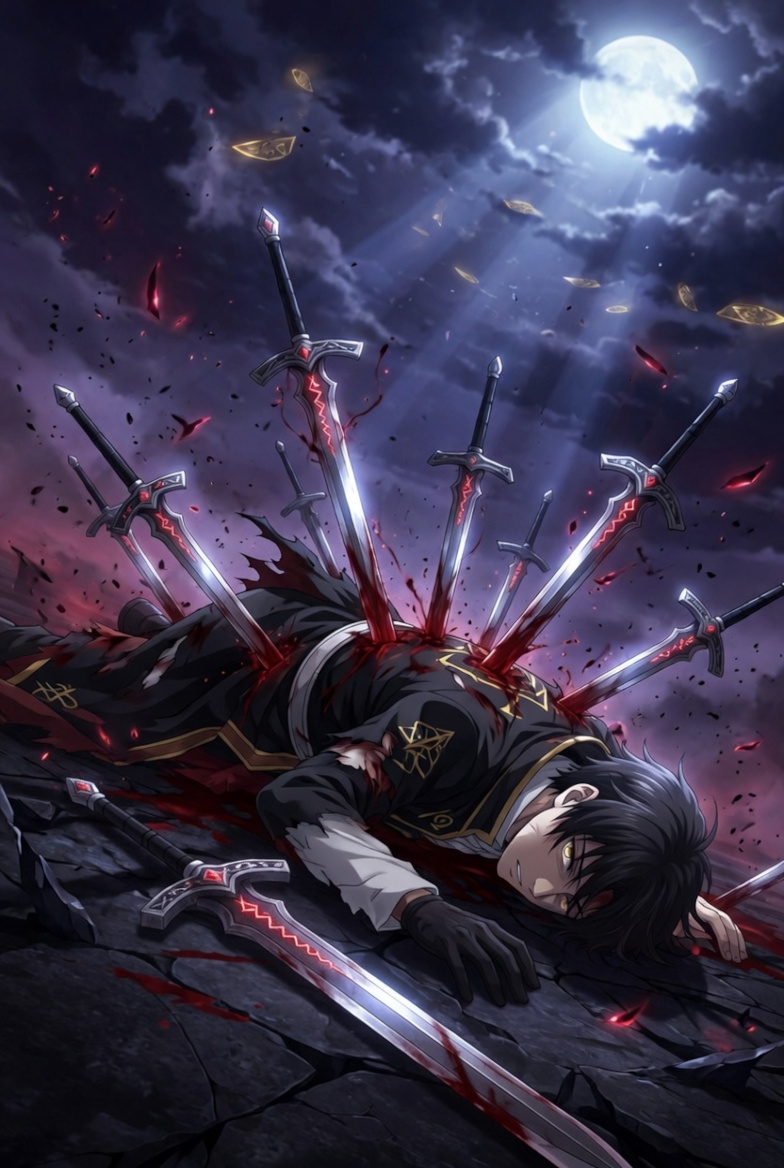
Worth one comparison to sharpen it: the deck already has a card for the ending that feels like catastrophe, the Ten of Swords, ten blades in a back under a black sky, tarot at its most theatrical. Even that card’s honest tagline is “it is over; the sun is rising.” Death is the same truth with all the drama removed: no blades, no black sky, just an ending, walking calmly, carrying a rose. The deck saves its melodrama for the Ten. Death is the grown-up in the room.
Death and the Wheel: Why Endings Aren’t Optional
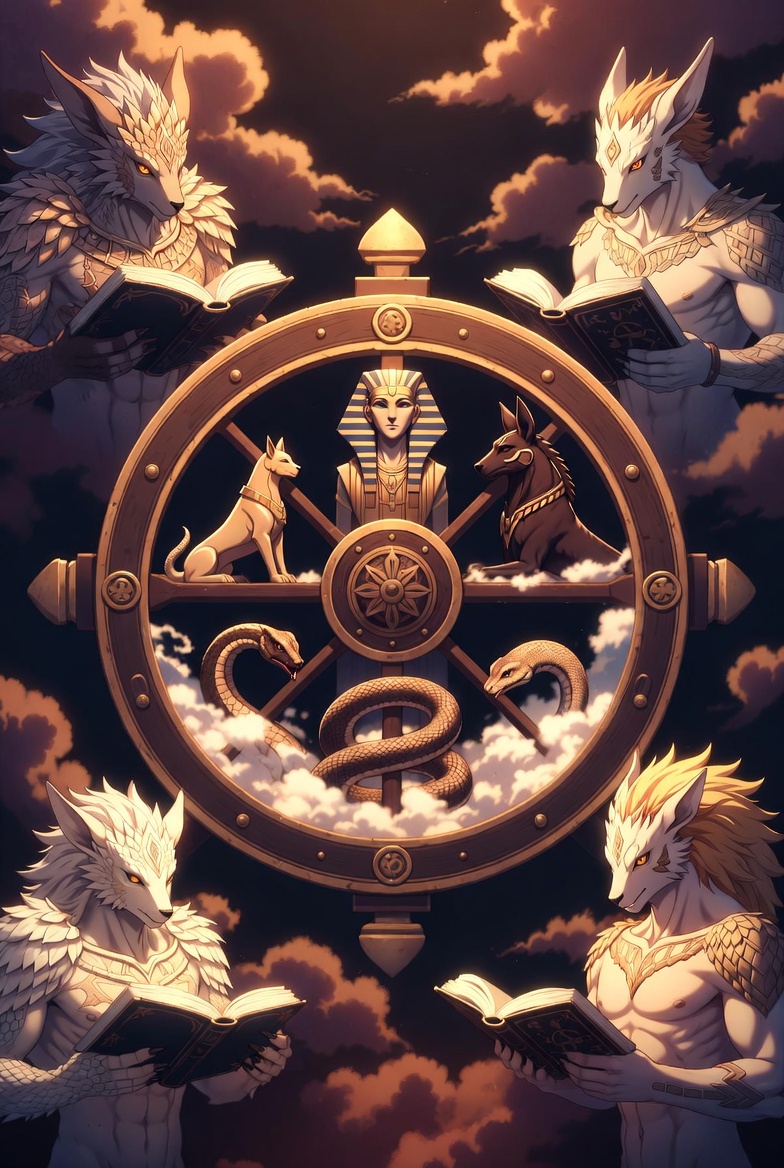
Death sits in the Major Arcana as the partner-in-truth of the Wheel of Fortune. The Wheel says cycles turn whether or not you consent. Death names the specific part of the turn nobody wants to say out loud. Every full thing empties, every chapter closes, every version of you retires. The deck doesn’t consider this dark. It considers it weather, and it gave the fact its most dignified card. Armour, because endings survive argument. A slow horse, because they arrive on their own schedule. A rose, because they carry a promise. A sunrise, because they’re the far side of something.
And the sequence keeps the promise: two cards later comes Temperance’s steady pour, and the arc the Fool begins at zero only works because Death keeps clearing the stage for it. No deck that includes rebirth could leave out its prerequisite.
Upright, Reversed, and in Love
Upright: an ending reaching completion, a transformation past its point of no return, the invitation to stop resuscitating something finished. In career: a role, project or professional identity concluding; the card favours the clean exit over the slow fade. In money: the end of a financial chapter or dependency, often with short-term discomfort and long-term relief. In love, and this is the reading people fear most and need most: not “your relationship will die,” but something in the relationship is already over. A phase, a dynamic, sometimes the relationship itself. Pretending otherwise is the only truly costly option. Plenty of couples meet Death and come out renewed; what dies is the old version of them, which was blocking the door.
Reversed: the ending resisted. Half-leaving, half-grieving, keeping something on life support because switching the machine off feels like failure. The reversed card’s question is gentle and awful: what would it cost to let this finish? Usually less than the maintenance bill you’re currently paying. (Death reversed is also the deck’s clearest proof that reversals redirect rather than soften; the resisted ending is the harder news.)
The One Uncomfortable Thing It Asks
Here’s the card’s real sting, and it isn’t mortality: Death asks you to stop negotiating with finished things. Most of us keep at least one ended situation deliberately unacknowledged, because acknowledgement carries grief, and grief that got skipped waits patiently. Pulling Death is the deck handing you the paperwork. A small practice for it, three cards:
- What has already ended. Name it plainly; the card landed because part of you already knows.
- What I’ve been paying to keep it looking alive. Energy, honesty, time, self-respect: the maintenance bill.
- What the cleared ground is for. Not a replacement, necessarily; sometimes just space, and space is a gift.
Journal line: “The thing that is over is ___. I’m allowed to stop tending it.” Write it in your journal ›
The Bottom Line
The Death card doesn’t predict death; it never did. It marks the completed ending, the transformation already underway, the chapter that needs its last page turned so the book can continue. Its image is a slow horse, a white rose, and a rising sun, and its only real demand is the honesty to say “finished” out loud. The child in the picture has the right idea: greet it, and it hands you a flower.
Everything the card ends was already over. What it gives you back is everything you were spending to pretend otherwise.
FAQ
Does the Death tarot card mean actual death? No, and it never has in the reading tradition. The card marks endings, transitions and transformations: chapters closing, roles concluding, situations completing. Readers don’t use it to predict mortality, and a reflective practice couldn’t do so anyway; the card works as a mirror for the endings already present in your life.
Is Death a bad card to pull? It’s one of the deck’s most hopeful cards wearing its most alarming costume. It usually points at something already finished that’s waiting to be acknowledged, and the acknowledgement is a release. Most experienced readers are quietly glad to see it; limbo is the painful state, and Death is the card that ends limbo.
What does the Death card mean in love? That something in the connection is already over: a phase, a dynamic, occasionally the relationship itself. It isn’t a breakup verdict; couples often meet this card at the death of an old pattern and the start of a truer one. The only reading it rules out is pretending everything is unchanged.
What does Death reversed mean? An ending being resisted: something kept on life support past its time, half-left, half-grieved. The reversed card asks what it would cost to let the thing finish, and points out, kindly, that the current maintenance bill is usually higher. It’s the same medicine as upright, needed more.
What’s the difference between Death and the Tower? Authorship and pace. Death is the acknowledged ending: walked toward, dignified, complete. The Tower is the sudden one: delivered by events because nobody moved. Death asks for a funeral; the Tower throws a demolition. When they appear together, the message is that something is finishing either way, and you still get to choose which kind of ending it is.
Is Death a good card for new beginnings? It’s the deck’s prerequisite for them. Nothing new starts in an unclosed room, and Death is the card that closes rooms properly. It stands in the same family as the Fool’s fresh zero and the Wheel’s turning cycles: the part of every beginning that happens just before, when the old thing is finally allowed to be over.
Pulled Death and feeling braver now? Draw a card on what’s ending →, no sign-up needed, and ask the question the rose on the banner is holding: what is this ending making room for?
forum Comments
Loading comments…