Court Cards: The Complete Reference
All sixteen court cards, each as a posture, a person, an energy and a line of advice: the rank and suit grid, the naming bridge between decks, and how to put a court to work at the table.
What This Is, and How to Use an Entry
Sixteen of the deck's seventy-eight cards are shaped like people, and they stall more learners than the whole Major Arcana. Our court cards blog post makes the case that the way out is a grid. Four ranks crossed with four suits: eight ideas instead of sixteen strangers. This page is that grid built out into the full reference, one entry per court. Each is written four ways, because a court card is asked to do four different jobs depending on where it lands.
Every entry below gives the same four aspects. The posture: the card's essential stance, the image to hold. As a person: the character it describes when someone in your life (or a version of you) fits it. As an energy: the mode or weather it names when nobody in particular comes to mind. As advice: what the card tells you to do when it lands in a position that asks for direction. Each entry has its own anchor link, and each title links through to that card's full page in the library.
One naming note before the entries, because it confuses everyone exactly once. Decks disagree about what the ranks are called. The Rider-Waite tradition runs Page, Knight, Queen, King. Our deck follows the Golden Dawn line, which runs Princess, Prince, Queen, Knight, and seats the Knight in the King's chair. The four roles underneath are identical, and Part One maps them so any book's meaning carries cleanly to any deck.
Part One: The Four Ranks, and the Naming Bridge
A rank is a relationship to an element: a stage of how fully someone has made that kind of energy their own. Learn these four once and they repeat across all four suits without exception. Each rank also carries its own elemental temperament in the Golden Dawn system. That is why the entries later read as pairings like Water of Fire: the rank's temperament, working through the suit's territory.
The Princess · the student (the Page, in RWS decks)#
Earth is her temperament: she grounds her suit’s element by living it. New to the element, curious, and honest about not knowing yet, she covers beginnings, messages, study and first steps. When a Princess lands, something in that suit’s territory is just starting. Or you are being asked to meet it like a beginner again.
The Prince · the quester (the Knight, in RWS decks)#
Air is his temperament: he moves his element at speed. Mid-journey and all momentum, he rides the suit’s energy hard, and is sometimes ridden by it. Princes cover pursuit, dedication and overshoot. When one lands, something is in motion. The reading is usually asking whether the momentum has a destination.
The Queen · inward mastery#
Water is her temperament: she holds her element in depth. A Queen does not chase her suit’s energy. She lives it, sustains it, and makes it available to the people around her. Queens cover steadiness, nurture, and the element fully understood from the inside. When one lands, the question is what you are holding, and how well.
The Knight · outward mastery (the King, in RWS decks)#
Fire is his temperament: he directs his element at the world. In our deck’s Golden Dawn naming, the Knight sits in the King’s chair: authority, command, and responsibility for what the element builds. When one lands, something needs to be led, finished or answered for. The card is asking who is in charge here.
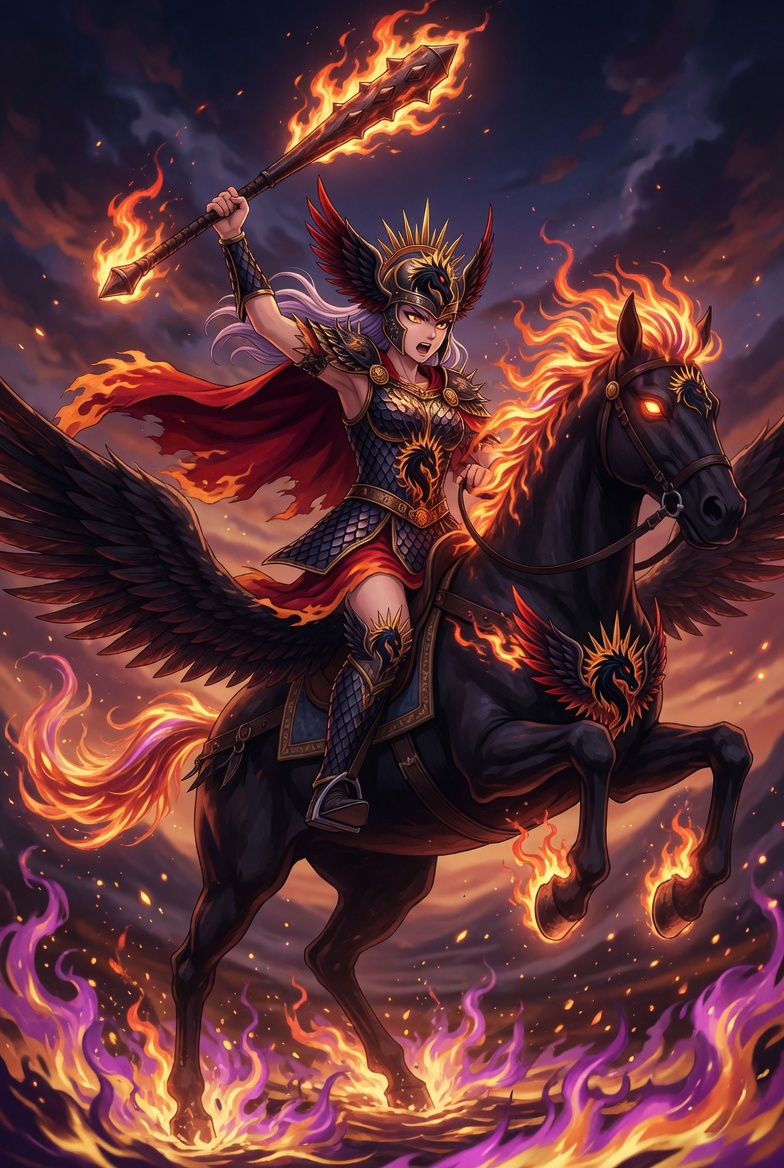
Part Two: The Wands Court (Fire)
Fire's territory: will, work, ambition, the creative drive. Read the four in order and you watch the element grow up: the spark arrives, accelerates, steadies into sustained warmth, and ends in command of itself.
Princess of Wands · Earth of Fire#
Posture: the spark made flesh. Her tagline says she arrived and everything changed, and that is the whole card: enthusiasm before any plan, carried like a torch. As a person: the one who starts things, brave and spontaneous, young in spirit whatever their age. As an energy: a beginning in the territory of work or passion, alive and unstructured. As advice: start before you feel ready, and let the plan catch up with you.
Prince of Wands · Air of Fire#
Posture: wind on flame. Fast, brilliant and slightly dangerous, he is inspired action that does not wait for permission. As a person: charming, dynamic, magnetic, and genuinely hard to slow down long enough to finish a conversation. As an energy: momentum, boldness, progress that occasionally arrives on fire. As advice: move now and decide at speed, but check where the accelerator is pointed first.
Queen of Wands · Water of Fire#
Posture: confidence at rest. She burns without apology: deep, consistent heat rather than bursts, warmth that rooms rearrange themselves around. As a person: fiercely capable, intensely warm, entirely herself, and done asking permission. As an energy: fire sustained; a project or a self that has stopped flickering. As advice: hold your ground with warmth. You do not need the room’s approval to keep burning.
Knight of Wands · Fire of Fire#
Posture: fire mastered. The element doubled, and the suit’s seat of authority: he has learned the difference between passion and compulsion, between boldness and recklessness. As a person: the leader whose vision comes with weight behind it, boldness seasoned into command. As an energy: fire in charge of something real. As advice: act with the full force you have, and take full responsibility for what the force builds.
Part Three: The Cups Court (Water)
Water's territory: feeling, connection, intuition, the inner life. The column runs from the open heart that receives everything to the emotional authority who can hold a room's worth of it.
Princess of Cups · Earth of Water#
Posture: the listener at the water’s edge. She receives feelings, impressions and intuitions with unusual openness, and takes them seriously as information. As a person: the one who says exactly what they feel and notices what everyone else missed. As an energy: a new feeling arriving, still unnamed and worth hearing out. As advice: listen before you decide. The inner report is data too.
Prince of Cups · Air of Water#
Posture: thought moving over deep water. He arrives like a feeling you cannot name: romantic depth with intellectual polish, pursuit as an art form. As a person: the idealist who makes you feel genuinely seen, and who sometimes loves the chase more than the catch. As an energy: feeling in motion toward something, courtship in any currency. As advice: follow the feeling, and know what you plan to do once you have caught it.
Queen of Cups · Water of Water#
Posture: the depths held without drowning. The element doubled: emotional fluency that never becomes flooding, compassion with a container. As a person: the one everyone tells things to, who has felt everything and been made wise by it rather than broken. As an energy: deep, steady feeling that can hold other people’s truths without needing to fix them. As advice: feel it fully, hold it steadily, and resist the urge to rescue.
Knight of Cups · Fire of Water#
Posture: the ocean mastered from within. Drive applied to feeling: he has lived his emotional nature thoroughly enough to navigate every current of it. As a person: the wise counsellor, the leader who has done their emotional work and can be fully present for others because of it. As an energy: feeling directed outward with authority. As advice: lead from the work you have already done on yourself.
Part Four: The Swords Court (Air)
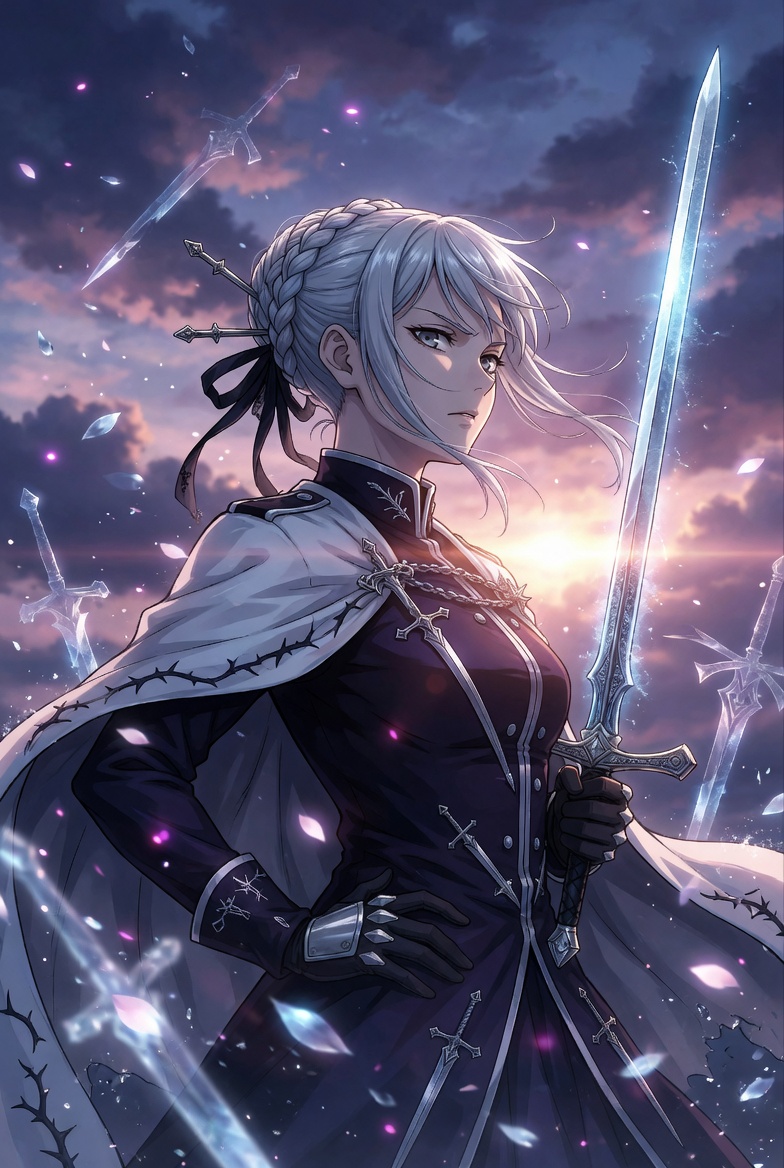
Air's territory: thought, words, decisions, truth. The sharpest column in the deck, and the one where every rank's virtue has an edge to manage.
Princess of Swords · Earth of Air#
Posture: the sharp question, grounded. Her tagline promises she will find the truth, and she will: curiosity with an edge, watchfulness with a notebook. As a person: the one who says what everyone else was thinking, still learning when saying it helps. As an energy: vigilance, honest inquiry, the blunt question that clears a room’s fog. As advice: ask the direct question, and be ready for a direct answer.
Prince of Swords · Air of Air#
Posture: the element doubled, at full speed. The fastest mind in the room, already at the conclusion while everyone else finishes the premise. As a person: brilliant, direct, ambitious, and prone to leaving emotional and practical details behind in the slipstream. As an energy: pure analysis in motion, argument as movement. As advice: decide cleanly and go. Then circle back for what the speed dropped.
Queen of Swords · Water of Air#
Posture: clarity earned. She sees clearly because she has seen everything: feeling refined by experience into clean sight, honesty mistaken for coldness by people who have not yet paid for theirs. As a person: kind and utterly truthful; she will not lie to you, least of all on your behalf. As an energy: boundaries, discernment, the well-cut sentence. As advice: tell the truth, starting with the one you tell yourself.
Knight of Swords · Fire of Air#
Posture: the decided mind. He has thought it through and he has decided: a King’s judgement applied to truth, acute and seasoned at once. As a person: the strategist with real authority, precise without cruelty, in command of the argument and of himself. As an energy: intellect leading something, the plan with a spine. As advice: end the deliberation. Make the call, and own every consequence of it.
Part Five: The Pentacles Court (Earth)
Earth's territory: money, body, home, the practical world. The steadiest column, and the slowest, because everything it governs is real and takes as long as real things take.
Princess of Pentacles · Earth of Earth#
Posture: learning its weight. The element doubled in its gentlest form: a student of the material world, holding one real thing with complete attention. As a person: the diligent beginner, methodical, patient, quietly curious about how things actually work. As an energy: study, apprenticeship, the small real step. As advice: take the small step and take it properly. Foundations go down one careful stone at a time.
Prince of Pentacles · Air of Earth#
Posture: slow, deliberate, unstoppable. Strategy in service of building: the most methodical quester in the deck, moving at the pace things actually get finished at. As a person: the one who completes what everyone else started, unglamorous and completely reliable. As an energy: steady progress, the long middle of any real project. As advice: keep going at your own pace. Every unglamorous step counts, and you are the one willing to take all of them.
Queen of Pentacles · Water of Earth#
Posture: abundance tended, in her tagline’s words, not merely held. Warmth applied to material life: the garden kept, the table fed, resources turned into wellbeing for everyone in reach. As a person: the practical nurturer, generous because she is genuinely at ease in the material world. As an energy: care with its sleeves rolled up. As advice: tend what you have, and make the resources feed the people, including you.
Knight of Pentacles · Fire of Earth#
Posture: he built it once and he can build it again. Drive applied to matter over years: the whole arc of patient work distilled into quiet material authority. As a person: the dependable master-builder, trusted completely because the trust has been earned completely. As an energy: mastery of the practical, the long view holding firm. As advice: think in years, act today, and be the person others can safely rely on.
Part Six: Putting a Court to Work in a Spread
The four aspects exist because spread positions ask different questions. So let the position choose the aspect. A court in a position about you (the present, the self, the heart of the matter) reads as posture: which version of you is at the table. A court in a position about your situation or another person can read as a person. The honest default on this site, though, is to try it as a part of yourself first, for reasons the blog post argues properly. A court in a weather or atmosphere position reads as an energy. And a court in an advice position reads as advice: a costume the reading hands you for the week, not a verdict about anyone.
Two patterns worth keeping from the table. A court in a blocking position is almost always a good trait at the wrong volume. The Queen of Swords blocking you is your own clarity turned cold, not a cruel stranger. And when a spread deals more courts than there are people in the situation, read them as an inner committee: the parts of you currently arguing, each one nameable by rank and suit. That turns a confusing spread into an unusually honest one.
Part Seven: Choosing a Significator, Honestly
The significator is the old practice of choosing one card, nearly always a court, to stand for the querent before a reading begins. Older books chose it by appearance: hair colour, age and complexion mapped to suits, in tables that read today like a Victorian passport office. Retire that method without guilt. It was arbitrary when it was written.
The honest version chooses by posture: the court whose stance matches how you are entering this question. Coming to a career reading all momentum and no destination? You are the Prince of Wands today, whatever your hair colour. That single act of choosing is a genuinely useful thirty seconds of self-assessment, which is the real reason the practice survives. None of our spreads require one, and no reading fails without it. The significator is seasoning, not structure. If choosing one sharpens how you enter the reading, choose one; the sixteen entries above are the menu.
The conversation this manual pairs with: the 4x4 unlock, the is-it-me-or-a-person question settled, and which court were you today:
Court cards, finally explainedarrow_forwardThe other half of the Minor Arcana: four suits, Ace to Ten, and the grid the whole deck runs on:
The four suits guidearrow_forwardEvery court’s paired elements sit inside the full 78-card map of signs, planets and decans:
The correspondences referencearrow_forwardMeet whoever turns up in person: pull a free reading and read your court with the entry open:
Pull a free readingarrow_forwardSixteen cards, four ranks, four suits, and one honest trick underneath: every court is an element at a stage of being mastered, and every one of them is you on some day of your life. Keep this page open at the table until the grid is in your hands, and then notice the morning you no longer need it, because somewhere along the way the sixteen strangers became sixteen postures you recognise from the inside.