
Here’s the card people turn over and then quietly turn back. A horned figure. Two humans in chains. The word at the bottom in case the picture wasn’t clear. Of the whole deck, the Devil is the one most likely to make a first-timer ask whether they should have been doing this at all.
So let’s say the true thing first: the Devil is not a card about evil, and it’s not a card about temptation arriving from outside. It’s a card about arrangements. The deals you made with yourself, for good reasons at the time, that you’ve stopped noticing are deals: the habit, the job, the relationship, the story about who you are, anything you’re still paying for after it stopped paying you back. Its tagline, in our deck, is the whole reading: the chains you forget you chose. And the detail that turns this from the deck’s scariest card into one of its kindest is sitting right there in the image, where nearly everyone misses it. The chains are loose.
What the Image Is Actually Showing You
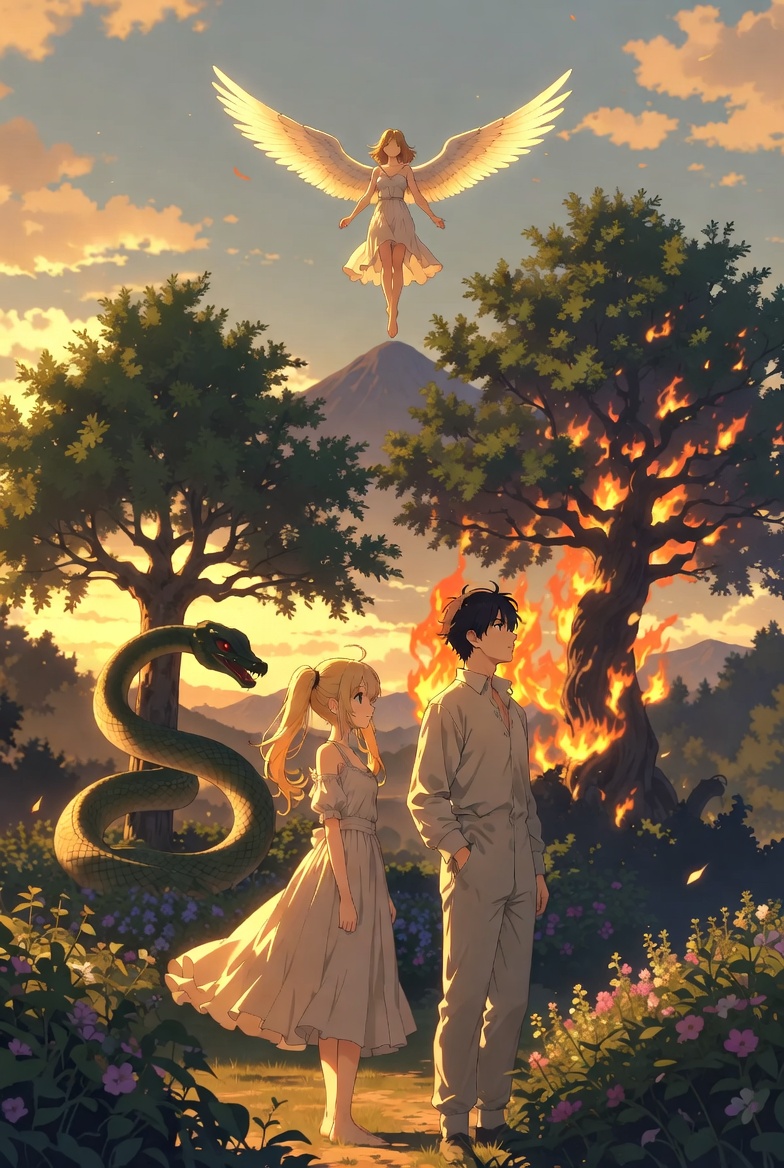
Tarot built this card as a parody, and once you see it you can’t unsee it. Look at the Lovers: two figures, a presiding winged presence above, open sky. Now look at the Devil: two figures, a presiding horned presence above, and the sky replaced by a dark block. Same composition, deliberately. The deck drew the Lovers’ shadow on purpose: this is what a bond looks like when the choosing has gone out of it. Connection has become attachment; staying has become not-leaving.
The figures are chained, and here’s the detail: in almost every version of this card, the chains are slack. Loose loops around the neck, wide enough to lift off with both hands. Nobody is holding the other end. The captivity is real in its effects and entirely voluntary in its construction, which is the most precise description of a bad habit ever painted. (Chains earn their place in our symbols reference for exactly this loose fit.)
Two more things the picture tells you. The figure above holds a torch, and it points down; it lights the ground and nothing else. That’s the Devil’s whole field of vision: the immediate, the bodily, the next hit of whatever it is, with the longer view simply unlit. And in our deck, as in many, the Devil sits where the Hierophant sits, in the teacher’s chair, hand raised in a gesture that mirrors a blessing. Read that as the card’s sharpest joke: whatever has you chained has been installed as an authority. You consult it. You organise your day around it. You’ve made something small into something you answer to.
What the Devil Actually Names
In a reading, the Devil points at the thing in your life that has power over you by agreement. Not by force; the chains are loose, remember. By a deal you keep renewing because, at some level, it pays.
That’s the part most readings skip, and it’s the part that matters. Patterns don’t persist because you’re weak. They persist because they work: the drink takes the edge off, the doomscroll fills the silence, the relationship that’s gone stale still spares you being alone, the job you hate still pays the mortgage and the self-respect. The Devil never lands on a random vice. It lands on the arrangement that’s currently giving you something, and it asks the only question that can loosen a chain: what, exactly, is this paying me?
So the card’s range is wide and very ordinary. Addiction and compulsion, yes, the literal territory. But also: the phone, the ex you still check on, the credit card, the role you play in your family, the belief about yourself that keeps you small and safe, the comfortable cage of a life that works well enough that you never look up. The Devil is less a demon than a very good accountant, and it’s showing you a ledger you stopped reading.
And notice what it isn’t. It isn’t a verdict that you’re bad, and it isn’t a prophecy that things get worse. The card’s deepest message is the opposite of the horror reading: awareness is the key. Looking directly at what binds you doesn’t strengthen it. It’s the one thing that weakens it, because an arrangement you can see is an arrangement you can renegotiate.
Temperance, the Devil, the Tower: What Comes Before and After

The Major Arcana is a sequence, and the Devil’s neighbours are the best commentary on it.
Directly before it sits Temperance: the angel pouring between two cups at a rate that can be poured forever, one foot in water and one on land, tagline alchemy in the everyday. Temperance is measure, the sustainable dose, the right amount. The Devil is what happens to the same appetite when the measure is removed. It’s not a different hunger; it’s Temperance’s cups with the pouring stopped and the drinking started. The deck puts them side by side so you can see that the difference between a pleasure and a chain is almost never the thing itself. It’s the dose, and who’s in charge of it.
Directly after it comes the Tower, and then the Star. We’ve told that story from the Tower’s side: chains, then lightning, then peace. The Devil’s place in it is the part nobody wants to hear and everybody needs to: an arrangement you won’t renegotiate gets renegotiated for you. The habit becomes the health scare, the stale relationship becomes the affair or the ultimatum, the job you wouldn’t leave becomes the redundancy. The Tower is the Devil’s chains snapped by force because they weren’t lifted by choice. And the Star after it is what the figures in the Devil card could have walked into any time they liked: open sky, bare feet, nothing worshipped.
Pull the Devil and you are being shown the chains while they’re still loose. That’s the good news inside the scary card. The Tower is later in the sequence, and it’s optional.
Upright, Reversed, and in Love, Work and Money
Upright: something has power over you by your own agreement, and the reading’s real subject is the deal underneath it: what it pays, what it costs, who installed it in the teacher’s chair. The honest upright question is “what am I answering to?”, and the answer is usually smaller than it feels.
Reversed: the chains loosening. Not freedom yet; the first honest look, the morning you notice the arrangement as an arrangement. Through the reversals lens we’d use here, the overcooked system, a reversed Devil can also mean the appetite has run past what you can pretend about, and the pretending is ending. Either way it’s a hopeful reversal: awareness arriving, which is the whole key.
In love: the Devil is the Lovers with the choosing gone. Attachment, intensity mistaken for depth, staying because leaving is scarier, the bond you’re no longer allowed to question. The twin flame story is this card’s favourite costume, because it makes the chains sound sacred. The card’s love question is plain: is this still a choice, or has it become furniture? And the honest follow-up: would you choose it again today, from outside?
In work and money: the golden handcuffs, literally. The job that pays too well to leave and costs too much to stay in; the spending that manages a feeling; the debt that funds a life you’re performing. The Devil in the money position is rarely about greed. It’s about what the money is standing in for.
What to Do When You Pull It
Don’t redraw, and don’t file it as “the bad card” and move on. The Devil has done you a favour by landing, because it’s naming a thing while the chains are still loose. Three cards, and the second one is the whole practice:
- The chain. What I can’t seem to put down. Let the card name it, and be literal: the thing, not the feeling about the thing.
- What it pays me. The honest ledger. Patterns persist because they work; what is this one working at? Relief, company, safety, a self I’m used to? This card is the Devil’s actual message and the reason the chain has lasted.
- What lifting it would cost in the first week. Not the grand life after. The first seven days: the silence the scroll was filling, the evening the drink was managing, the loneliness the relationship was spacing out. Name the withdrawal honestly and it gets smaller; leave it vague and it runs the show.
Journal line: The thing I keep answering to is ___. What it pays me is ___. The first week without it would cost me ___. Write it in your journal ›
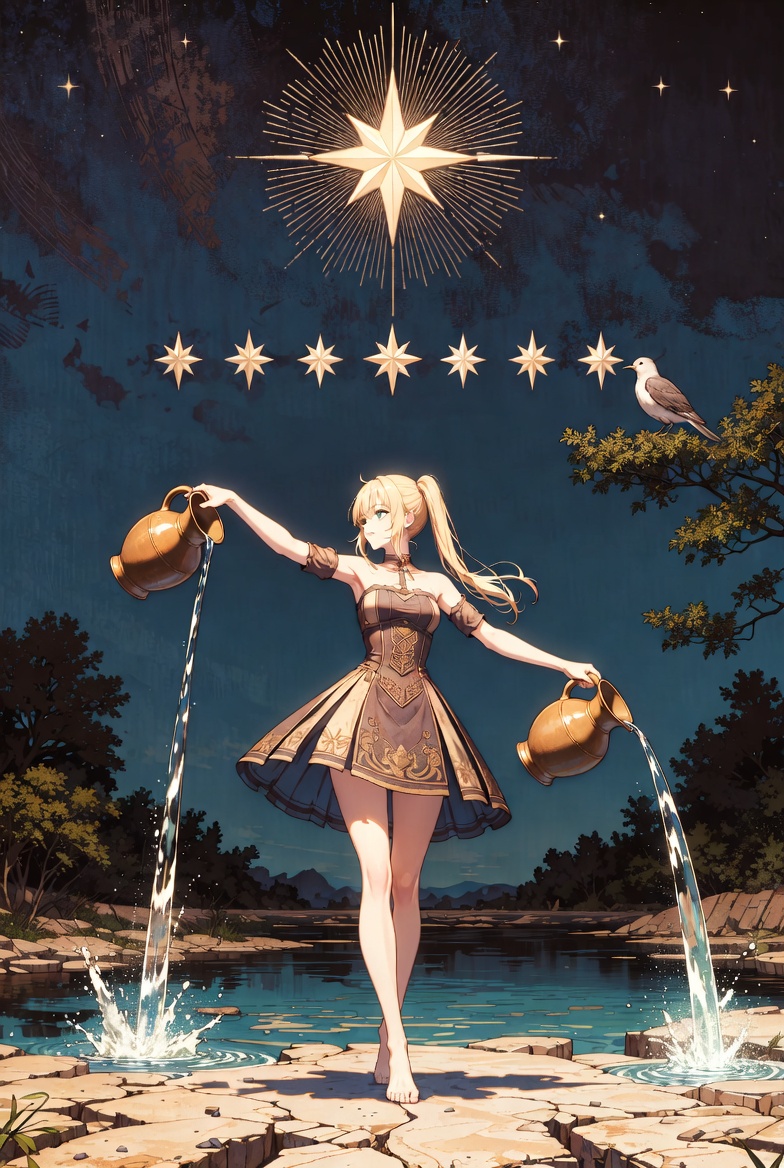
Then look at the Star, two cards on. Bare feet, open water, nothing worshipped, hope that’s necessary, not naive. That’s the view from outside the dark block, and the figures in the Devil card have been standing one lifted loop away from it the whole time.
What This Won’t Do
The honest paragraph, and with this card it has weight. When the Devil lands on its most literal ground, on drinking, drugs, gambling, or anything else that’s stopped being a choice, a tarot card is a mirror and not a treatment. Seeing the chain clearly is genuinely the first step, and it’s the step this post can help with. The rest is made of people: your GP, a support group, or the free confidential lines (in the UK, FRANK on 0300 123 6600 for drugs and Drinkline on 0300 123 1110). Pulling the Devil about an addiction and then pulling it again next month is the chain talking. Calling someone is the loop coming off.
And for the worried: the card is not a summons and not a sign of anything in the room. Its imagery is stock medieval church-wall material, the horned figure every fifteenth-century Italian would have recognised on sight, and the deck has never had any power you didn’t bring to the table. The only devil the card knows about is the arrangement you’re living in, and that one, unlike the painted one, can be walked out of.
The Bottom Line
The Devil names the thing that has power over you by agreement: the habit, the bond, the job, the story, whatever you’ve installed in the teacher’s chair and organised your days around. It never lands on a random vice; it lands on the deal that’s currently paying you something, and its one question is what. Temperance sits before it with the measure still in place. The Tower sits after it for the chains that don’t get lifted by choice.
The chains in the picture are loose. They always were. The card’s whole message is that looking at them is what loosens them further, and that the open sky two cards on has been available the entire time.
FAQ
Is the Devil tarot card bad? It’s uncomfortable, which isn’t the same thing. The Devil names a pattern or attachment that has power over you by your own agreement, and its defining detail is that the chains are loose. Read honestly it’s one of the deck’s most useful cards, because it shows you a deal you’d stopped noticing while you can still renegotiate it.
Does the Devil card mean addiction? Sometimes literally, and often in a broader sense: any compulsion or arrangement you keep renewing because it pays you something, from a substance to a phone habit to a relationship you stay in by default. If it lands on a literal addiction, the card is a mirror, not treatment; the next step is a person or a helpline, not another reading.
What does the Devil mean in a love reading? The Lovers with the choosing gone: attachment, intensity mistaken for depth, staying because leaving is scarier, a bond you’re not allowed to question. The honest question it asks is whether the relationship is still a choice or has become furniture, and whether you’d choose it again today from outside.
What does the Devil reversed mean? The chains loosening: the first honest look at an arrangement as an arrangement, or an appetite that has run past what you can pretend about. It’s a hopeful reversal. Awareness is the card’s whole key, and reversed it usually means awareness has arrived.
What does the Devil mean with the Lovers? The deck drew them as a matched pair, and together they ask which picture your bond currently lives in: connection chosen daily, or attachment maintained by habit. We’ve worked the pair through in full; it applies to jobs, friendships and habits just as sharply as to romance.
Pulled the Devil and want the honest version rather than the horror one? Ask it what the chain is paying you: pull a free online tarot reading →, then write the three lines.
forum Comments
Loading comments…