
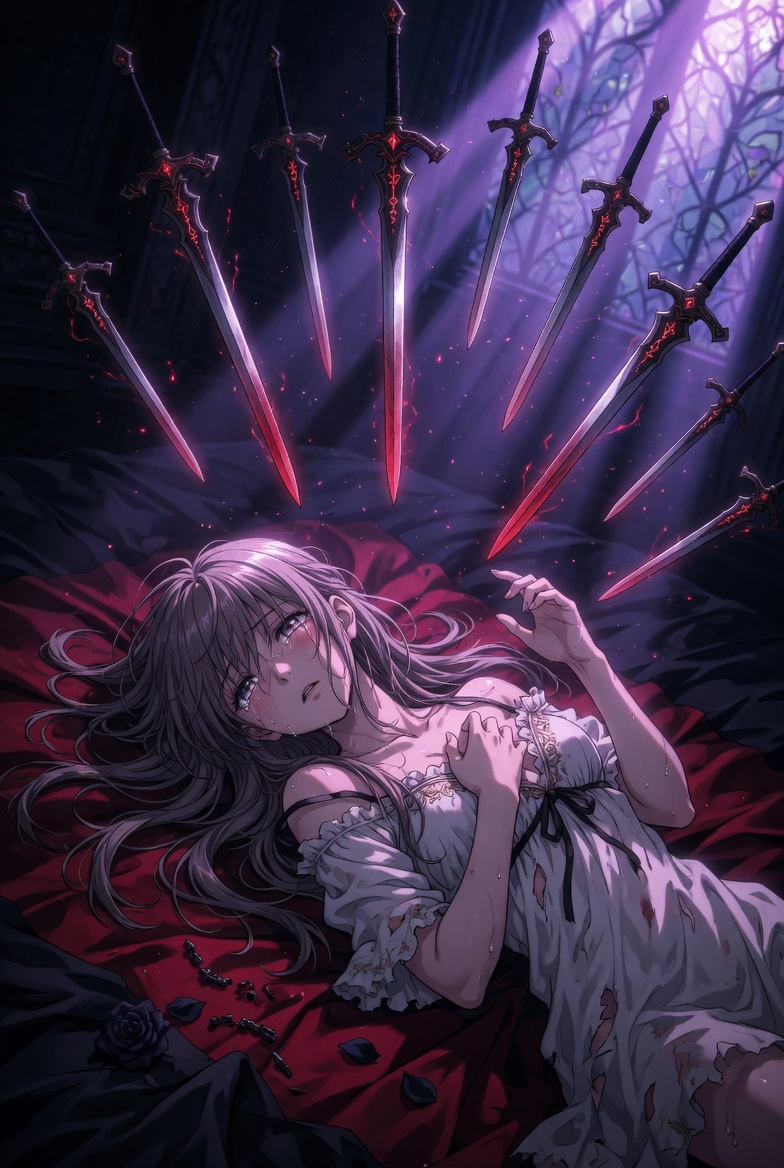
It’s late, and hours ago a piece of card stock ruined your evening. Maybe it was the Tower mid-collapse, maybe the skeleton on the horse, maybe the figure crying under nine blades. The reading ended, the deck went away, and the card didn’t. It’s been riding along ever since, through dinner, through the scrolling, and now it’s sitting on your chest at bedtime asking what it knows that you don’t.
Here’s the first thing, stated as plainly as this site knows how: it knows nothing. No tarot card has ever predicted anything for anyone, and we’ve written the full honest case. Nothing was foretold tonight, nothing is coming because a picture came up, and the dread you’re carrying is not information about your future. But the stuck feeling itself is real, it has honest mechanics, and it responds to first aid. This post is that first aid: why scary cards stick, what to do tonight, what to do tomorrow morning, and the one useful thing hiding inside the whole horrible evening.
Why Scary Cards Stick
Three mechanisms, none of them mystical. First, the images are designed to grab you. Provocative art is the whole job description of a good tarot deck, it’s literally our first criterion for choosing one, and the deck’s darker cards were drawn by artists at full power. A picture built over centuries to arrest attention has arrested yours. It’s working as intended; nobody warned you what “working” feels like at 11pm.
Second, threat gets priority processing. Minds run a negativity bias for sound evolutionary reasons: the alarming thing gets remembered, replayed and enlarged, while the pleasant Six of Cups you pulled last Tuesday sank without a ripple. The scary card isn’t stickier because it’s truer. It’s stickier because it’s scary, and that’s the whole of it.
Third, and this is the one that turns the key: somewhere in the evening, a mirror got reread as a forecast. In the moment of the reading you likely knew the house rule, the cards reflect what’s in you. But fear is a genre-editor: by dinner, “this image stirred something in me” had quietly become “something bad is coming”. That edit, from mirror to prophecy, is where all the suffering lives, and reversing it is what the first aid below actually does.
First Aid: Tonight
1. Say what the card can’t do, out loud if needed. No card predicts. Not the Tower, not Death, not at midnight, not reversed, not in the outcome position. The deck’s spec sheet is public and short, and prophecy isn’t on it. You’re allowed to lean your whole weight on this; it will hold.
2. Body before thoughts. Feet on the floor, five breaths with the exhale longer than the inhale. You’re not doing card philosophy at the top of a spiral; downshift first is doctrine here, and it takes ninety seconds.
3. Rebuild it as a picture. From memory, describe the card like a witness: what is literally in the image? The Tower is a building, weather, and two seconds of a fall. Death is a figure on a horse in a field of flowers. The Nine of Swords is a person in bed under swords that are hanging, and in our deck’s art, notably, not one of them has fallen. The dread you’re carrying was never in the picture; the picture is ink. Naming what’s actually there returns the card to its actual size.
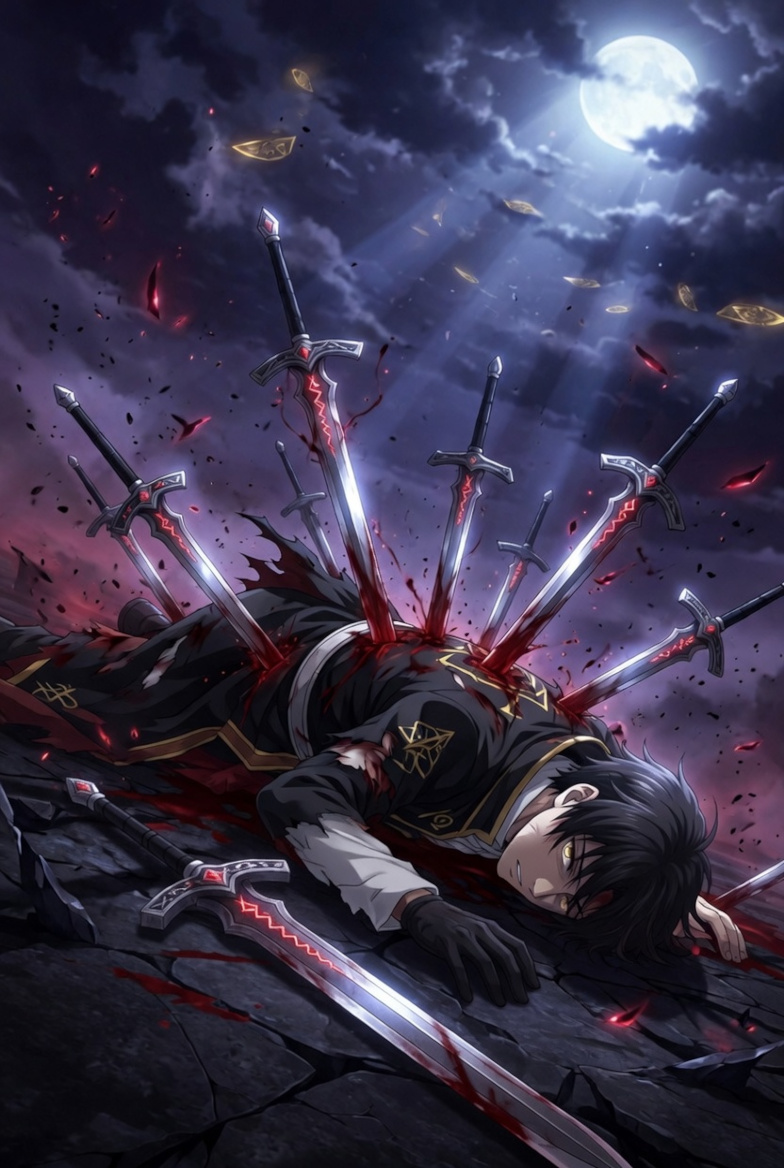
4. Look up the card’s honest job. Every scary card has a real meaning, and the real meaning is invariably kinder than the 11pm version. We keep the receipts: the Tower breaks pretending, never good things. Death has never predicted a death, and readers are quietly pleased to see it. The Devil’s chains hang loose on purpose. The Moon reports bad light, and accuses nobody. Even the Ten of Swords, the deck’s most theatrical worst-case, carries its own punchline in the tagline: it is over, and the sun is rising.
5. Write one line and close the case for the night. The card was ___. What’s literally in the picture: ___. What it landed on in me: ___. Tomorrow-me will check the rest. Write it in your journal › The last blank matters: you’re formally adjourning, and adjournment is a real psychological move. The verdict is postponed to a better court.
6. And no re-pulls. Not to clarify, not to “check”, not until the cards say something nicer. The appeal court is closed: re-pulling to soothe a scare is the reassurance loop wearing card costume, and it teaches your fear that the deck is part of the emergency. One pull was the reading. Bed is the next practice.
The Daylight Audit: Tomorrow
Morning-you is, functionally, a different reader, and tomorrow’s job takes five minutes. Reread the line you wrote, and ask the only question that matters: what did the card land on?
Because here’s the useful thing hiding in the horrible evening: cards don’t stick to nothing. Out of the whole deck, this image snagged, and it snagged on material that was in you before you ever shuffled: the job worry, the relationship wobble, the health fear, the change you can feel coming and haven’t named. The card didn’t put it there and can’t act on it; it just gave a live concern a face and a costume. That’s what a flinch is, and we’ve taught reading the flinch as a skill for months: the strongest signal in the whole practice, arriving upside down. The scary card that wrecked your evening was, in the least welcome way possible, your most accurate reading of the week. In daylight, with tea, you can finally read it properly: what is this actually about, and what’s the small, boring, real-world step it’s been waiting for?
And if the answer to “what did it land on” is a real-world question with a real-world address, a symptom, a legal thing, a person’s silence, then the card has done all it can, and the honest doors are here. Mirrors point; they don’t treat.
The Cards That Do This Most (Read Kindly)
For the record, the usual suspects and their honest jobs, one line each. The Tower: the end of something built wrong, with relief in the rubble, and in our deck’s art the horizon behind the storm is already dawn-coloured. Death: an ending already present, asking to be acknowledged; the most hopeful card in armour. The Devil: arrangements you can renegotiate; look how loose the chains are drawn. The Nine of Swords: the night lies; the swords hang and don’t fall. The Ten of Swords: finality plus sunrise; the only way out that’s guaranteed to work. The Moon: you’re navigating on bad light; wait for better before believing what you see. Notice the pattern: every “scary” card is the deck being honest about a hard thing while pointing at the way through it. The fear was never the message. It was the packaging.
When to Shelve the Deck
Honest boundary, held gently. If this isn’t a one-off, if scary cards reliably cost you evenings, if dread arrives before every pull, if you’re reading to manage the fear the readings created, then the practice has joined the loop instead of interrupting it, and the anxious-minds guide covers exactly this. The kind move is a proper break, not a braver spread, and the deck will still be there when it can be a floor again instead of a trapdoor. A practice that scares you isn’t failing to work. It’s telling you it’s the wrong tool for this season, and listening to that is better tarot than any reading.
The Bottom Line
Nothing was predicted; a striking picture met a live worry and your threat-wiring did the rest. Tonight: say what the card can’t do, breathe, rebuild the picture, look up its honest job, write the line, no re-pulls. Tomorrow: read what it landed on, because that part is real and yours and useful. And if the deck keeps costing you evenings, shelve it with our blessing.
The card was ink. The flinch was information. Read the second one, and let the first one go back in the box.
FAQ
What does it mean if I pull a scary tarot card? It means a deliberately striking image met something live in you: a worry, a change, an ending you’ve half-noticed. It predicts nothing; no card does. The productive reading is of the flinch itself, in daylight: what did this image land on, and what small real step has that thing been waiting for?
Can a tarot card predict something bad happening? No. Cards have no access to the future, and the reading tradition at its honest best has never claimed otherwise. A frightening card is a reflection with dramatic art, and the fear it stirs is information about what you’re carrying, never about what’s coming.
Should I pull another card to clarify a scary one? No, and especially not at night. Re-pulling to feel better is reassurance-seeking in card costume: the relief shrinks each time and the fear learns the deck is part of the emergency. One pull was the reading. Write a line, adjourn to the morning, and let daylight do the clarifying.
Which tarot cards are actually bad? None, as omens; several are honest about hard things. The Tower ends what was built wrong, Death marks endings already present, the Devil shows chains loose enough to lift, the Nine of Swords depicts the night exaggerating. Each has a kinder real meaning than its reputation, and each has a full page here explaining it.
Why can’t I stop thinking about my tarot reading? Because threat gets priority processing: minds replay alarming things and let pleasant ones sink, so the scary card loops while last week’s lovely one is forgotten. It’s stickier because it’s scary, never because it’s truer. The first-aid sequence above is built for exactly this, and it works tonight.
Want to make peace with the deck’s dark side properly? The deep-dives are the antidote: the Tower, Death, the Devil, the Moon. Or pull a fresh card in daylight →, describe it like a witness, and notice how different the same deck feels at 10am.
forum Comments
Loading comments…