
You pulled the Five of Wands and braced. Work. A relationship. Something with more than one will in the room. You came here expecting bad news about a fight.
People read this card as a doom-fight card, and it is the gentlest conflict card the deck owns. Real heat. Nobody hurt. The deck’s own line for it is the whole picture: Everyone is fighting for the floor.
Two questions will carry most of a reading. First: is this sport or war. Check for blood. Wounds mean you’ve wandered into Five of Swords territory. Second: what is the floor actually for.
What a Five Is
Fives are the arc’s low point in every suit. The numbers reference puts it plainly, and it holds across all four departments. Each five also hides its consolation in plain sight. Two cups still stand after the spill. Light still comes through the window on a cold street.
This five’s consolation is the picture itself. Nobody is wounded. Nobody is down. Five people this animated about the same floor means five people who all care. The energy is real, and nothing has been broken yet. That’s the spine of the card.
Wands is fire’s territory: drive, will, desire, the projects you are trying to make happen. The four suits guide maps that whole department. When a five lands in fire, the low point is a scramble for the stage. The drive has arrived. The structure has not. That’s why the room feels loud.
What’s Actually in the Picture
The classic Rider-Waite image is five youths waving staves in open ground. Most teachers have long read it as a mock battle, sparring or a scramble rather than a war.
Our painting keeps that reading and makes the styles visible.
Five young fighters stand in a ruined stone courtyard at dusk. Fires burn in the ruins behind them. The wands cross in two separate spark-bursts. Faces are gritted and strained.
The detail that carries the card: every wand is different, and every fighter is dressed to match their own wand. A thorn-wrapped wand and masked silver armour. A flame-carved wand and a red flame-embroidered robe. A vine-wound green wand and leaf-plated armour. A rune-ribboned wand and a hooded cloak stitched with star charts. A crackling purple wand spitting lightning.
Five entire aesthetics, each one internally consistent and convinced of its own signature, all colliding.
Then the honest inventory. No blood. Nobody on the ground. No wounds anywhere in the frame. It’s a melee of styles.
Look at the frame. No prize. No marked territory. The floor itself is the prize, which is exactly how it feels in real rooms. The meeting. The group chat. The studio. The kitchen. Whoever holds the floor gets to be the voice in it.
What It Means in a Reading
This card often marks energy arriving before structure. The project everyone is excited about and nobody is running. The heat is the useful news. The missing format is the work.
The rooms it turns up for, one honest line each.
The meeting where every idea competes and none land. The group chat planning the trip five different ways. The creative collaboration where every voice wants the hook. Siblings. The gym-and-banter version of a friendship, where the friction is how you keep each other sharp. Five apps and five suitors in the early-dating scramble. The market: applying for jobs against a crowd, pitching against rivals.
That is the Five of Wands meaning in ordinary rooms: heat in the building, no chair at the head of the table yet.
If neighbouring cards are in play, volume changes. The elemental dignities guide puts it in one line: next to other fire or air cards this one gets louder, next to water or earth it calms. The neighbours tell you how hot the room is tonight.
Sport or War
The dividing test is the Five of Swords.
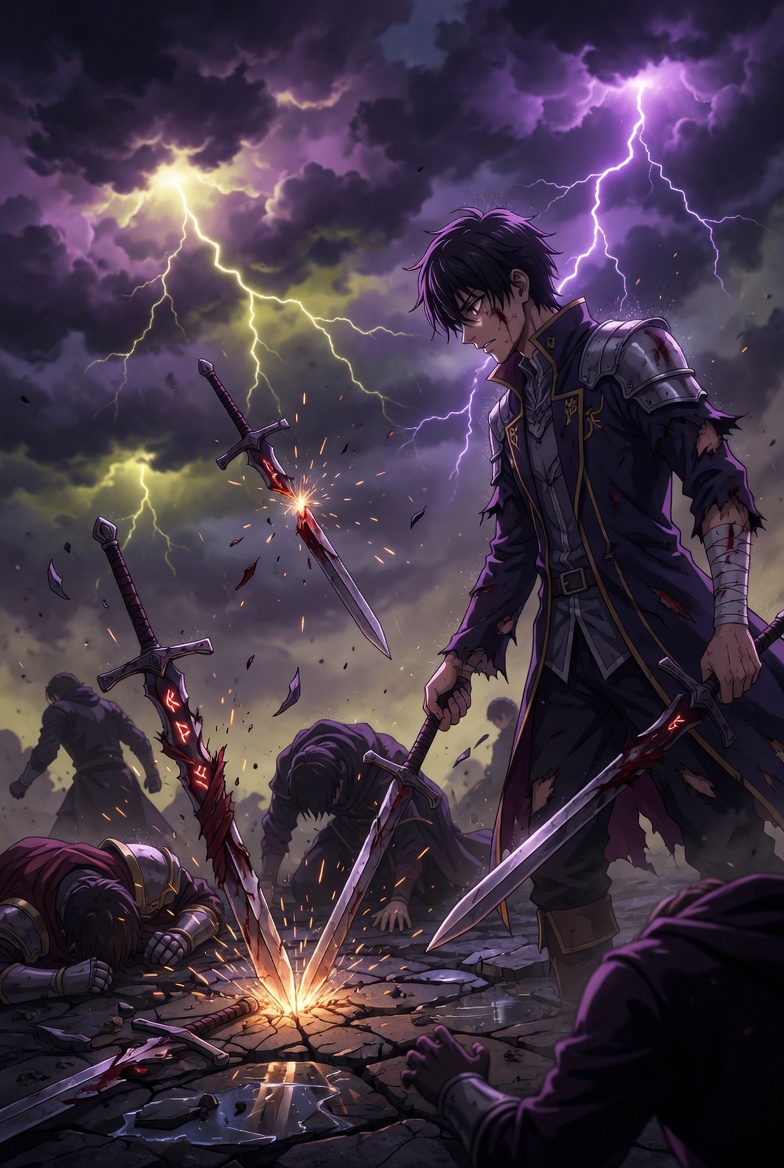
In the Five of Wands, nobody is wounded. In our Five of Swords a wounded victor in a torn coat holds two bloodied swords under a storm of yellow and purple lightning. Broken blades stick in cracked ground. Figures have fallen and are crawling behind him. That picture is what winning costs when sport curdles: a bloodied victor, people on the ground, and the winner bleeding too. The site’s line for that card is the win that cost the relationship it was won inside. Its tagline: Winning this way was losing something else.
Sport leaves everyone able to come back tomorrow. War leaves marks.
If the banter leaves marks, if the same person always loses, if you rehearse before every meeting like armour, stop reading the room as healthy competition. Workplace bullying is a real thing with real routes. In the UK, ACAS is one of them. No card should talk anyone out of naming harm.
If you are one card away from sending the message that will make this worse, the anger post is the pause before you hit send. If a real fight already happened, the repair draw post is built for the after.
Saturn in Leo, the Friction That Teaches
The correspondences reference gives this card Saturn in Leo, the third decan of Leo. The site’s own line: The taskmaster crashing Leo’s stage: everyone fighting for the floor, and the friction that teaches. The tarot calendar runs on those decans. Decans are its whole engine. This card gets ten days of the year as its weather.
Leo is the sign of the stage. Everyone in the picture wants to shine. Saturn is the planet of structure, turns, limits, and rules. The taskmaster has walked onto the lion’s stage and started keeping time.
Keep the passion. Give the contest a format: turns, roles, a chair, a brief. Whoever brings the format usually ends up holding the floor.
That move is available in a meeting this afternoon. Write the agenda. The argument can wait its turn.
The Internal Five
Sometimes there is nobody else in the card.
Five of your own priorities fighting for the floor. The evening where the gym, the side project, the book, the friends and the sofa all shout at once. The loudest one is only loudest. It is rarely the most important.
Name the five. Notice which one has been winning by volume. Then give the floor on purpose. That is what the practice at the end of this post is for.
If the inner argument has become a loop you cannot close, the overthinkers post is the one-card tool for ending the meeting with yourself.
As Feelings, in Love
Five of Wands love questions usually arrive as a scramble. Sparring interest. Banter as courtship. Rivalry, real or perceived, for someone’s attention. Or a relationship where everything has quietly become a debate.
Hold the house line. A card drawn about your side can speak. A card drawn to read someone else’s feelings is your hope wearing their face. Their Tuesdays tell you the rest.
If everything at home has become a contest, the honest question is what winning is for. A couple that spars well can still be a couple that cares. You will feel the difference in the morning, once the need to win has left the room.
The Five of Wands Reversed
Reversals in this house follow a system you choose before you shuffle. The reversals guide lays the lenses out. None of them removes the fire. The heat is always somewhere.
Blocked. The conflict avoided. The meeting where nobody says the true thing. The meeting after the meeting, where the real fight happens in the corridor.
Internalised. The whole contest is inside you. This points straight at the internal five: five priorities, one evening, no referee.
The dimmer. Friction winding down. The fight fizzling, sometimes because it was never about anything that could hold a night’s heat.
Leaving. Walking off the floor. The reversal asks whether that is wisdom or forfeit. Both are possible. Only you know which one you are doing.
Best Combinations
Treat pairs as grammar, not omens. The combinations post is the method. These four earn their place because the pictures talk to each other.

Five of Wands + Six of Wands. The contest resolved. Our Six is a laurel-crowned rider in black and gold armour with a red cape, on a white horse, raising one wand that ends in a laurel wreath holding a small bouquet of flame-tipped wands. Riders carrying purple banners follow behind him. The five wands of the contest have been gathered into one raised bundle, and the other riders are riding with him. The floor finally has one voice on it, and the rest became the procession. The pair reads as pick a voice, and the floor will follow. The Six’s tagline is the destination: You came back. You won.
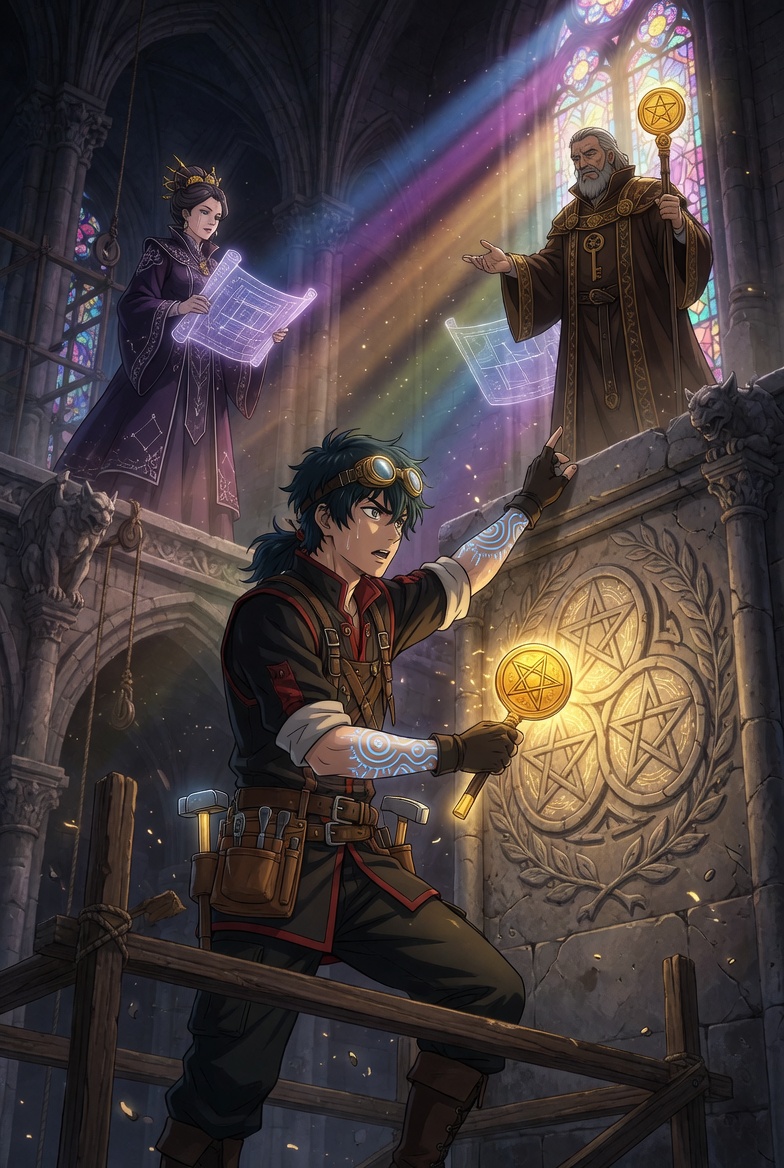
Five of Wands + Three of Pentacles. Friction into structure. The other resolution. Our Three shows a young craftsman with goggles and a tool belt on wooden scaffolding, carving glowing pentacles into a cathedral wall, while two figures consult above him: a woman holding a glowing blueprint scroll and a robed elder with a pentacle-topped staff. Three different roles, one wall actually getting built. The argument became an assignment sheet. The Three’s tagline is the proof: Good work done together.
Five of Wands + Five of Swords. The escalation warning. Same number, different suit, and the difference is wounds. This pair lands when sport is curdling. Read it as the line being approached.
Five of Wands + Seven of Wands. Contest versus defence. Five is many voices on open ground. Seven is one voice holding high ground alone. Together they often mark the moment a free-for-all picks a target, or a winner. The Seven’s tagline: Hold the high ground.
A Practice: Give Out the Floor
Journal open. Five minutes.
Name all five combatants honestly. Include the quiet fifth. It is usually the real one.
Ask what the floor is actually for. What would decide this if volume did not vote.
Give one voice the floor for a set term. A week is plenty. Book the rematch on purpose. That is Saturn’s move: turns instead of shouting.
The journal line: Fighting for the floor right now: ___, ___, ___, ___, ___. The floor goes to: ___, until ___. Write it in your journal ›
What This Card Won’t Do
It cannot name the winner of the job, the pitch, or the rivalry. Competition cards describe the shape of the contest. They never name the result.
It does not rank the five voices for you. Volume is not a ranking system, and the card will not pretend it is.
If there are wounds, it stopped being this card. Call harm by its name.
Cards here are for reflection. They do not predict.
The Bottom Line
Five fires. One floor. No wounds yet. The whole game is deciding what the floor is for before somebody reaches for swords.
Five people this animated about the same floor still care. Give the room a format, and the heat has somewhere to go.
FAQ
What does the Five of Wands mean? Friction without wounds. Five styles fighting for one floor. Energy arriving before structure. The heat is real and nothing has been broken yet.
What does the Five of Wands mean as feelings? Sparring interest, banter as courtship, or rivalry for someone’s attention. If the card landed on your side, it can speak. A card drawn to read someone else’s feelings is your hope wearing their face. Watch their Tuesdays.
What is the difference between the Five of Wands and the Five of Swords? The wounds. The Five of Wands is sport: strained faces, crossed wands, nobody down. The Five of Swords is the win that cost the relationship it was won inside: bloodied victor, people on the ground, the winner bleeding too. Sport leaves everyone able to come back tomorrow. War leaves marks.
What does the Five of Wands reversed mean? Read it through the system you chose. Blocked: the fight avoided, then held in the corridor. Internalised: the contest moved inside you. The dimmer: friction winding down. Leaving: walking off the floor, wisdom or forfeit. None of those lenses puts the fire out. The heat stays somewhere.
Is the Five of Wands a yes or no? A conditional. Yes to entering the contest. No promise about winning it. Yes-or-no is a blunt format, and the yes-or-no guide holds the house caveat: the flinch or the lift when the card turns is usually the real answer.
What does the Five of Wands mean for career? A competitive field. A jostling team. Pitching against rivals. Energy before anyone has written the brief. The Saturn move still applies at work: bring the format. Turns, roles, a chair. If the question is whether to stay or go, the career post is the wider reading this card cannot settle on its own.
What is the floor for, and who is holding it? If you want that question read with the rest of the spread around it, take a free online tarot reading →.
forum Comments
Loading comments…