
Nobody shuffles hoping for the Tower. A stone tower, a crown, a bolt of lightning, two figures in mid-fall: it’s the card that makes new readers close the app, the one horror films reach for, the pull that turns “this is a fun little practice” into “wait, should I be worried?”
So let’s say the honest thing first, the thing experienced readers know and rarely say plainly: the Tower is bad news, and it’s the best bad news in the deck. Not because collapse is fun, but because of what, specifically, the lightning strikes, and what you’re left standing next to when the dust settles. If you pulled this card today and came here worried, take a breath; by the end of this post you’ll know why a lot of long-time readers are quietly glad to see it.
What the Image Is Actually Showing You
Look closely at the classic scene, because every detail is doing work. The tower stands on a peak, tall, proud, and, this is the point everyone misses, built wrong. In the traditional imagery it’s crowned, and the lightning knocks the crown off first: the false summit, the pretence at the top. The bolt doesn’t strike a home or a tree or a person. It strikes a structure, and specifically a structure with something untrue about it.
The figures fall, yes. But notice what the card doesn’t show: it doesn’t show them landing badly. They’re leaving a burning building, which, stated that way, is not a tragedy; it’s an evacuation. And the lightning itself, in the old esoteric readings, isn’t punishment. It’s sudden truth: the flash that shows the crack that was always in the wall. The Tower never destroys anything sound. It can’t. That’s the whole secret of the card: lightning finds the flaw, and only the flaw was holding the building up.
What the Tower Actually Names
In a reading, the Tower marks the collapse of something built on a false premise: the job held together by pretending, the relationship running on an unspoken lie, the self-image propped up by exhaustion, the plan that only worked if nobody looked down. It’s sudden, it’s disruptive, and, this is the part people admit later, it was overdue. Ask anyone a year out from their Tower moment, the redundancy, the breakup, the diagnosis of the situation, and you’ll hear the same sentence: “honestly, it needed to happen.”
There’s a feeling that accompanies real Tower events which nobody expects and almost everyone reports: relief. The dreaded phone call that finally comes is easier than the months of dreading it. The collapse ends the exhausting work of holding up the collapsing thing. If you’ve been pulling the Tower repeatedly about a situation, the question worth sitting with isn’t “what disaster is coming?” It’s “what am I currently holding up by force, and what would it cost me to stop?”
The Devil, the Tower, the Star: The Deck’s Own Story
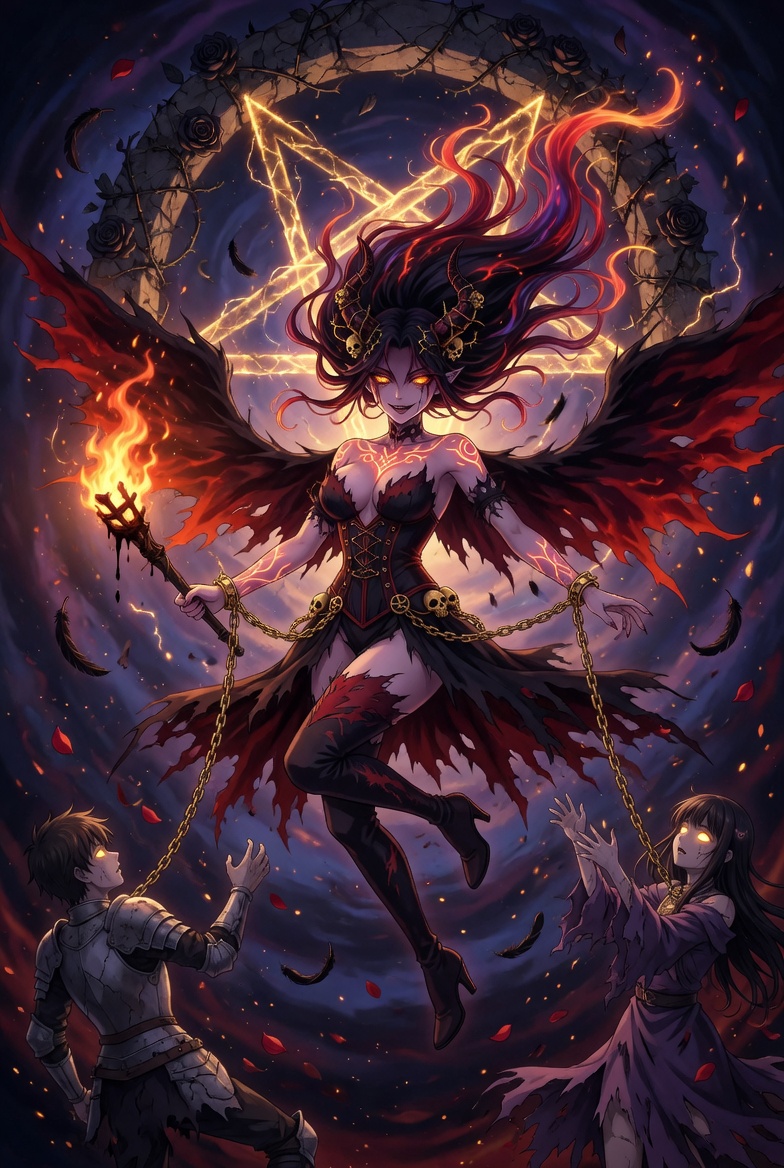
The Major Arcana is a sequence, and the Tower’s neighbours tell you exactly how the deck itself understands the card. Directly before it sits the Devil (full deep dive here): the comfortable chains, the bondage nobody admits is optional, the stuck situation everyone tolerates. And directly after the Tower comes the Star: the deck’s calmest card, open sky, bare feet, the quiet after the alarm finally stops.
Read the three in order and the Tower stops being a horror card and becomes the hinge of a story the deck tells on purpose: chains, then lightning, then peace. The Tower is how the Devil’s situation ends when nobody ends it voluntarily. That’s why the card reads as mercy to people who’ve lived it: the lightning does the thing you couldn’t.

Upright and Reversed (Briefly, Honestly)
Upright, the Tower is the event: sudden change, the reveal, the structure giving way, usually from outside and usually fast. In love, it often marks the conversation that changes everything or the discovery that forces one. In career, the restructure, the resignation that surprises everyone including you. In money, the expense or loss that exposes how thin the plan was. In all of them, the aftermath matters more than the bang: what’s still standing is sound, and now you know it.
Reversed, readers take it one of two ways, and both are worth checking against your situation: either the collapse is being resisted, propped up past its time, at mounting cost, or it’s happening internally: the quiet crisis, the private realisation, the tower falling where nobody else can see it yet. Reversed Tower questions are “what am I refusing to let fall?” and “what has already fallen in me that I haven’t told anyone about?”
What to Do When You Pull It
Not: brace for random catastrophe. The Tower isn’t a forecast of lightning; no card is. It’s a prompt to run the structural survey while the sky is still clear. Three cards, if you want a spread for it:
- The crack. What in my current structures is genuinely unsound: the pretence, the postponed conversation, the load-bearing lie.
- What’s actually sound. The parts that would survive any collapse, because they’re true. (This card is the comfort, and it’s usually bigger than expected.)
- The controlled demolition. What dismantling the unsound part on purpose would look like, while it’s still my choice. Death’s way, not the lightning’s.
Journal line: “The thing I’m holding up by force is ___, and if it fell, what would still be standing is ___.” Write it in your journal ›
The Bottom Line
The Tower is the deck’s honest emergency: the sudden end of something that was never sound, arriving with the mercy of finality and the strange gift of relief. It never takes what’s true; it can’t. Before it sits the Devil’s chains, after it the Star’s open sky, and the only real choice the card ever offers is whether the demolition is yours or the lightning’s.
The Tower doesn’t break good things. It breaks the pretending, and pretending was always the heaviest thing you carried.
(Pulled it tonight and can’t put it down? The scary-card first aid is here, and it works before you finish the deep dive.)
FAQ
Is the Tower a bad card to pull? It marks disruption, so it’s rarely comfortable, but “bad” misses what it disrupts: structures with something false in them. Sound things survive Tower weather. Most people describing a real Tower event a year later call it necessary, and many admit to relief. Expect a shake-up; don’t expect it to take anything true.
What does the Tower mean in a love reading? A sudden reveal or turning point: the conversation that can’t be postponed again, a truth surfacing, a false footing giving way. It doesn’t automatically mean a breakup; it means the relationship’s untrue part, a pretence, an avoidance, can’t hold. What’s genuine between you is exactly the part the Tower can’t touch.
What does the Tower reversed mean? Either a collapse being resisted (propping up something past its time, at growing cost) or one happening privately (the internal crisis nobody else sees yet). Ask which fits: “what am I refusing to let fall?” or “what has already fallen quietly?” Both point at the same medicine: honest structural review.
What’s the difference between the Tower and Death in tarot? Both are ending cards; the difference is authorship. Death is the ending you acknowledge and walk toward: chosen, dignified, complete. The Tower is the ending delivered from outside because nobody moved. Together in one spread, they’re the deck at its most direct: this is finishing either way, so choose your exit. We’ve covered the pairing in our combinations guide.
What should I actually do after pulling the Tower? Survey, don’t panic. Identify what in your life currently requires pretence or force to keep standing, name what would survive any collapse (more than you think), and consider dismantling the unsound part deliberately while it’s still your choice. The card rewards people who renovate before the lightning does it for them.
Can the Tower be a good card? Ask anyone stuck in the Devil’s chains: the lightning that breaks them doesn’t feel good, and is good. The Tower clears what couldn’t be kept, ends the labour of holding it up, and stands directly before the Star, the calmest card in the deck. Liberation rarely arrives politely. It arrives.
Pulled the Tower recently? Draw a card on what it struck →, no sign-up needed, and ask the only question it ever really poses: what am I holding up by force?
forum Comments
Loading comments…