Turn the Moon over and the meaning books reach for their darkest vocabulary: illusion, deception, hidden enemies, madness. It’s the card that makes people glance at their partner, their business partner, their own sanity. Somebody, the card seems to whisper, is lying to you.
So let’s say the true thing first: the Moon is not an accusation. It’s a light report. It doesn’t tell you the landscape has changed, or that anything on the path means you harm. It tells you visibility has dropped, that everything out there is currently showing you its largest and strangest shape, and that your eyes, which work fine, cannot be fully trusted until morning. Its tagline in our deck runs deeper than any warning: not all that is hidden is gone. Hold onto that sentence. By the end of this post it should comfort you and unsettle you at the same time, because it does both on purpose.
What the Image Is Actually Showing You
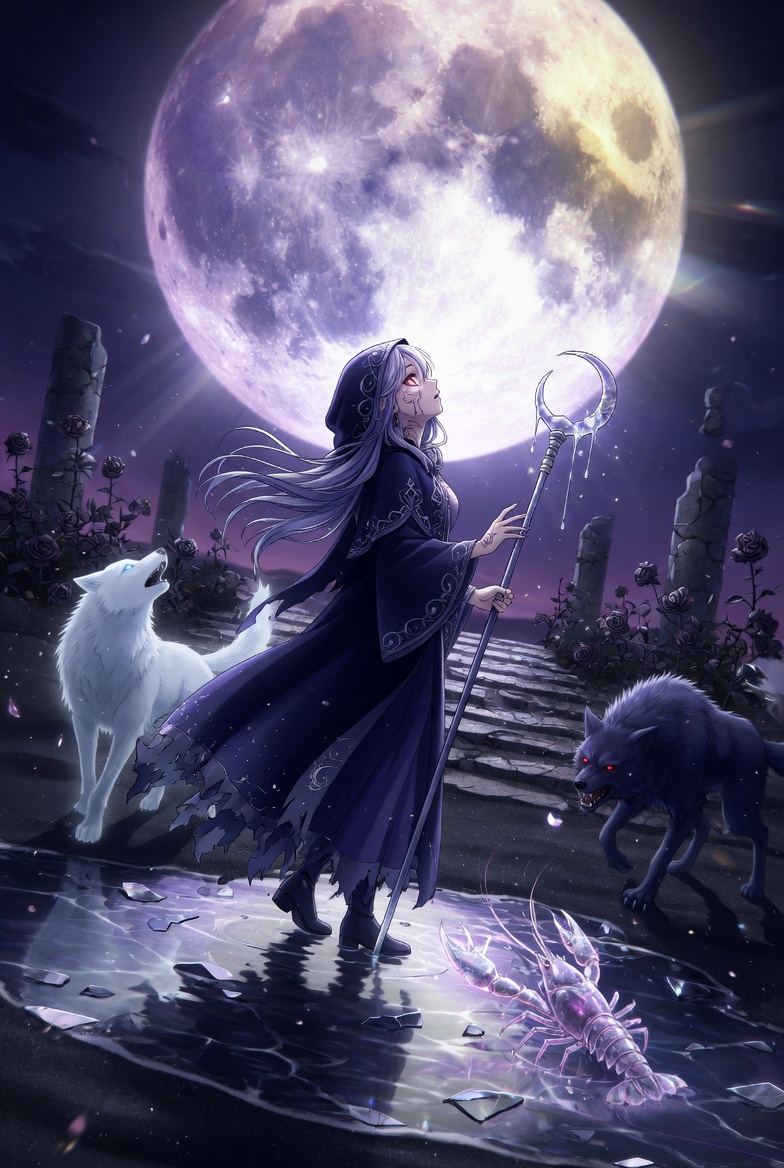
The Moon’s landscape varies more than most cards from deck to deck, but four things nearly always survive: a huge moon, a pair of animals crying at it, something climbing out of the water, and a path. Maybe yours shows a dog and a wolf between two towers; ours has two wolves, one white and howling, one dark with red eyes, among broken pillars and roses, with a traveller walking the path that most versions leave empty so you can put yourself on it. Read the four fixtures in turn, because each one is doing precise work. (Three of them, the paired animals, the climber from the pool and the towers, hold entries in our symbols reference; no card contributes more to it.)
Start with the moon itself, and remember what moonlight is: borrowed light. The moon makes nothing. It takes the sun’s light and hands it on dimmed, colour-drained, and cold, and the world it shows you is real but rendered wrong. That’s the card’s whole diagnosis of the mind at night, or in any uncertain season. Nothing false has been added to your situation. The same facts are all still out there. They’re just being re-served to you by a weaker light, and in that light the bush is a bear, the pause is a verdict, and the unknown is unanimous against you.
The two animals are the detail I’d rescue from every rushed reading. One is tame, one is wild, and they are both howling. The reasonable worry and the feral three-in-the-morning terror cry at the same moon in the same voice, and nothing about how loud they are tells you which is which. That’s worth knowing about your own head: in bad light, volume is no measure of truth.
The creature surfacing from the pool, a crayfish in the classic image, is the oldest thing in the picture: material from the deep coming up to look around. Notice that it waits for moonlight to do it. The buried stuff always chooses bad light, because that’s when it can wear a costume.
And then the path. It doesn’t route around the landscape. It runs straight through it, between the markers, past the animals, out of the frame toward the horizon. The card never once suggests you wait for the light to improve before walking. It suggests you walk like someone who knows the light is bad: slower, without big swerves, and without mistaking anything you see for a measurement.
What the Moon Actually Names
In a reading, the Moon points at an in-between stretch: the test results that haven’t come back, the relationship that’s neither on nor off, the restructure everyone’s heard about and nobody’s confirmed, the ambiguous scan, the silence after the interview, the 3am hour when the day’s facts rearrange themselves into a case against you. Situations where the problem isn’t what’s happening. The problem is that you can’t see what’s happening, and a mind can bear almost anything better than a gap.
Because the gap never stays empty. That’s the card’s real subject. Whatever you can’t verify, imagination furnishes, and imagination decorates to match your fears, not your evidence. The Moon marks the hour when your gut is at its loudest and its least trustworthy at the same time, which is why our deck files it, bluntly, under intuition at its most unreliable. There’s a whole shelf of tarot advice that says trust your intuition, and this is the one card where that advice fails. On the Moon’s path, your intuition is one of the howling animals. It gets a hearing. It doesn’t get the casting vote.
There’s a quieter honesty here too, and it’s very much this site’s kind. The Moon is a divination deck’s own admission about the limits of sight. Of all seventy-eight cards, this is the one where tarot stops performing knowledge and says plainly: you cannot see right now, and neither can I, and pretending otherwise is the only real deception on the table. We said the cards were never a clock; the Moon is the deck saying it isn’t a torch either. What it can do is what this whole practice does: show you your own state honestly enough to stop it steering.
Not All That Is Hidden Is Gone
The tagline deserves its own section, because it cuts in two directions and most readings only feel the first.
Direction one, the unsettling one: the things you buried kept. The fear you never finished with, the grief you skipped, the conversation you swallowed in 2019. Hidden is not gone, and on the nights the light goes bad, the old material surfaces and walks the path beside you wearing tonight’s face. The dread that’s out of all proportion to today’s trigger usually isn’t about today at all; it’s an old animal that knows a good costume hour when it sees one.
Direction two, the kindness, and the reason this card belongs on the calm shelf as much as the scary one: everything good that you currently can’t see also kept. The progress that feels erased at 3am. The affection of people who aren’t in the room. The point of the work, the state of your friendships, the person you’ve slowly become: none of it is gone, it’s just unlit. Bad light hides your assets exactly as thoroughly as it hides your monsters, and a mind that remembers this can sit in the dark without concluding the dark is all there is.
Say the whole sentence on the bad nights: not all that is hidden is gone. Your old fears kept. So did everything you love.
The Star, the Moon, the Sun: What Comes Before and After
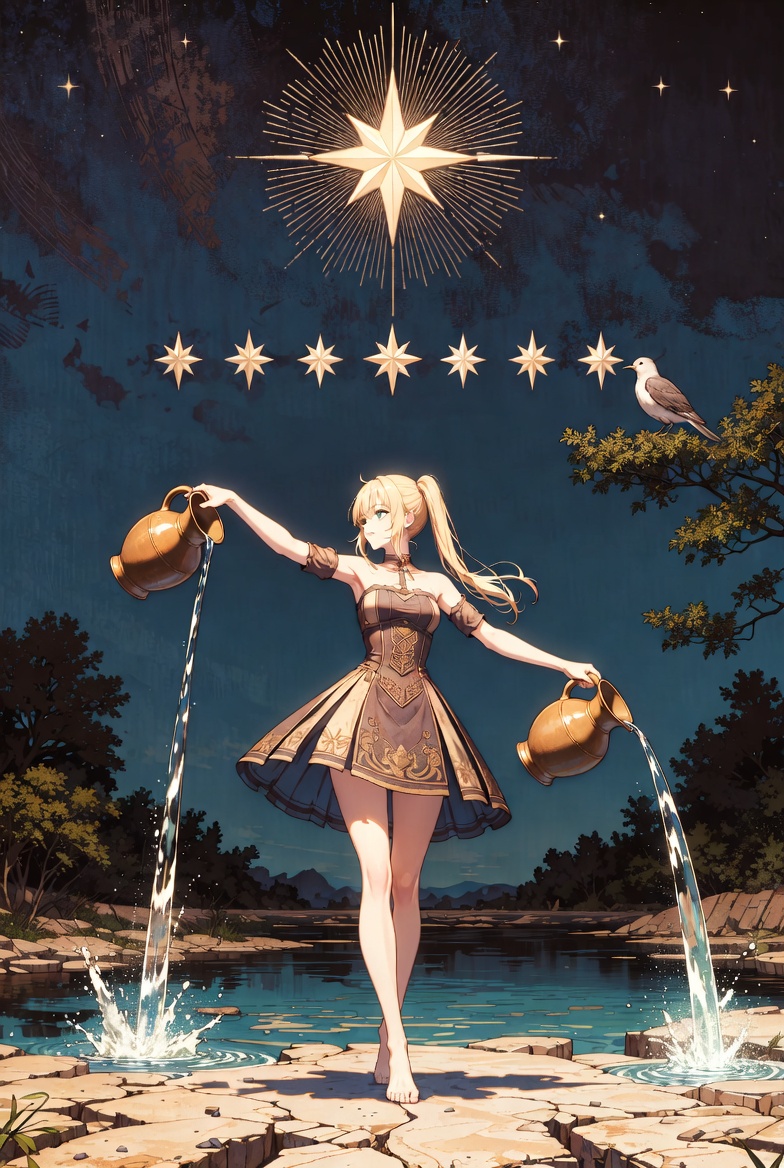
The Moon’s position in the Major Arcana is the most reassuring thing about it, and almost nobody looks.
Directly before it comes the Star: open sky, calm water, hope that’s necessary, not naive. And then, immediately after that restoration, the deck sends you into its darkest landscape. That ordering is honest about how recovery actually works. Hope doesn’t switch the lights on. It makes the dark crossable, and the crossing still has to happen. If you’ve ever felt genuinely better about your life on Tuesday and found yourself back in the fog on Thursday night, you haven’t relapsed. You’ve walked from card seventeen to card eighteen, in order, like everyone does.
And directly after the Moon comes the Sun: full daylight, everything at its true size, the deck’s happiest card. The sequence is a promise with conditions. The Moon is the final dark stretch of the whole journey, the last card before dawn, and its path was always aimed at morning. But the Sun sits on the far side of the crossing, not instead of it. The landscape you’re afraid of tonight and the field you’ll walk through tomorrow are the same place. Only the light changes.
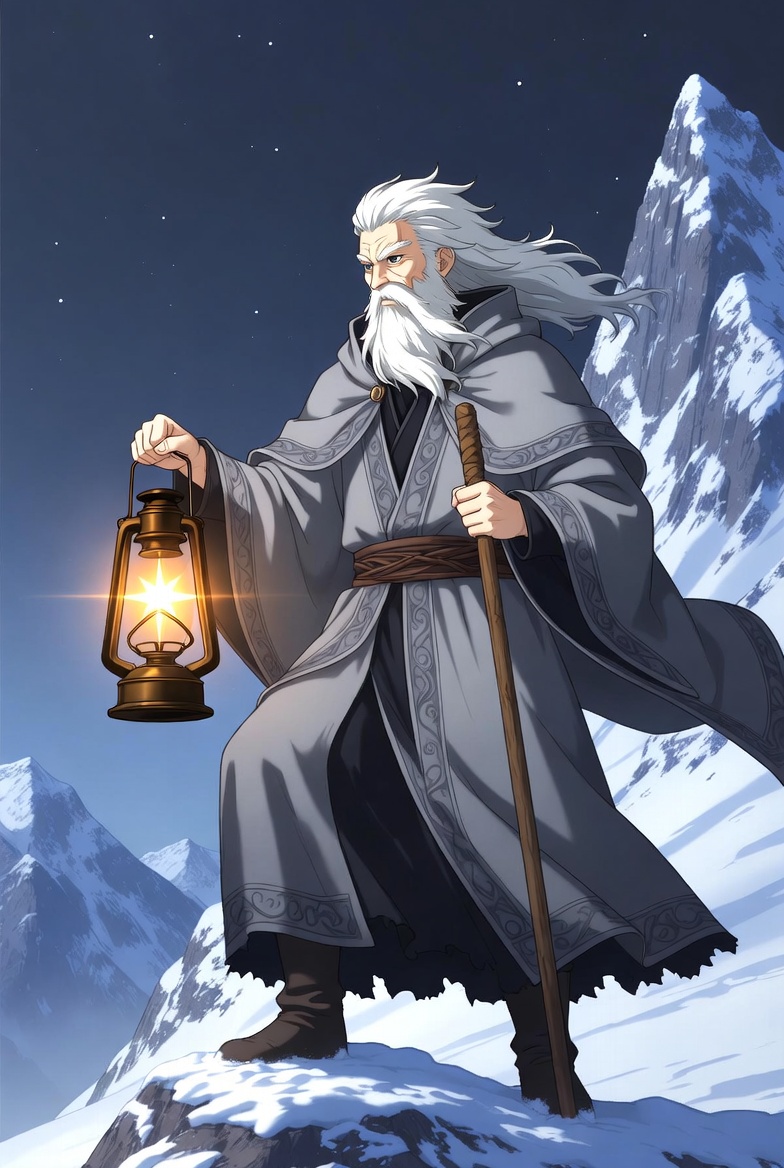
One more travel note, for readers who were here yesterday: eighteen reduces to nine, and nine is the Hermit. The numerologists take that to mean the two cards share a root, and the picture agrees, because there’s no lantern anywhere in the Moon’s landscape. The only light you carry across this stretch is the light you banked in your own company: the self-knowledge, the practised quiet, the tested sense of which of your voices to believe. The Hermit’s climb was provisioning. This is the road it provisioned for.
Upright, Reversed, and in Love, Work and Money
Upright: the light is bad and the card is telling you so. Distrust your estimates, not your path: keep walking, make no permanent decisions by moonlight, and sort what you actually know from what the hour is painting. If something’s been surfacing from the deep lately, let it surface; it came up because it’s ready to be looked at.
Reversed: the fog thinning. Through the reversals lens we use here, the overcooked system, a reversed Moon can also mean imagination has fully taken the wheel: the story has outgrown every fact it was built on, and some part of you knows it. Either way the move is the same. Turn toward the nearest real light: the checkable fact, the direct question, the morning.
In love: the Moon is uncertainty about another person, and we’ve written honestly about how that state bends readings: hope takes the day shift, dread takes the nights, and neither one has actually met the person in question. The card’s love message isn’t “they’re deceiving you”. It’s “you can’t currently see, and you’re reading your own projections as reconnaissance”. Sometimes there is real concealment, and even then the remedy is the same daylight remedy: a direct question, asked once, in the morning.
In work and money: limbo seasons. The rumoured restructure, the pending decision, the client gone quiet, the imposter hour after the difficult meeting. Moonlight is when people fire off the 11pm resignation email and make the panic sale, and the card’s counsel is one word: daylight. Get the actual numbers, ask the actual question, wait for the actual announcement. The crossroads has its own spreads once you can see it; the Moon’s job is to stop you steering by fog.
What to Do When You Pull It
Don’t hunt for the liar, and don’t pull three more cards to make the fog explain itself; asking the deck the same unanswerable thing twice is how the Moon wins. Instead, separate the landscape from the light. Four cards, the Daylight Check:
- What I actually know. Daylight facts only: the things that would survive being said out loud to a witness. This list is nearly always shorter than the 3am version, and that shrinkage is information.
- What the moonlight is adding. The story imagination has built between the facts. Name it as a story: “I am telling myself that…”. Stories can be excellent guesses, but tonight they don’t get filed as evidence.
- What’s surfacing. The older thing underneath: the fear that predates tonight’s subject and has borrowed its face. If position three feels stronger than the situation deserves, that’s the crayfish, and it’s the real client.
- What waits for dawn. The decision you are explicitly not making tonight, and the actual light source that will settle it: the result, the conversation, the checkable fact, and roughly when it arrives.
Journal line: What I actually know is ___. What the moonlight is adding is ___. Daylight arrives when ___. Write it in your journal ›
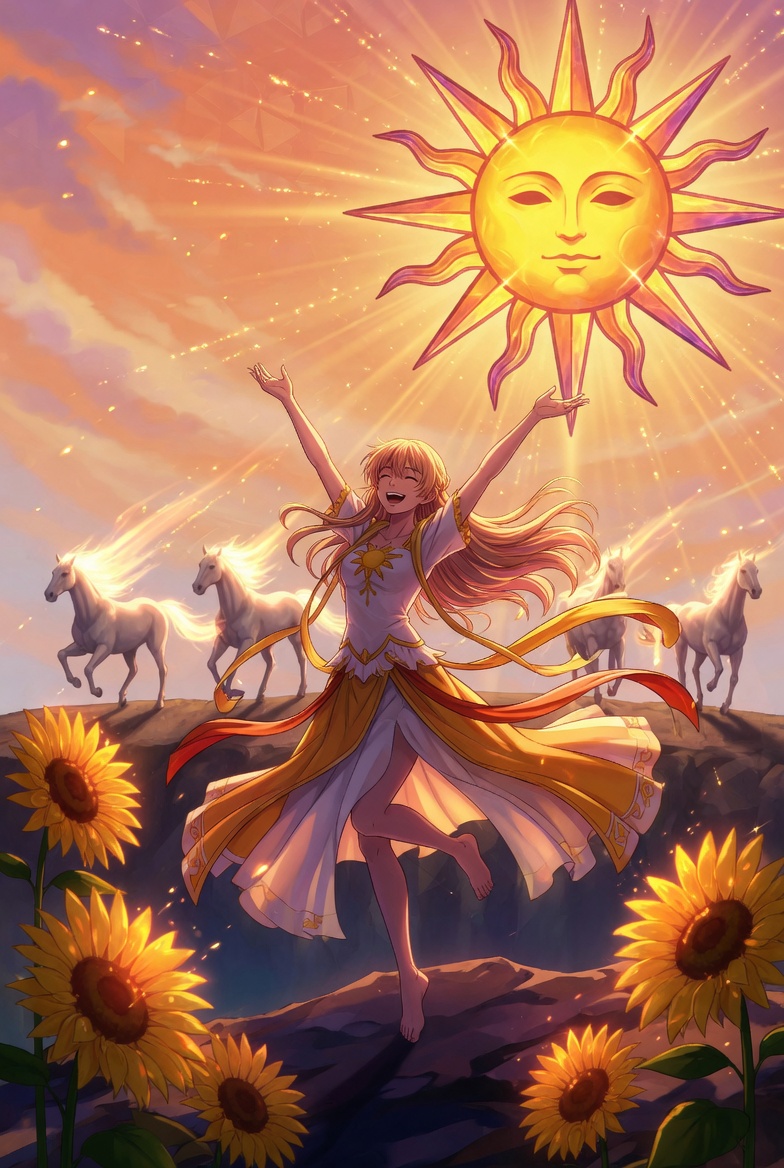
Then put the cards down and do the most Moon-appropriate thing there is: nothing further tonight. If it’s actually night, the Ferry and the 3am protocol are built for exactly this handover. The spread’s whole job is to get the fog on paper where it can be checked against the morning, because the single most reliable property of the Moon is printed right there in the deck’s ordering: the next card is the Sun.
What This Won’t Do
Two honest paragraphs, because this card gets people into two kinds of trouble.
First: the Moon is not a lie detector. It cannot tell you that a partner is cheating, a colleague is scheming, or a friend is false, and treating it as evidence of any of those things is moonlight reasoning at its purest: an unverifiable fear, dressed as information, by a card whose actual message is that you can’t currently verify. If you suspect real deception, the card’s own advice applies: daylight. Ask directly, check the checkable, and don’t act on what a picture seemed to confirm at midnight. Accusations launched off a card reading have ended relationships that deserved better, and the Moon would be the first card to say so.
Second: if the 3am landscape is where you live, most nights, for weeks, that’s not a season of bad light anymore; that’s anxiety or low mood running the projector, and it’s a solvable, treatable, absurdly common thing that a card can point at but not fix. Talk to your GP, or refer yourself to NHS talking therapies directly if you’re in England; no reading required first. The card marks the dark stretch. It never said you had to cross it alone.
The Bottom Line
The Moon names the in-between stretches: the seasons and the small hours when you can’t see, when imagination furnishes the gap, and when your loudest instincts are your least reliable ones. Rather than an omen of betrayal or a verdict on the path, it files a light report, and its practical counsel fits on a card: distrust your estimates, not your road. The Star before it made the dark crossable. The Sun after it is the same landscape at its true size.
Not all that is hidden is gone. Your old fears kept, and so did everything good the dark is currently sitting on. The light is bad. The path is real. And it was always aimed at morning.
FAQ
Is the Moon a bad card? No, but it’s an honest one, and honesty about uncertainty feels bad. The Moon doesn’t predict betrayal, madness or misfortune; it describes a stretch where you can’t see clearly and your imagination is filling the gaps. Pulled at the right moment, it’s genuinely protective: it’s the card that stops you treating a 3am estimate as a fact.
Does the Moon mean someone is deceiving me? It can point at concealment, but far more often the concealer it means is the light: your own fear furnishing an information gap. Either way the card never works as evidence against a person, and the remedy is identical: a direct question, a checkable fact, daylight. If you find yourself pulling cards to confirm a suspicion, that’s the Moon’s state talking, not its message.
What does the Moon reversed mean? Most readers take it as the fog lifting: hidden things becoming clear, confusion starting to drain. Through the reversals system we use, it can also mean the story has fully outgrown the facts and some part of you knows it. Both readings point the same way: toward the nearest real light, and away from another hour of speculation.
What does the Moon mean in love? Uncertainty about the other person, and a warning about what your mind does with it: fills the gap with hope by day and dread by night while the person stays unknown. It rarely means “they’re lying”; it means “you’re navigating by projection”. The card’s request is the brave one: get your answer from the person, in daylight, rather than from the fog.
What does the Moon mean with the Sun? Together they’re the deck’s before-and-after picture: something half-guessed and something fully lit in the same season, a pairing we’ve worked through in the combinations post. Drawn side by side, they ask you to name which parts of your situation are actually known and which are still moonlit, because the two deserve completely different handling.
Pulled the Moon and tempted to pull five more until the fog explains itself? Do the opposite: one question, sorted into known and imagined: pull a free online tarot reading →, then write the three lines and hand the rest to the morning.
forum Comments
Loading comments…