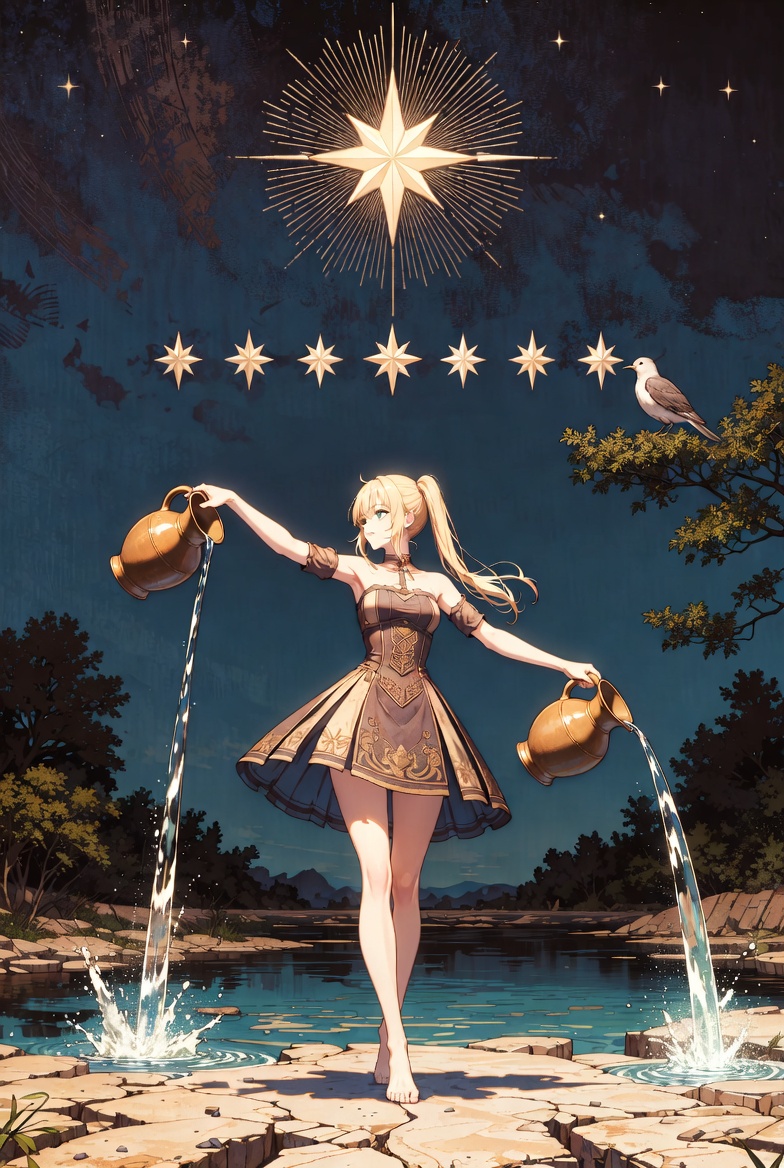
At some point, everyone curious about this corner of life stands in the same aisle, real or digital, holding the same question: tarot or astrology? One friend swears by her birth chart. Another pulls a card every morning. A third has a drawer of oracle decks with foxes on them. They all seem to be getting something out of it. Meanwhile you’d just like to know: what’s actually the difference, and which one is for you?
Here’s the comparison nobody selling either will give you, from a site that admittedly lives on the tarot side but shares a garden fence with the other two. The short version: astrology reads a clock. Tarot holds up a mirror. Oracle cards hand you a warm note. They’re different instruments, not competing answers, and they’re good at genuinely different things. The longer version is more useful. It includes the hundred-year-old marriage between the first two that most people never hear about, and that this site quietly runs on.
The Core Difference: A Clock and a Mirror
Astrology is a timing system (tarot, honestly, isn’t one). Your inputs are fixed: birth date, time, place. From them comes a chart. From the sky’s ongoing motion come cycles: transits, returns, retrogrades, moons. Nothing is random; everything is calculated. Its stance is top-down: the sky proposes a pattern, and you consider your life through it. Whatever else it is, astrology is a magnificent piece of shared timekeeping. It’s a vocabulary for the seasons of a life, kept in sync by an object everyone can see.
Tarot is a reflection tool. Its engine is the opposite: deliberate randomness meeting your specific question, right now. A card lands, your mind connects it to your life, and that connection, made by you, is the reading. Its stance is bottom-up. Nothing is fixed at birth, and nothing is calculated. The deck knows nothing and you know everything, which is precisely what makes it work.
Feel the difference in the questions each one loves. Astrology’s natural questions are when and what season is this: why this year feels like rebuilding, why everything is churning this month. Tarot’s natural questions are what and what am I not seeing: aimed, specific, yours. One is a weather report you stand inside. The other is a conversation you start.
What Astrology Does Well (Said Fairly)

We’d be poor neighbours to pretend astrology has nothing going for it. Honestly, half our readers love both. Its genuine strengths:
Rhythm. Astrology gives life a calendar with meaning in it: lunar months, yearly returns, longer seasons. Whatever you believe about the mechanism, recurring sky markers are genuinely powerful reflection anchors. We built our own full moon practice on exactly that fact.
A shared language for identity. “I’m such a Capricorn” does real social work. It hands people a vocabulary for talking about temperament, which most of us otherwise lack. Tarot has nothing quite like sun-sign small talk, and it’s allowed to be a little jealous.
Patience with the long arc. Charts and transits think in years and decades. When someone needs “this is a season, and seasons end,” astrology’s whole architecture says it natively.
The honest limit, and we hold our own tool to the same standard: astrology’s predictions don’t survive testing any better than card-reading’s would, and we’ve never claimed otherwise for tarot. Both work as reflection tools, not forecasting ones. The difference is only in how they reflect. The clock gives you a season to consider. The mirror gives you a reaction to read.
What Tarot Does Well (Our Side of the Fence)
Specificity, on demand. A chart describes your climate; a card answers this Tuesday’s question. Tarot is the only one of the three built around a question you bring. That makes it the working tool of the trio: something on your mind at 9pm becomes a reading by 9:05, no chart required.
Agency. Astrology’s grammar is things happening to you: transits arrive, retrogrades descend (the most famous one now has our honest survival kit). Tarot’s grammar, done honestly, is relentlessly second-person. What are you avoiding, choosing, carrying? The deck gets an opinion, never a vote. Nothing in it happened at your birth, and every reading starts fresh.
The reaction, readable. Because a card is random and pictorial, your flinch when it lands is data: relief, disappointment, resistance, recognition. A birth chart can’t surprise you twice. A deck surprises you every single time, and the surprise is where the information lives.
Structure you can learn. Seventy-eight cards in a learnable grid, centuries of shared meanings, combinations with grammar. Which brings us to the cousin with no grid at all.
Where Oracle Cards Fit
Oracle decks are tarot’s freeform cousin. Any number of cards, any theme, any system, usually one author’s vision: foxes, moon phases, affirmations, whatever the artist dreamed. No fixed structure, no shared tradition, no reversals or courts or suits unless the creator fancied them.
That’s their strength and their ceiling in one. The strength: they’re gentle, immediate, zero learning curve, and often genuinely beautiful. As a soft daily companion (“what energy today?”), an oracle deck is lovely. The ceiling: with no shared structure, there’s no grammar to learn, no combinations, no tradition pushing back on you. And, said kindly, most oracle decks are built to comfort rather than to question. Comfort is a real service. But the friction is where reflection happens, and tarot’s fixed 78, with its Towers and Devils you can’t curate away, guarantees the deck will sometimes tell you what you didn’t order. An oracle deck is a kind friend. A tarot deck is an honest one. Most collections end up with both, used for exactly those purposes.
The Century-Old Marriage (The Part Nobody Mentions)
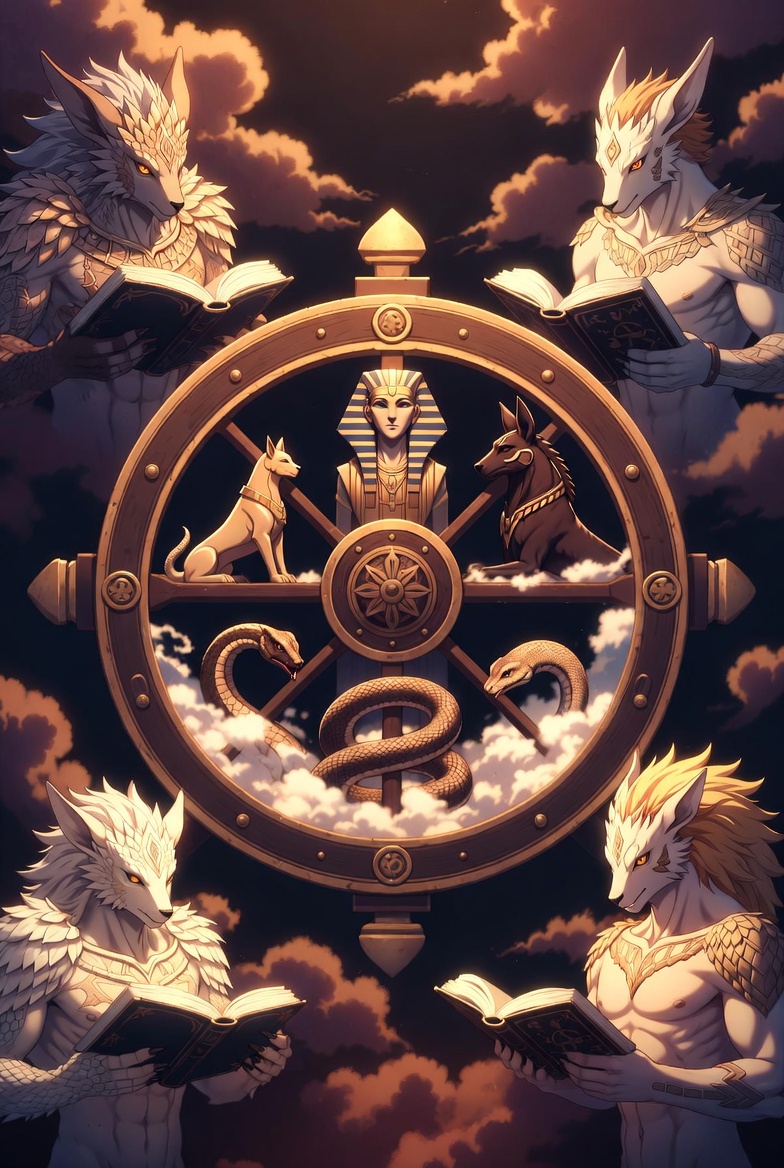
Here’s the twist the “versus” framing hides (and the reason every zodiac sign has a tarot card): tarot and astrology were formally married over a century ago, by the same Victorian order that shaped modern card meanings. The Golden Dawn mapped the whole zodiac onto the deck. Every sign got Major Arcana and court correspondences. And, most beautifully, every decan, each ten-day slice of the zodiac, got its own minor arcana card. The Eight of Pentacles isn’t just “diligent work”. In that system it’s the first decan of Virgo, late August, which is why the old meanings sometimes fit the calendar with eerie neatness. (Every card’s assignment now lives in one reference.)
So “are zodiac signs in tarot?” isn’t just answerable, it’s built in. It’s also why the two practices combine so naturally rather than competing. If you want to see the decan system running live, our tarot calendar tracks exactly this: the current decan’s card, the moon’s phase, the sky and the deck keeping time together. And tarot returns the favour with its own birthday trick: your birth cards, the Major Arcana pair hiding in your date of birth, the nearest thing the deck has to a star sign.
So Which Should You Pick?
By temperament, honestly:
- Pick astrology if what you’re missing is rhythm and a longer view: you want your life to have seasons, a calendar with meaning, and a shared language for “why everything feels like this right now.”
- Pick tarot if what you’re missing is a thinking partner: you have actual questions, you want them answered-ish by Tuesday, and you’d rather be handed a mirror than a forecast.
- Pick oracle cards if what you’re missing is gentleness: a soft daily word, no learning curve, comfort on tap.
- Pick freely from all three, which is what most people quietly do: astrology for the season, tarot for the question, an oracle card for the bedside table. They were never really competing. They’re a clock, a mirror, and a kind note, and most lives have wall space for all three.
The Bottom Line
Tarot versus astrology is the wrong fight, and always was. One is a timekeeping system that reads your life top-down through the sky’s cycles. The other is a reflection tool that reads it bottom-up through your own reactions. And they’ve been formally intertwined since the decans got their cards a century ago. Astrology tells you what season it is. Tarot asks what you’re doing about it. Oracle cards tell you it’s going to be okay. On a good week, you might want all three sentences.
The sky keeps the time. The deck asks the questions. You, in both systems, remain the only one who answers.
FAQ
What’s the main difference between tarot and astrology? Mechanism. Astrology is calculated from fixed birth data and the sky’s real positions: nothing random, cycles and seasons, a top-down pattern to consider your life through. Tarot is deliberately random: a card meets your question and your reaction makes the meaning, bottom-up. A clock and a mirror; they answer different kinds of question.
Which is more accurate, tarot or astrology? Neither, as prediction, and honest practitioners of both say so. Both work as reflection tools. Astrology hands you a meaningful season to think inside; tarot provokes reactions you can read. “Accuracy” in both comes from the same place, you, recognising something true. That’s a feature once you know that’s the machine.
Can I use tarot and astrology together? They’ve been formally combined for over a century. The Golden Dawn mapped zodiac signs and decans onto the deck, so every ten-day slice of the zodiac has its own minor arcana card. Practically: use astrology’s calendar (moons, seasons) to time your reflection, and tarot’s cards to do it. Our tarot calendar runs on exactly this system.
Are zodiac signs in tarot? Built in, via the Golden Dawn correspondences. Each sign maps to Major Arcana and court cards, and each decan to a minor card. Your deck has been carrying the zodiac for a hundred years, whether or not anyone told you. Tarot also has its own birthday system, birth cards, worked out from your date of birth.
What’s the difference between oracle cards and tarot? Structure. Tarot is a fixed 78-card system with centuries of shared meanings, suits, courts and combination grammar; any tarot deck speaks the same language. Oracle decks are freeform: any size, any theme, one author’s vocabulary, usually built to comfort rather than question. Kind friend versus honest one; many people keep both.
Do I need my birth chart to read tarot? Not at all. Tarot needs only a question and a moment, which is much of its charm. If you enjoy the crossover, your birth cards (from your date of birth) and the decan calendar add an astrological layer. But they’re seasoning, not requirements. The deck works from a standing start.
Clock, mirror, or kind note? If it’s a mirror you’re missing: pull a free online tarot reading →, no sign-up and no birth time needed. Just a question, a card, and your own honest reaction.
forum Comments
Loading comments…