Here’s the sentence that stops most people from ever learning tarot: “I’d love to, but I could never memorise all those meanings.”
So let’s kill that idea in the first paragraph. You do not need to memorise 78 card meanings to read tarot. Nobody learned that way. The readers you admire, the ones who seem to glance at a spread and just know, are not running a mental database. They’re doing something much simpler, and much more learnable: they look at a picture, notice what it stirs up, and ask what that has to do with the question on the table. The meanings came later, soaked up gradually through use, the way you learned the streets of your own town by walking them rather than studying the map.
This guide is the honest version of how to read tarot cards: what the deck actually is, the three-step method that works from your very first pull, the only two spreads a beginner needs, and the handful of mistakes worth skipping. No gift required, no memorisation front-loaded, no pretending it’s harder than it is.
What a Tarot Deck Actually Is
Seventy-eight cards, two families. That’s the whole structure, and knowing it is genuinely half the orientation.
The Major Arcana is the set of 22 named cards everyone can picture: the Fool, the Lovers, Death, the Moon. Think of them as the big plot points, the archetypal chapters that turn up in every human life: beginnings, temptations, collapses, recoveries, rebirths. When a Major lands in your reading, the traditional nudge is that the theme is significant, something with weight behind it.
The Minor Arcana is the other 56, and they’re the everyday texture: work, money, arguments, friendships, small wins, bad nights. They come in four suits, and each suit owns a department of life:
- Wands: fire, energy, work, ambition, the things you’re driven to do
- Cups: water, feelings, relationships, the heart’s whole territory
- Swords: air, thoughts, conflict, decisions, the stuff in your head
- Pentacles: earth, money, home, body, the practical and material
Each suit runs Ace to Ten, then four court cards. And here’s your first working shortcut, no memorisation needed: suit tells you the department, number tells you the stage. Aces are sparks and beginnings; the middle numbers are work, friction and adjustment; Tens are completions. A Five of Pentacles? Some kind of struggle (five) in the material department (pentacles). You just read a card you’ve never studied. (When you want that shortcut as a full reference, all four suits and all ten stages, the four suits guide is the complete treatment.)
When you want the full picture on any specific card, our card meanings library covers all 78, upright and reversed. Use it like a dictionary: something you consult, not something you swallow.
The Only Belief You Need (Which Is None)
Quick but important, because beginners often stall here: you don’t have to believe anything in particular to start reading. A tarot reading works as a structured way of thinking, a mirror that shows you your own situation from an angle you didn’t choose. The card lands, your mind connects it to your life, and the connection it makes tells you what’s actually occupying you. That mechanism runs on psychology, not permission, and we wrote a whole piece on it if the skeptic in you wants the details: why tarot works even if you don’t believe in magic.
If your practice grows into something more spiritual over time, lovely. If it stays a thinking tool forever, equally lovely. The cards genuinely do not mind.
How to Read a Card: The Three-Step Method

This is the entire skill, and it works on day one.
Step 1: React before you research. Turn the card over and say what you see, out loud if you can, before looking anything up. Literally describe it: who’s in the picture, what they’re doing, what detail your eye went to first. Then notice your gut response: warm, uneasy, bored, seen? That reaction is not noise to be corrected by the “real” meaning. It’s your half of the reading, and it’s the half no book can supply.
Step 2: Check the traditional meaning. Now look the card up (each card page on this site, or the booklet from a physical deck). Read it briefly. You’re not studying; you’re getting the other voice in the conversation.
Step 3: Bridge the two. Ask the only question that makes tarot work: what does the overlap between my reaction and this meaning have to do with my question? The answer to that is the reading.
A worked example. Say you ask “what should I know about this new friendship?” and pull the Ace of Cups: a hand holding out an overflowing chalice. Maybe your gut says generous, but a little much. The book says new emotional beginnings, an open heart. The bridge: perhaps this friendship is a genuine fresh start, and perhaps the slight “a little much” you felt is your own hesitance about being open again. Thirty seconds, no memorisation, and you’ve surfaced something true enough to act on. That’s a tarot reading. Everything else is refinement.
Your First Spread Is One Card

Beginners reach for the ten-card Celtic Cross because it looks like the real thing. Skip it, honestly, for months. Big spreads multiply everything that’s hard about reading before you’ve practised anything that makes it easy. The professionals’ secret is that most of their personal practice is one card anyway. (When the months have passed and three cards feel easy, the complete Celtic Cross walkthrough will be waiting.)
The daily one-card draw. Each morning, or whenever suits, ask something small and honest: “what should I keep an eye on today?” Pull one card, run the three steps, done in five minutes. This is the single fastest way to learn tarot, because you meet the deck one card at a time, in the context of your actual life, which is exactly how the meanings stick without study. Fitting note: the deck’s own card of new beginnings, the Fool, is numbered zero, the open start before the counting begins. We’ve written about why starting from zero isn’t a weakness; consider it the patron card of your first week.
When you’re ready for three cards, use this one:
- The situation. What’s really going on, beneath how it looks.
- What I’m not seeing. The blind spot. Read this one slowest.
- A useful next step. Not fate, just a direction worth considering.
Past-present-future is the classic alternative and it’s fine, but situation/blind-spot/step keeps the reading pointed at something you can actually use, which for a new reader is the difference between a practice that sticks and one that fizzles.
If you don’t own a deck yet, you don’t need to wait: a free online tarot reading works with the exact same three-step method, and it’s a low-stakes way to try today’s card before you commit to buying anything. When you are ready to buy, our guide to choosing a first deck covers the traditions, the five tests that matter, and the gift myth you can safely ignore.
The Scary Cards Aren’t Scary (Read This Before You Pull One)
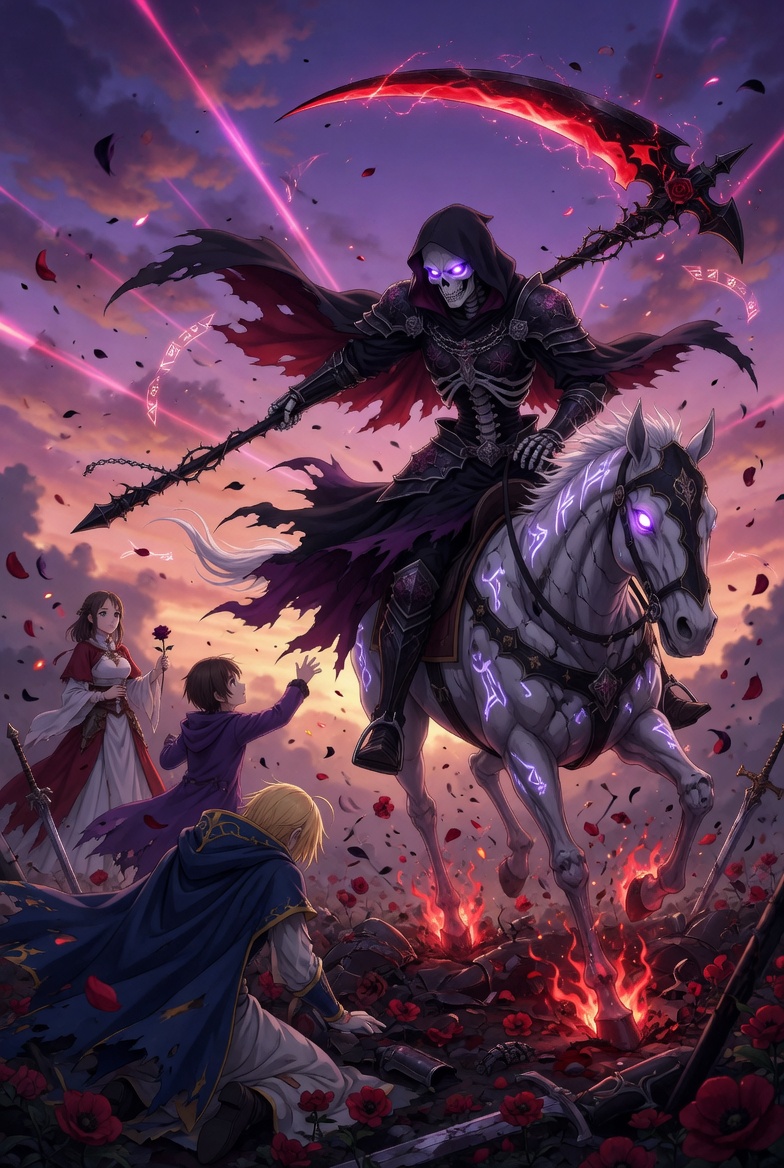
At some point in your first week, you will pull Death, the Tower, or the Devil, and if nobody has briefed you, it can genuinely rattle you. So here’s the briefing.
Death does not mean death. It means an ending that clears space: a chapter closing, a version of you retiring, a situation that has already finished even if you haven’t admitted it. Experienced readers are often quietly pleased to see it. The Tower is sudden change, the collapse of something that was built on a crack, disruptive and usually, in hindsight, overdue. The Devil is about what owns you: habits, patterns, the chains you could lift off. Uncomfortable cards, all three. Predictions of doom, none of them.
The general rule that will serve you for years: tarot cards describe situations and energies, not fixed events. A hard card names a hard thing, and naming hard things is precisely what makes the practice useful. If a card ever lands heavily on a day you’re struggling, the right response is the same as for any tool: put it down, and if what came up is bigger than a card, take it to a person, not a deck. (Our standing house rule, which will serve you longer than any card meaning: the cards get an opinion, not a vote.)
Five Beginner Mistakes to Skip
- Front-loading study. Learning all 78 meanings before reading is like learning every word in the dictionary before speaking. Read first, look up as you go.
- Re-drawing until you like the answer. One question, one pull (and when the same card keeps turning up anyway, that’s a different thing entirely). Redrawing teaches your practice to flatter you, and a mirror that flatters is useless.
- Asking questions you don’t want examined. “Does he love me?” invites anxiety. “What should I understand about this relationship?” invites thought. Aim questions at yourself; you’re the only person at the table.
- Reading only in a crisis. A deck consulted exclusively at 2am learns to speak only crisis. The small boring daily pull is where the skill and the calm actually come from.
- Treating reversals as mandatory. Reversed cards (upside-down draws) add nuance, but plenty of good readers ignore them entirely for the first year. Permission granted to keep it simple, and when you’re eventually curious, the complete reversals guide will still be there; it opens by agreeing with this paragraph.
The Bottom Line
Learning how to read tarot cards is a smaller task than the internet makes it look. One deck, two families, four suits. React, check, bridge. One card a day until the faces feel familiar, three cards when the question is bigger. Look meanings up like dictionary words. Don’t fear Death, redraw, or force yourself to study.
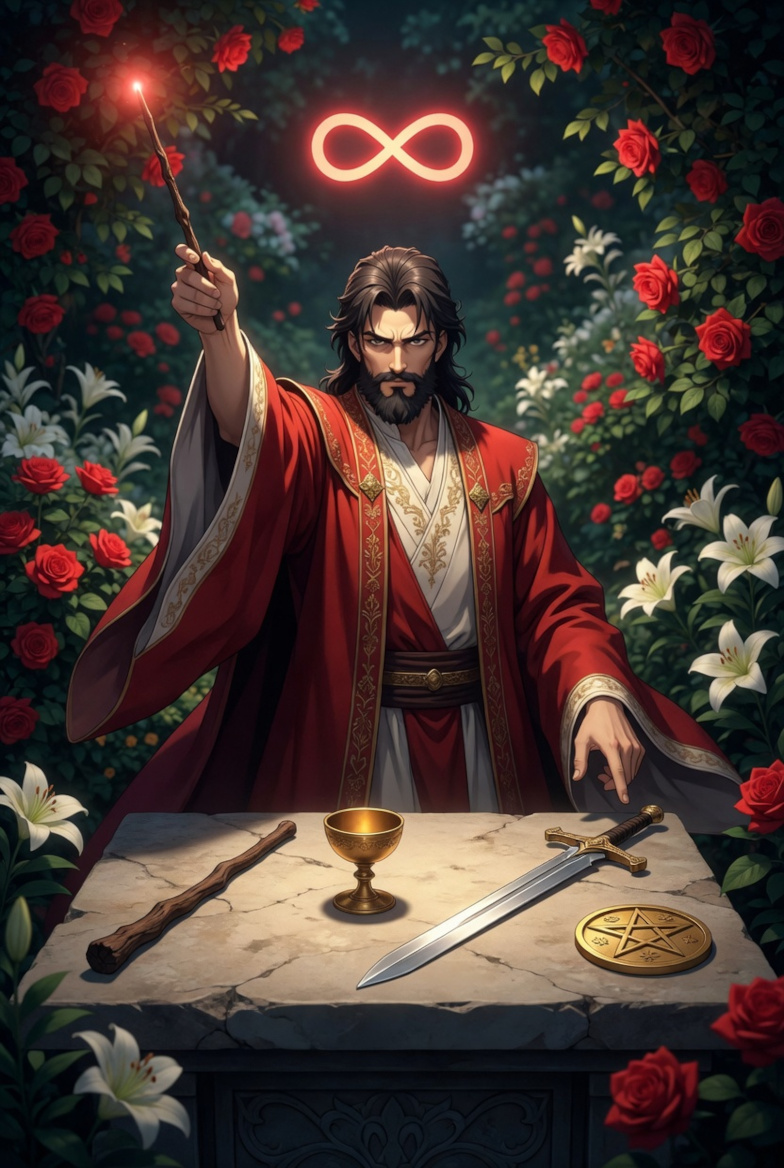
Everything past that, reversals, combinations, big spreads, court card subtleties, is depth you can add whenever you’re curious, and our card library and plain-English glossary of every term will be sitting there when you want them. The Magician, card one of the Major Arcana, shows a figure standing at a table where all four suits are already laid out, everything needed, already to hand. That’s the deck’s own first lesson, and it’s aimed at you: you’re not missing anything. Start.
FAQ
How do I start reading tarot cards as a complete beginner? Pull one card a day with a simple question, describe what you see before looking anything up, then check the meaning and connect the two to your life. That three-step loop, done daily, teaches the deck faster than any amount of study; the 30-day journal challenge turns it into a guided month. Add a three-card spread when questions feel bigger than one card.
Do you need to memorise all 78 tarot card meanings? No, and trying is the most common reason beginners quit. Learn the structure instead (suit = area of life, number = stage of the journey), read daily, and look cards up as they appear. The meanings accumulate on their own within a few weeks of regular pulls.
Do you need a special gift to read tarot? No. Reading tarot is a learnable skill: observing an image honestly, knowing roughly what it traditionally points to, and connecting the two to a real question. What looks like intuition in experienced readers is mostly familiarity, the same way a mechanic hears an engine.
Can I do tarot readings online, or do I need a physical deck? The method is identical either way: react, check the meaning, bridge to your question. An online reading is the easiest way to start today and try the practice before buying a deck; a physical deck adds ritual and shuffle-feel that many people grow to love. Neither is more valid.
What’s the best tarot spread for beginners? A single card, honestly, for at least your first month. After that, a three-card spread: the situation, what you’re not seeing, and a useful next step. Save the ten-card Celtic Cross until reading three cards feels comfortable rather than effortful. When you’re ready to branch out, the complete guide to tarot spreads collects every spread we teach, organised by situation.
What if I pull a scary card like Death or the Tower? Neither predicts disaster. Death means an ending clearing space for something new; the Tower means sudden change to something that wasn’t stable anyway. Hard cards name hard things, which is exactly what makes tarot useful, and none of them are verdicts about your future.
Ready to try the three steps on a real card? Pull a free online tarot reading →, no sign-up and no deck needed. One card, one honest reaction, and you’re a beginner no longer.
forum Comments
Loading comments…