
Ask a room of tarot learners where they got stuck, and you’ll hear the same answer in different accents: the court cards. Sixteen of the seventy-eight, nearly a quarter of the deck, and they stall more students than the whole Major Arcana put together. People sail through Death and the Tower, then quit over the Queen of Cups.
It isn’t you, and it isn’t mysterious. The courts stall people for one specific reason: they’re shaped like people, so every one of them arrives with a question the other cards never ask. Is this me? Is it someone in my life? Is it my boss? Am I about to meet a dark-haired stranger? The meaning books make it worse by listing personality traits like dating profiles, and now you’re memorising sixteen imaginary acquaintances.
Here’s the way out, and it genuinely dissolves the problem: stop learning sixteen cards. Learn four plus four. The courts are a grid, four roles crossed with four suits, and once you see the grid you can read any court card you’ve never studied, the same way you can read a five of a suit you know. This post hands you the grid, settles the “is it me or a person” question honestly, and finishes with a personality tour of all sixteen in one line each.
The Grid: Four Roles, Four Energies
You already know the suits from the rest of the deck, and they mean exactly the same here: Wands are fire (drive, work, ambition), Cups water (feeling, connection), Swords air (thought, words, decisions), Pentacles earth (money, body, the practical). That’s half the grid, and you knew it already (and if you didn’t, the four suits guide covers each territory properly).
The other half is the ranks, and each rank is a relationship to its element, a stage of how someone handles that kind of energy:
- The Princess (Page, in many decks) is the student: new to the element, curious, open, still learning what it can do. Princess energy is beginnings, messages, first steps, honest inexperience.
- The Prince (the Knight, in many decks) is the quester: mid-journey, all momentum, riding the element hard and sometimes ridden by it. Prince energy is pursuit, speed, dedication, and occasionally overshoot.
- The Queen is inward mastery: the element fully understood and held. She doesn’t chase it; she embodies it, and others feel it radiating off her. Queen energy is depth, steadiness, nurture of the element in herself and others.
- The Knight (the King, in many decks) is outward mastery: the element directed at the world, commanding it, building with it, responsible for it. Knight energy is authority, direction, the element in charge of something.
A quick word on those names, because it confuses everyone once: decks differ. The Rider-Waite tradition runs Page, Knight, Queen, King. Our deck follows the Golden Dawn current, which runs Princess, Prince, Queen, Knight, where the Knight sits in the King’s chair. Same four roles, different uniforms; the grid underneath is identical, and everything in this post works for both. (Yes, this means a “Knight” is a galloping quester in one deck and the seated master in another. Blame the Victorians; we’ve written about them before, and now given them their place in the deck’s whole history.)
Now cross the halves: a Princess of Swords is a student of thought (curiosity with a sharp edge, the new idea, the blunt question). A Knight of Pentacles is a master-builder of the practical. You just read two cards you may never have studied. Sixteen cards, eight ideas. That’s the whole trick.
Is It Me, a Person, or a Mood? (The Question That Stalls Everyone)

The traditional answer is that a court card can be any of three things: a person in your life, a part of yourself, or an energy asking to be used (or watched). True, and unhelpful, because it doesn’t tell you which. So here’s the honest rule this whole site is built on: a reading runs on what’s in you, so the default is always a part of yourself. Read it as you first: which version of me is at the table this week? Only promote it to “a person in my life” when someone leaps to mind unbidden the moment you see the card, and even then, keep half an eye on why that person leapt: the court you see in someone else is often the energy the two of you are trading.
And when neither lands, read it as the third thing: a mode being asked of you. The Princess of Cups in a career question probably isn’t a sensitive young woman about to join your office. She’s an instruction: approach this like a student of feeling, listen before you decide, stay open. Court cards as verbs, not nouns. Half the time, that’s the strongest reading available.
A Tour of the Sixteen (One Line Each)
The grid does the work; these are the personalities that fall out of it. Notice how each column is one element growing up.
Wands (fire):
- Princess of Wands: the spark itself; enthusiasm before any plan, and infectious with it.
- Prince of Wands: all accelerator, no brake; magnificent momentum that occasionally arrives on fire.
- Queen of Wands: confidence at rest; she burns without apology, and rooms rearrange around her warmth.
- Knight of Wands: fire in charge; vision made into marching orders, the one who says “we’re doing it” and means it.
Cups (water):
- Princess of Cups: the open heart at the start; feels everything, hides nothing, learning what feelings are for.
- Prince of Cups: the romantic quester; chases the feeling, writes the message, sometimes loves the pursuit more than the person.
- Queen of Cups: emotional depth mastered; the one everyone tells things to, who feels fully without drowning.
- Knight of Cups: feeling directed outward with mastery; he has a whole post’s worth of romance reputation, but his real job is emotional maturity leading something.
Swords (air):
- Princess of Swords: the sharp question nobody else will ask; watchful, quick, allergic to nonsense.
- Prince of Swords: fast, precise, three moves ahead, and occasionally three moves past the point.
- Queen of Swords: clarity earned the hard way; kind, but she will not lie to you, least of all on your behalf.
- Knight of Swords: the mind in command; strategy, judgement, the decision made cleanly and owned.
Pentacles (earth):
- Princess of Pentacles: the diligent beginner; small steady steps toward something real.
- Prince of Pentacles: the long-haul worker; unglamorous, unstoppable, the one who actually finishes.
- Queen of Pentacles: practical care embodied; the warm house, the fed table, resources turned into wellbeing.
- Knight of Pentacles: mastery of the material; he built it once, he can build it again.
Read a column and you’ll feel it: each suit’s Princess plants what its Knight eventually governs. Read a row and you’ll feel the rank: all four Queens hold their element the same way, in four different materials.
Courts in Real Readings (Where They Get Interesting)

A court card in an advice position is a costume, not a verdict. Prince of Swords as “what would help”: move fast, cut the debate, decide. The reading is handing you a role to play this week.
A court card in a “what’s blocking me” position is usually your own overplayed strength. The Queen of Swords blocking you isn’t some cruel woman; it’s your own clarity turned cold, honesty used as a wall. Courts in shadow positions are almost always a good trait at the wrong volume, which makes them shadow work in miniature.
In love readings, resist casting. The temptation is to make every court the other person (“the Knight of Cups is him!”). Keep the mirror rule: the court most worth reading is the one you’re being in the relationship. Are you the Princess of Cups, all open water? The Queen of Swords, guarding with clarity? The relationship conversation that follows from that is worth ten “is he my king” readings.
And when a court feels like nobody at all, check the weather: sometimes a season has a personality. A Prince of Wands month. A Queen of Pentacles winter. Naming the season’s court is a surprisingly durable journaling habit.
Practice: Which Court Am I Today?
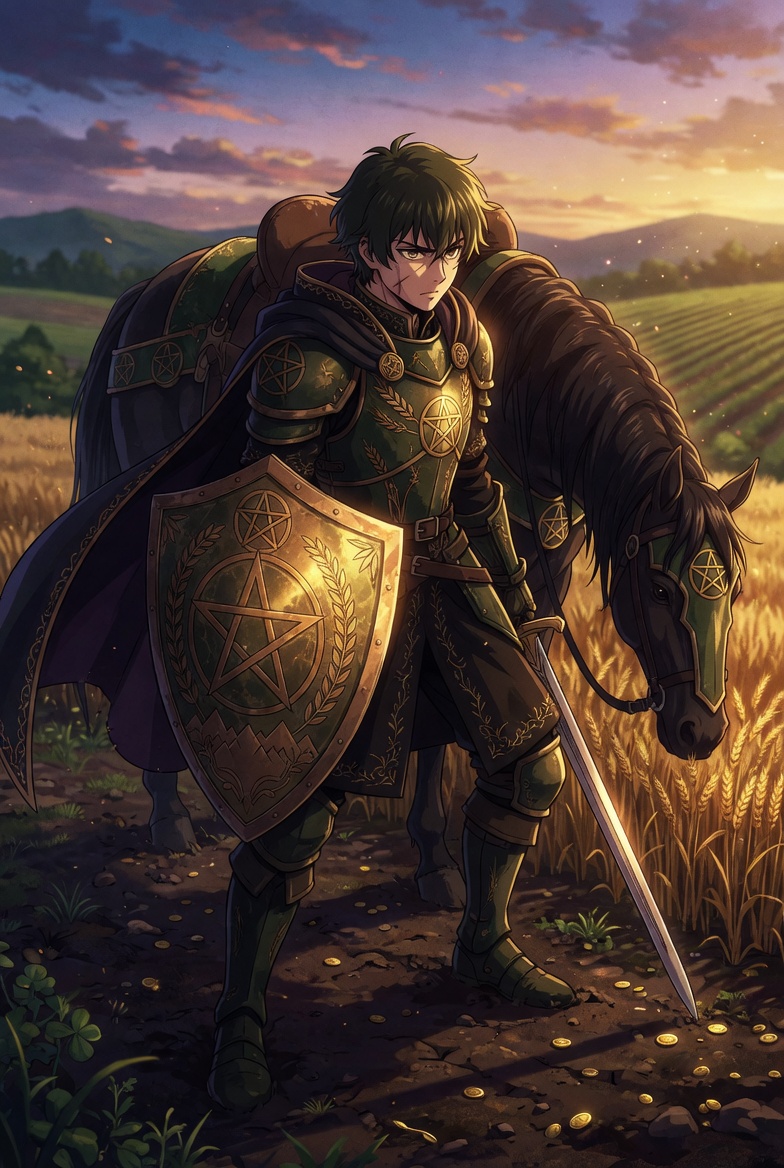
The fastest way to make the courts yours: for one week, end each day by asking “which court card was I today?” Not which you’d like to be; which you were. The day you snapped at a colleague with surgical accuracy: Queen of Swords at the wrong volume. The day you started three things and finished none: Prince of Wands, whole accelerator, no destination. The day you quietly got the boring thing done: Knight of Pentacles, tagline: he built it once, he can build it again.
Two things happen. The sixteen stop being strangers, because you’ve been all of them. And you start noticing your default court, which is worth knowing: it’s the energy you reach for under pressure, and the grid quietly shows you both its Queen-level best and its overplayed shadow. That’s the court cards doing what they were always for: not sixteen people to memorise, but a mirror with sixteen angles.
The Bottom Line
The court cards stall learners because they look like sixteen personalities to memorise, and they’re actually a four-by-four grid: suit tells you the element, rank tells you the relationship to it, student to quester to inward master to outward master. Cross them and you can read any court on sight. Default to reading them as parts of yourself, promote them to real people only when someone leaps to mind, and let them be verbs (a way to act) as often as nouns.
Nearly a quarter of the deck was waiting behind that one unlock. Welcome to the part of tarot where the deck stops describing situations and starts describing you. And when you want the full entry on any single court, all sixteen now have a complete reference: each one written as a posture, a person, an energy and a line of advice, with the naming bridge laid out properly.
Sixteen cards. Eight ideas. One mirror with a lot of angles. That’s the court, finally explained.
FAQ
What do court cards mean in tarot? They’re the deck’s sixteen people-shaped cards: four ranks (student, quester, inward master, outward master) crossed with the four suits’ elements. Each one describes a way of handling that element, fire, feeling, thought or the practical, at a particular stage of mastery, readable as a part of yourself, a person, or an energy to adopt.
Do court cards always represent actual people? No, and the healthiest default is reading them as parts of yourself, since a reading runs on your own material. Promote a court to “a real person” only when someone springs to mind instantly, and even then notice why: the court you recognise in someone else is usually the energy active between you.
What’s the difference between Page, Knight, Queen and King? They’re stages of one element growing up: the Page (Princess) studies it, the Knight (Prince) chases it, the Queen embodies it inwardly, the King directs it outwardly. Learn those four relationships once and they apply across all four suits, which turns sixteen cards into eight ideas.
Why does my deck have a Princess and Prince instead of Page and King? Different traditions, same grid. Rider-Waite-style decks run Page/Knight/Queen/King; Golden Dawn and Thoth-style decks (ours included) run Princess/Prince/Queen/Knight, with the Knight in the King’s seat. Map Princess to Page and Prince to the galloping Knight and every book meaning transfers cleanly.
How do I read a court card as feelings or energy instead of a person? Read it as a verb: an approach being described or prescribed. Prince of Swords as advice means “move fast and decide”; Queen of Cups as the situation means “this is being held with deep feeling.” In advice positions especially, a court card is a costume the reading hands you for the week.
How do I know which court card I am? You’re all of them at different hours, which is the real answer, but try a week of asking “which court was I today?” each evening. Your repeat performer is your default court: the energy you lead with under pressure. The grid then shows you its mastered form and its overplayed shadow, which is self-knowledge worth more than any fixed assignment.
Want to meet today’s court in person? Pull a free online tarot reading →, no sign-up needed, and if royalty turns up, you now know exactly how to read them.
forum Comments
Loading comments…