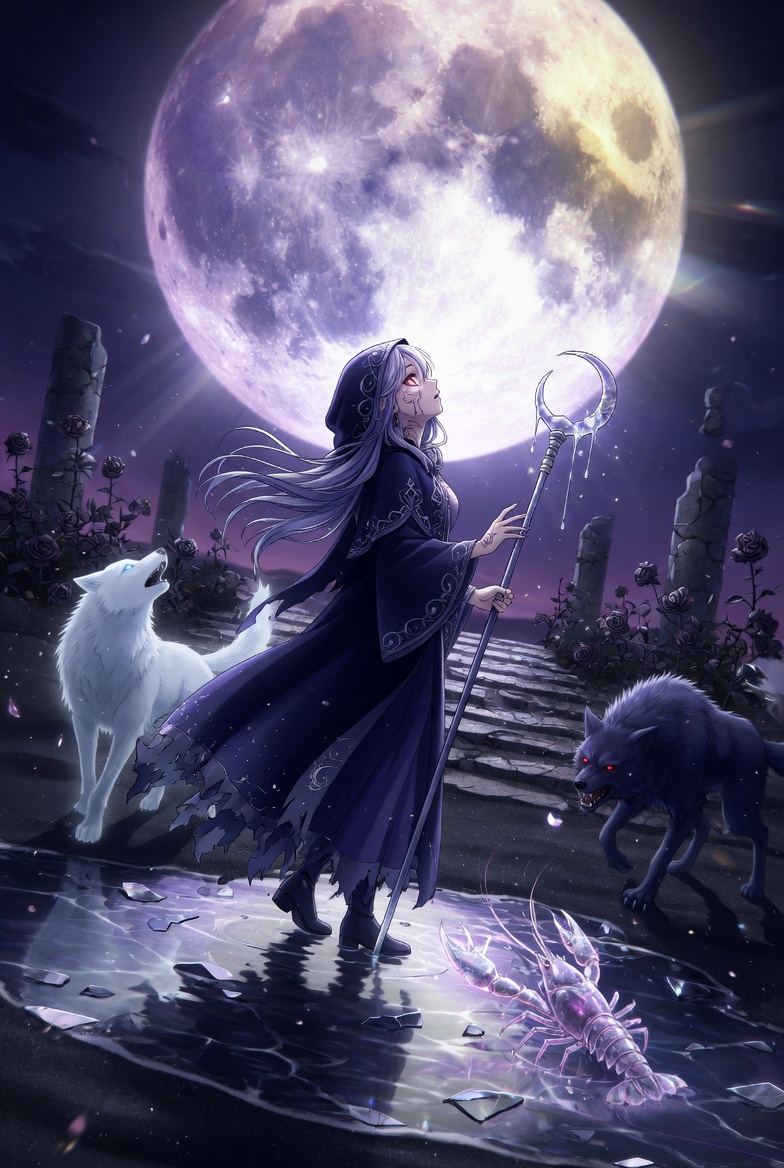
On the night of 28 August 2026, the full moon rises with a bite taken out of it: a partial lunar eclipse, the Earth’s shadow sliding across the Sturgeon Moon. If you’ve been meaning to try a full moon tarot ritual, that’s about as good an opening night as the sky offers. And if you’re reading this in some other month entirely: stay, because the full moon comes back every 29.5 days, and the ritual below is built for all of them.
Full moons are tarot’s favourite appointment, and not by accident. This post gives you the whole practice honestly: what a full moon actually offers a reflective habit (something real, and it isn’t moonbeams), the five-card Release and Reveal spread, the eclipse variation for nights like the 28th, and straight answers to the classic questions, including whether you’re “allowed” to read during an eclipse. Short version: yes, and we’ll get to why people say otherwise.
What a Full Moon Is Actually For (No Moonbeams Required)
Let’s do the honest part first, as ever. The moon does not charge your cards, and moonlight carries no substance that soaks into card stock; we’ve covered what cleansing rituals really do, and the answer lives in you, not the paper. So why does the full moon earn a permanent place in a reflective practice?
Because it’s a recurring temporal landmark, and those are genuinely powerful. When we wrote about the September reset, we leaned on the fresh start effect: the well-studied human tendency to reflect and begin at moments that mark a clean break in time. New year, new month, birthdays. The full moon is the fresh start effect’s monthly edition, and it has three features no calendar date can match: you can see it (the reminder hangs in the sky), it’s communal (millions are looking up the same night), and it carries a built-in metaphor that does half the reflective work for you. Fullness. Maximum light. The point in the cycle where things are as visible as they’re going to get, and where the only way forward is letting the cycle turn.
That metaphor is the whole ritual, honestly. A full moon night asks two questions: what has come to fullness, and what needs releasing so the next cycle can start? Everything below is those two questions, given structure.
The Full Moon Ritual: Release and Reveal
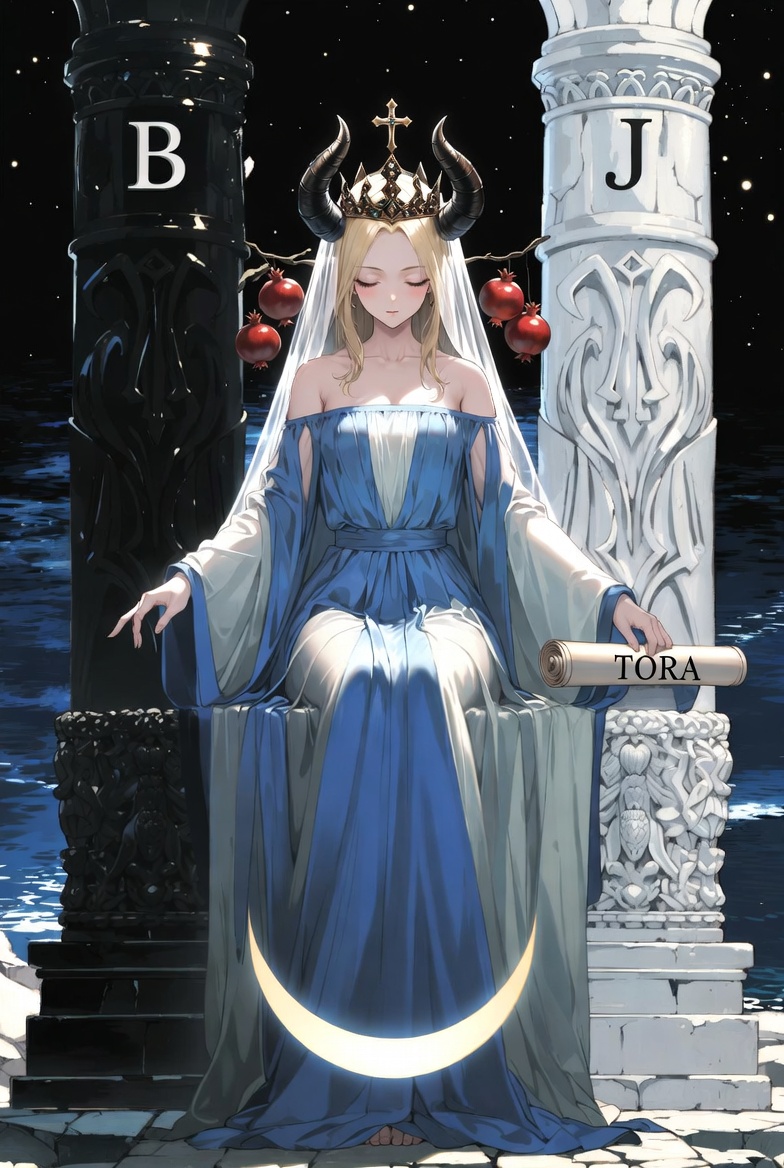
Set up small. You need ten minutes, somewhere you can see the sky or at least know it’s there, and a deck or a reading open on your phone. If you like ceremony, our guided cleansing ritual makes a lovely opening and paces itself to your breath; if you don’t, two slow breaths and one honest intention (“I’m here to look at this month properly”) do the load-bearing work. The presiding card for the whole business is the High Priestess, crescent moon at her feet: tonight is for what you know without knowing why.
The spread: five cards, laid in an arc like a moonrise.
- What came to fullness. Something this month completed, peaked, or finally became what it was going to be. Read generously; fullness includes finished difficulties.
- What the light shows now. Something you couldn’t see a month ago that’s visible tonight. This is the reveal card; read it slowly, it tends to be the one that lands.
- What I’m ready to release. Not what you should release. What you’re actually done carrying: a worry, a grudge, a plan that expired, a version of the month you didn’t get.
- What releasing it makes room for. The space behind the thing is the point of letting go; this card names what moves into it.
- What I carry into the waning weeks. One thing, deliberately chosen, for the quieter half of the cycle.
Then the journal line, which outlives the cards: “This month came to fullness in ___. I’m putting down ___. That makes room for ___.” Write it (your journal here keeps the dated series for you), date it with the moon’s name if you enjoy that (August’s is the Sturgeon Moon), and stop. Twelve of these entries is a year in review that writes itself.
Why “Releasing” Works (The Part Nobody Explains)
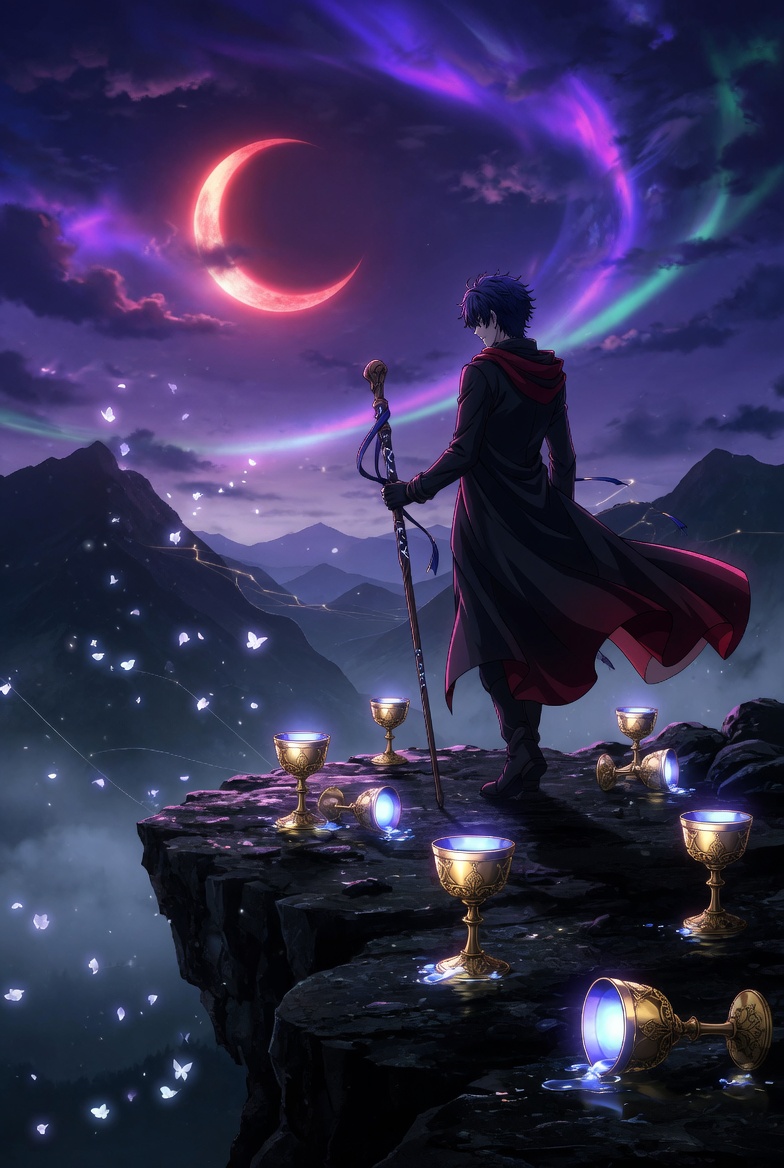
A fair skeptic asks: what does saying “I release this” actually do? More than it sounds like, and the deck’s own release card shows the mechanism. The Eight of Cups is a figure walking away from eight carefully stacked cups, under a watching moon, and its tagline is the whole psychology: walking away was the bravest thing. Release isn’t deleting a feeling; it’s a named decision to stop actively carrying something, made out loud, with a witness, even if the witness is card stock and the sky. Naming what you’re done with is the same externalizing move that makes tarot work at all, and doing it inside a small ceremony marks an ending the way all good ritual marks boundaries: your nervous system files it differently than a thought you merely had. That’s why people sleep better after a full moon ritual, and no moonbeams were involved. The moon kept the appointment; you did the work.
The Eclipse Variation (For Nights Like 28 August)

Tradition treats eclipses as full moons with the volume turned up: shadow crossing light, endings accelerated, the dramatic branch of the family. Our honest version: an eclipse is a rare landmark, and rarity concentrates attention. You’ll remember where you were, which makes whatever you name that night stickier, so name carefully.
Practically, on an eclipse night, add a sixth card to the spread: the shadow’s lesson. For a few minutes the fullest light of the month is dimmed by the Earth itself, standing briefly in its own way, and there is no better prompt in the sky: where am I standing in my own light, and what does the dimming show that full brightness couldn’t? Read it, write one line, and let the shadow pass, because that’s the other half of the prompt: it always passes. The eclipse’s presiding card is the World, the completed circle: cycles closing on schedule, shadow included.
And the superstition you may have met, that you shouldn’t read tarot during an eclipse, that the energy is “too chaotic”: you’re allowed. It’s a tradition some readers keep and you may too if it’s meaningful to you, but there’s nothing in a reflective practice that a shadow on the moon can break. The cards will not curdle. The only real risk of an eclipse reading is that you’ll remember it, which is rather the point.
Making It Monthly (The Quiet Superpower)
One full moon ritual is a nice evening. Twelve is a practice, and the compounding is where the value hides. The same five questions, asked at every fullness, do what a daily draw does at a different altitude: the dailies catch your weather, the weekly check-in catches your drift, the full moons catch your seasons. You’ll notice the same release appearing three months running (that’s not failure, that’s data), watch card two’s reveals slowly get less surprising as you get better at seeing in real time, and end the year with twelve dated entries that read like chapter summaries of a book you didn’t know you were writing.
Pair it with the new moon if you like symmetry (intentions at the dark, accounting at the full; the planting half now has its own ritual), but if you only keep one lunar appointment, keep this one. Fullness is when there’s something to look at. And Release and Reveal now sits in the seasonal chapter of the complete guide to tarot spreads, with every other spread we teach around it.
The Bottom Line
The full moon doesn’t charge your deck, and doesn’t need to: it’s the sky’s own monthly appointment for the two questions a reflective life runs on, what came to fullness, and what needs putting down. Five cards in an arc, one honest journal line, a sixth card when the Earth’s shadow makes it a special occasion, and back to bed. No moonbeams required; just the oldest reminder light in the world, and you underneath it, telling yourself the truth once a month.
The moon keeps the appointment. The cards take the minutes. You do the work, and then you put it down.
FAQ
What is a full moon tarot ritual? A short reflective practice timed to the full moon: a few quiet minutes, a spread built around culmination and release (what peaked this month, what the light reveals, what you’re done carrying), and a dated journal line. The moon acts as a recurring, visible appointment for reflection; the psychological work is in the naming and releasing, not in moonlight touching cards.
What’s the best tarot spread for a full moon? Five cards: what came to fullness, what the light shows now, what I’m ready to release, what releasing makes room for, and what I carry into the waning weeks. On an eclipse night, add a sixth: the shadow’s lesson. It’s designed to be repeated monthly, and its value compounds with a one-line journal entry each time.
Should I cleanse my tarot deck under the full moon? If you enjoy the custom, absolutely; it’s one of the oldest deck rituals and the windowsill costs nothing. Just know what it’s doing: marking a reset in your relationship with the tool, not drawing anything down from the sky. We’ve written a full honest guide to cleansing rituals and what they actually accomplish.
Is it bad to do a tarot reading during an eclipse? No. Some traditions advise against it, calling eclipse energy chaotic, and if that lore is meaningful to you, honouring it is fine. But nothing in a reflective reading can be broken by a shadow crossing the moon. If anything, an eclipse reading is more memorable, so choose your question with a little extra care.
When is the next full moon, and what’s special about August 2026’s? The next full moon is 28 August 2026, the Sturgeon Moon, and it arrives with a partial lunar eclipse: the Earth’s shadow visibly crossing it. That makes it a natural first night for this ritual, with the sixth eclipse card included. After that, the appointment repeats every 29.5 days, eclipse not required.
What’s the difference between new moon and full moon tarot readings? Rhythm. The new moon (dark sky, cycle starting) suits intention-setting: what am I beginning? The full moon (maximum light, cycle peaking) suits accounting and release: what became of it, and what am I putting down? Together they bracket each lunar month; if you keep only one, keep the full, since it’s the one with results to look at. (The whole cycle, all four beats plus eclipses, now has its complete guide.)
The Sturgeon Moon rises on the 28th with a shadow across it. Pull a free online tarot reading → that night, or any full moon after, and ask the only two questions the ritual needs: what came to fullness, and what am I ready to put down?
forum Comments
Loading comments…