
There are 3,003 possible two-card pairs in a tarot deck. Nobody has memorised them, including the readers who look like they have. So if you’ve learned your card meanings, pulled a three-card spread, and then sat there stuck because the cards seem to be having an argument, welcome: you’ve arrived at the actual skill of tarot reading. Single cards are vocabulary. Combinations are sentences.
The good news is that reading combinations isn’t 3,003 memorisation tasks. It’s one small method, applied over and over, and this post teaches it properly: the four questions that unlock any pair, the element rules that do half the work for you, and then worked examples of the combinations people search for most, Death with the Tower, the Lovers with the Devil, the Magician with the High Priestess, so you can watch the method run on real cases.
The Method: Four Questions for Any Pair
When two cards land together, run them through these four questions, in order. It takes about a minute, and it beats any lookup table ever printed.
1. What does each card mean alone? Quick, one line each. You’re not writing essays; you’re laying two ingredients on the counter. (If a card is a stranger, our card meanings library covers all 78.)
2. Do their elements feed or fight? Every card carries an element: Wands are fire, Cups water, Swords air, Pentacles earth (each suit’s full territory is mapped in the four suits guide), and each Major has one too. Fire and air feed each other (wind and flame); water and earth nourish each other (rain and soil); fire and water clash (steam, hiss); air and earth grind (dust). Feeding pairs amplify each other. Clashing pairs create tension, and the tension is usually the message: two forces in your situation pulling against each other. This rule scales into a whole classical technique, elemental dignities, which now has its own complete guide.
3. Which card is louder? A Major Arcana card outranks a minor: the minor tells you where in daily life the Major’s big theme is landing. Two Majors together is the deck raising its voice: pay attention. Two minors is texture: the ordinary weather of the week.
4. What’s the sentence between them? This is the real move. Look at the two images side by side and ask: if these were two panels of one story, what happens between panel one and panel two? Card order matters if your spread gives it meaning (past to future, situation then advice); side by side, let your eye decide which is speaking first. The sentence your mind builds IS the combination meaning, and it will fit your question better than any book’s version, for exactly the reasons tarot works at all.
That’s the whole method. Now watch it work on the famous pairs.
Death + The Tower: The Combination Everyone Fears
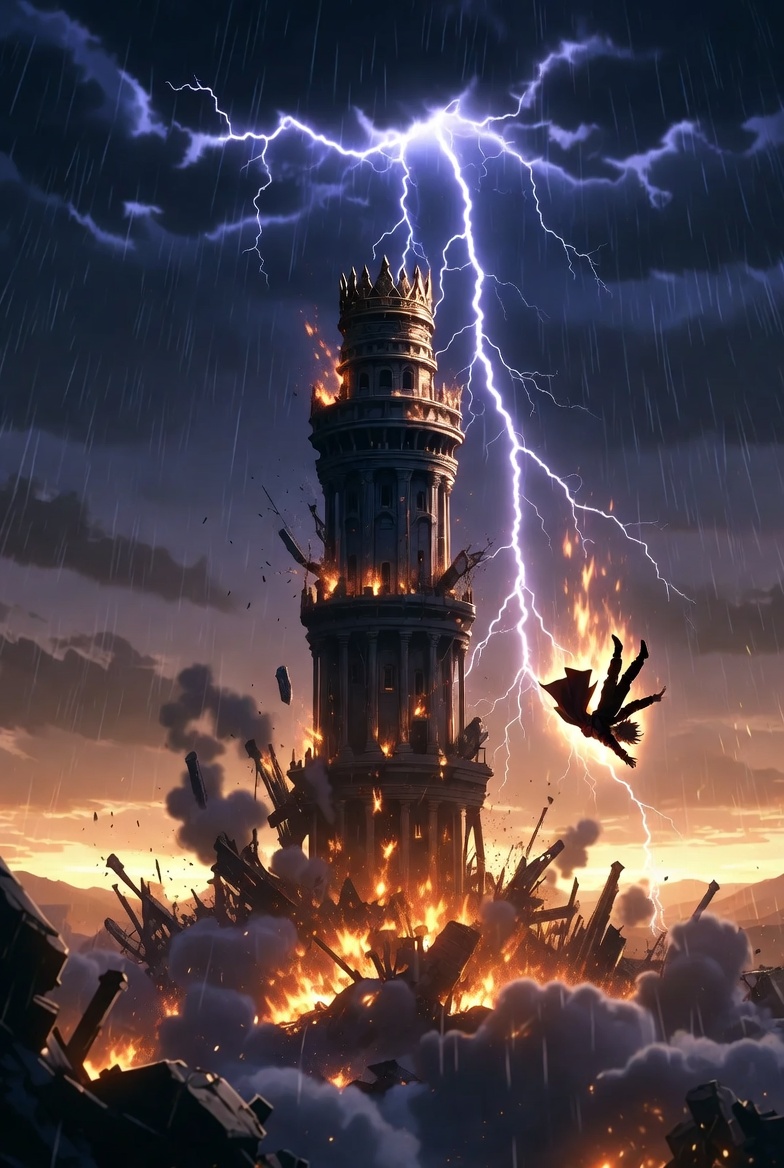
Pull Death and the Tower together and most newcomers quietly close the app. So let’s run the method. Alone: Death is the necessary ending, the chapter that’s already over; the Tower is sudden collapse, the structure with the hidden crack finally giving way. Both Majors, so the deck is raising its voice. And the sentence between them?
Not “disaster twice.” The two cards describe two different kinds of ending, and together they usually sort one question out fast: is this ending going to be chosen, or delivered? Death is the ending you walk toward with dignity, the notice you hand in, the conversation you finally have. The Tower is the same ending arriving by lightning because nobody moved. Together they’re the deck at its most bracing: something here is finishing either way; the only live choice is whether you’re the author of the ending or its audience. People consistently report this pair turning up around jobs they’d already outgrown and relationships already over in all but name. Read it as urgency, not doom: close the chapter yourself, before it closes on you. (Both cards deserve more room than a pairing gives them; we’ve written full deep dives on the Tower and Death.)
The Lovers + The Devil: The Same Bond in Two Lights
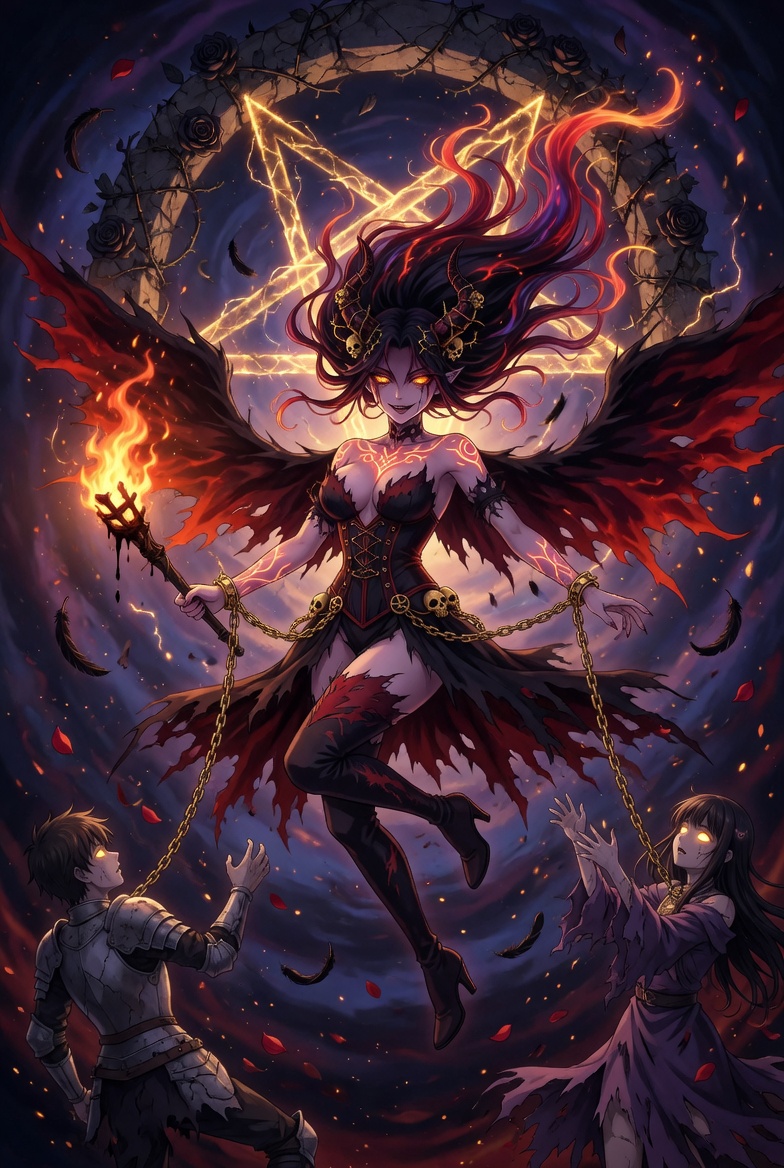
Here’s a secret hiding in the deck’s art: the Devil is drawn as a deliberate parody of the Lovers. Same two figures, same presiding presence above them, but the angel has become the beast and the open landscape a chained block. The deck built this combination on purpose, centuries before you pulled it.
So when they land together, the question isn’t “is my relationship good or evil.” It’s the sharper one the mirrored images ask: which picture is this bond currently living in? The Lovers is connection as choice: two people who could leave, choosing daily to stay. The Devil is the same closeness gone stale into attachment: staying because leaving is scarier, comfort mistaken for love, the loose chains nobody lifts off. Elements sharpen it further: the Lovers is air (talk, choice, clarity) and the Devil earth (habit, body, inertia). Together they ask: is this relationship still a conversation, or has it become furniture? Uncomfortable, honest, and one of the most useful pairs in the deck, in romance and in jobs, friendships and habits too. (The Lovers has a full deep dive of its own, because the choice card deserves more than its romance reputation, and so does the Devil.)
The Magician + The High Priestess: The Deck’s Original Couple
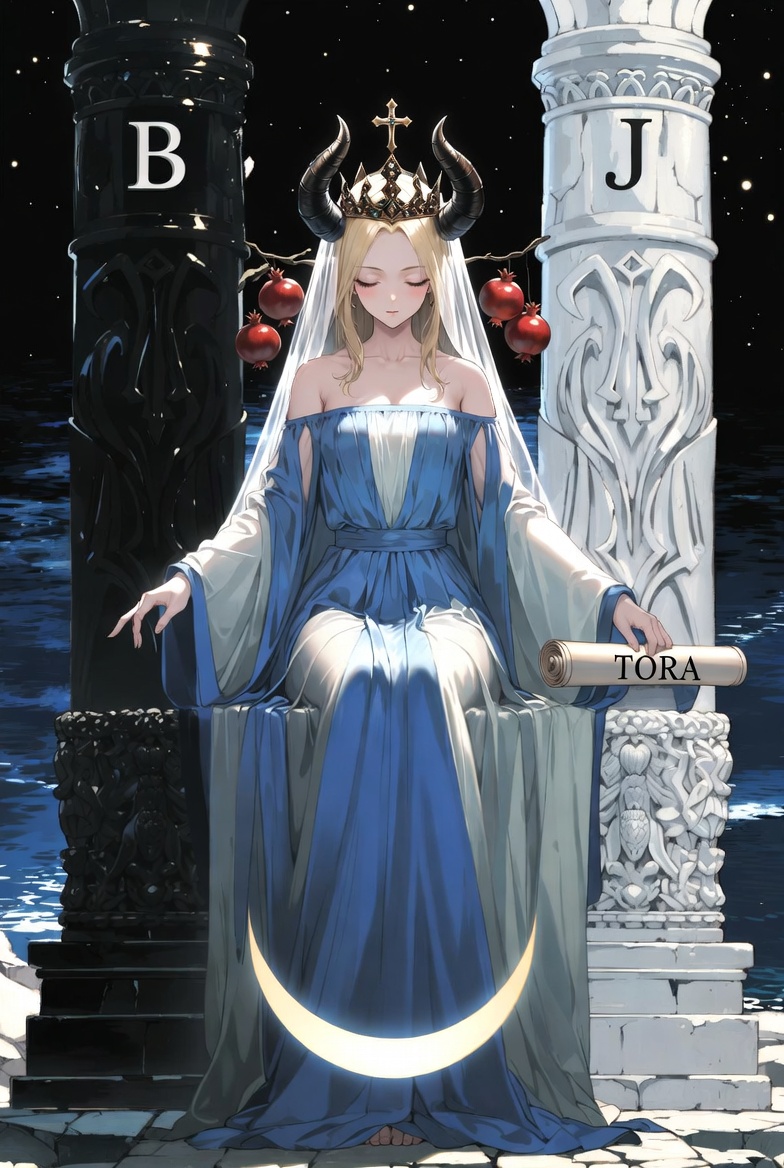
Cards one and two of the Major Arcana, and the deck’s first lesson in combinations. The Magician is outward power: tools on the table, hand raised, will made visible, act. The High Priestess is inward power: the veil, the stillness, what you know without knowing why, wait and listen. One projects, one receives; the pair is the deck saying that real capability is both.
Together in a reading, they almost always land on timing and balance. If your question is “should I push or pause,” this pair IS the answer key: something here needs action and something needs listening, and the card positions (or your gut about which came “first”) tell you the order. Pulled about a decision, they often mean: you already know (Priestess), now do it (Magician), or its reverse: you’re acting to avoid hearing yourself. A quieter pair than the famous scary ones, and honestly the one we’d most like beginners to meet early.
Quick Fire: More Pairs People Ask About
The method handles everything, but here are worked one-liners for combinations that come up constantly:
- The Sun + The Moon: clarity and confusion in the same season. Something in your situation is fully lit and something is still half-guessed; name which is which before deciding anything.
- Nine of Swords + The Star: the 3am panic and the morning after. This pair almost always reads as reassurance with homework: the fear is loud but the recovery is already in frame.
- Two of Cups + Five of Cups: a real connection and a real grief, sharing a table. Often: a new bond carrying the bruise of an old one, and the question of whether the bruise is steering.
- Ace of anything + Ten of the same suit: a cycle ending exactly as another begins in the same department of life. The deck loves this rhyme; when you spot it, the reading is about handover, not loss.
- The Fool with anything: the Fool resets whatever it touches; we covered its big pairings (with Death, the World and the Tower) in our deep dive on the Fool.
And three structural things worth noticing in any bigger spread: repeated numbers (two or three fives = instability is the week’s theme, whatever the suits); a flooded suit (all Cups = the whole question is emotional, whatever you asked about); and a lone Major among minors (that’s the headline; the minors are the small print).
When Cards Seem to Contradict Each Other
The pair that stumps everyone: two cards saying opposite things. Ten of Cups happiness next to Three of Swords heartbreak. Keep calm and read it straight: contradiction is information. Life holds opposite truths at once constantly, and the deck is usually pointing at exactly that: the job you love that’s burning you out, the relationship that’s both safe and stifling, the grief inside the good news. Don’t force the cards to agree. Ask instead: where in my situation are both of these true at the same time? That question almost always lands somewhere real, and somewhere you’d been avoiding by wanting a single tidy answer.
Practice: The Two-Card Conversation
The fastest way to build this skill is also the simplest spread we know. Once a day, pull two cards side by side with one question: “What are these two saying to each other?” Not to you; to each other. Give them one exchange of dialogue each, out loud or in a journal line. The Tower says: it’s all coming down. The Star says: yes, and look how much sky that leaves. Do this for two weeks and combinations stop being a wall and start being the most interesting part of every reading. It’s the same reflective muscle all good tarot practice builds, just working in pairs. (This daily pair, which we call the Conversation, lives with every other spread we teach in the complete guide to tarot spreads.)
The Bottom Line
Tarot card combinations aren’t a memory test, and anyone selling you a 3,003-entry dictionary has missed the point of the tool. Two cards make a sentence, and you read it the way you read any sentence: know the words, feel how they push against each other, and let the meaning happen between them. Four questions, element rules, loudness, and the story between the panels.
The famous pairs earn their fame honestly: Death and the Tower asking whether you’ll author your ending, the Lovers and Devil holding up their twin mirrors, the Magician and High Priestess balancing act and stillness. But the pair that matters most is always the one on your table right now, about your actual question, and you now have everything needed to read it.
One card is a word. Two cards are a sentence. The reading is where you learn what the sentence has to do with you.
FAQ
How do you read tarot card combinations? Four steps: know each card’s core meaning; check whether their elements feed (fire/air, water/earth) or clash; note which card is louder (Majors outrank minors); then ask what story happens between the two images. That last step, the sentence your own mind builds between the panels, is the combination meaning for your reading.
What does Death and the Tower together mean? Two kinds of ending sharing a table: Death is the ending you choose and walk toward; the Tower is the same ending arriving suddenly because nobody acted. Together they usually mean something in your situation is finishing either way, and the useful question is whether you’ll author the ending or be its audience. Urgency, not doom.
What does the Lovers and the Devil combination mean? The Devil’s image deliberately mirrors the Lovers: same figures, chains instead of choice. Together they ask which picture your bond currently lives in: connection freely re-chosen, or attachment held by habit and fear of leaving. It applies far beyond romance, to jobs, friendships and habits that were once chosen and are now just… there.
Do tarot card combinations have fixed meanings? No. Traditional pairings carry well-worn readings (worth knowing, like idioms), but a combination’s meaning lives in how the two cards interact with your specific question. The same pair can read differently in a love question and a career question, and that flexibility is the tool working properly, not a flaw.
What if two cards in my spread contradict each other? Read the contradiction as the message. Opposing cards usually mark a place where two things are true at once: the good job that exhausts you, the happy home with grief in it. Ask where in your situation both cards are simultaneously accurate; that’s nearly always the exact spot the reading is pointing at.
How many tarot card combinations are there? From 78 cards, 3,003 possible pairs, and over 76,000 three-card sets, which is precisely why nobody learns them as a list. Readers learn a method instead: element interactions, Major-versus-minor weight, and the story between the images. One method, applied fresh each time, covers all 3,003.
Want two cards to practise on? Pull a free online tarot reading →, no sign-up needed, and try the conversation exercise: what are your cards saying to each other, and what does that have to do with tonight’s question?
forum Comments
Loading comments…