
Ask where tarot comes from and you’ll hear some version of the same story. Ancient Egypt. Secret temple wisdom. Mystical knowledge smuggled through the centuries in a pack of cards. It’s a great story. It’s also completely made up. We can name the man who made it up, the year he did it, and the exact reason nobody could fact-check him.
Here’s the real story, and our honest pitch for it: it’s better than the myth. Tarot began as a card game for Italian nobles. It spent three and a half centuries being nothing but a card game. Then it got reinvented twice. Once by a Frenchman with an Egypt obsession. Once by a London secret society with a filing system. Everything you think of as “tarot” was built by real people, at known dates, arguing with each other the whole way. No temples required.
And knowing this doesn’t break the deck. It explains why it works.
Act One: A Game (1370s–1781)
Playing cards reached Europe in the 1370s. And here’s the one genuine piece of Egypt in the whole story: they arrived through trade with Mamluk Egypt. Those beautiful packs had four suits: cups, coins, swords and polo sticks. They’re the direct ancestors of every deck on earth. But they were ordinary playing cards, used for ordinary games and ordinary gambling. No trumps, no fortunes, no Thoth. That’s the entire Egyptian connection. It’s about trade routes, not temples.
Italy took those four suits, and sometime in the 1440s, somebody at the courts of Milan or Ferrara had the idea that changed everything. Add a fifth set of cards: a fixed run of picture cards that beat everything else. Court account books from the 1440s call them carte da trionfi, “triumph cards”. The game they made possible was a trick-taking game. Think of it as an ancestor of bridge, with built-in trumps. In fact our word “trump” IS “triumph”, worn down by table talk.
The oldest surviving cards are exactly what you’d expect from that world: luxury objects. The most famous set is the Visconti-Sforza deck, painted around 1450, probably by Bonifacio Bembo. It was made for the ruling family of Milan. It’s gilded like a prayer book, and it carries the crests of two families joined by marriage. A wedding present, in effect. Pierpont Morgan bought thirty-five of the cards in 1911. That’s why some of the deck’s oldest ancestors live in a New York library.
And then… nothing happened. For roughly three hundred and fifty years, tarot was a game, and a popular one. It spread through Italy and France. It picked up the name tarocchi (origin unknown, honestly). It settled into café culture. And here’s the punchline most people never hear: it still is a game. French tarot is played competitively across France today, with the same 78-card structure, and nobody at those tables is reading anyone’s future. The cards were a game before they were anything else, the way tea leaves were a drink.
The Trumps Aren’t Secrets. They’re a Parade.
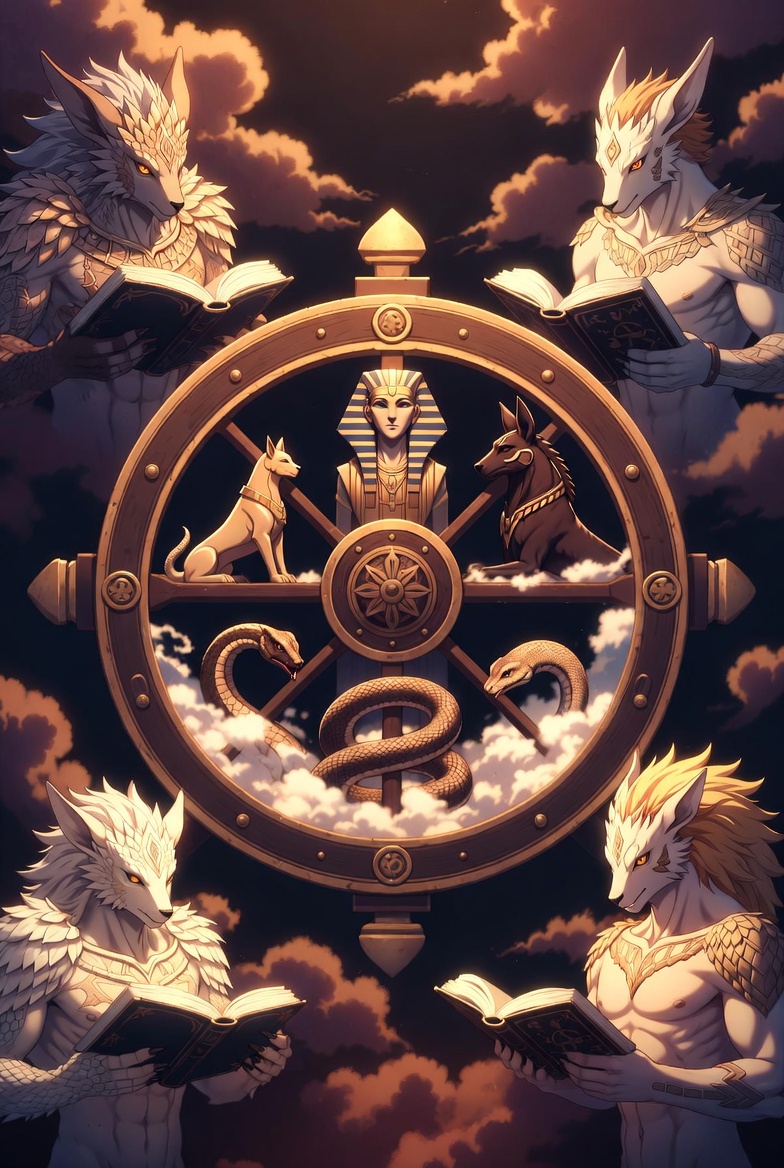
“But the images,” says the myth. “The Hanged Man! The Tower! Surely that’s secret symbolism.” It’s a fair instinct, and the answer is more interesting than the myth. To the people who ordered these cards, every single trump was instantly familiar. The sequence is a parade of the Renaissance’s stock images. The same figures marched through their real streets, and hung on their real walls.
The Wheel of Fortune was the most common allegory of the whole Middle Ages: Fortune turning her wheel while kings rise and fall. The Pope and the Emperor were the two powers everyone lived under. (Our deck, like most modern ones, calls the Pope the Hierophant. That’s a Victorian renaming, and we’ll get to it.) Death rode through every town’s plague art. Justice, Temperance and Strength are three of the four cardinal virtues, straight off church walls. Even the Hanged Man is ordinary once you know one fact: traitors in Italy were painted hanging by one foot on the walls of public buildings. It was the Renaissance version of a wanted poster.
The trumps look mysterious to us because we’ve forgotten the visual language. In 1450 they were about as cryptic as a deck drawn with traffic lights, celebrities and emoji would be now. The mystery wasn’t designed in. It gathered like dust, as the world that could read these images died away. And into that gap of forgetting stepped a man with a theory.
Act Two: 1781, the Year Egypt Was Invented
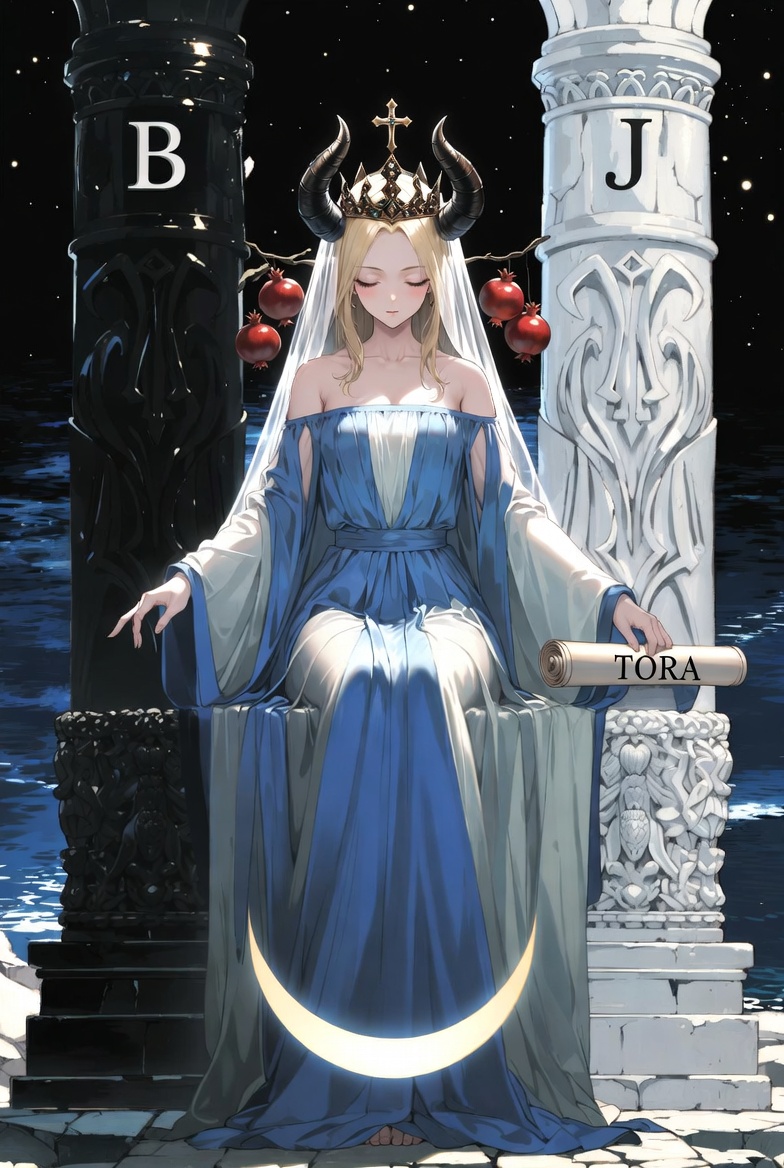
Antoine Court de Gébelin was a pastor and amateur scholar in pre-Revolution Paris. He was writing a sprawling encyclopedia about the lost wisdom of the ancient world. In 1781, in volume eight, he described watching tarot played at a friend’s salon. He had a revelation on the spot. This was no card game. This was the Book of Thoth: the wisdom of ancient Egyptian priests, hidden as a game so it could survive the centuries.
His evidence, in full: the pictures felt Egyptian to him. That’s it. And here’s the delicious detail that explains why the claim stuck: in 1781, nobody on earth could read a hieroglyph. The Rosetta Stone wouldn’t be found until 1799, or cracked until 1822. Egypt was a blank canvas, and fashionable Paris could project anything onto it. Gébelin died in 1784, decades before anyone could check. When the hieroglyphs were finally read, they turned out to hold tax records, hymns and royal boasts. No card games. By then the story had a forty-year head start, and a good story with a head start is nearly impossible to catch.
It went commercial fast. A Paris print-seller and self-taught mystic called Jean-Baptiste Alliette, writing under his reversed surname “Etteilla”, became history’s first professional tarot reader. He published on card divination in 1785 and produced the first deck designed for fortune-telling by 1789. Whatever else you say about him, Etteilla invented the job. People had told fortunes with cards before (people will divine with anything; they always have). But tarot-as-oracle, with printed meanings and a system, starts here: in a Paris shop, about two hundred and forty years ago.
One more myth to retire beside Egypt, and it’s worth saying carefully. Tarot wasn’t brought to Europe by Romani travellers either. The timeline runs the other way: the cards were at Italian courts before any record of Romani card-reading. The link mostly comes from the same French craze, plus one sad accident of language: “gypsy”, the name Europe wrongly gave the Romani, literally means “Egyptian”. Romani readers later took up the trade, and took it seriously. But they inherited the deck like everyone else. The Egypt in the story was always imaginary. It just kept getting pinned on different people.
Act Three: The Victorians Build the Machine (1850s–1909)
Gébelin supplied the myth. The next century supplied the engineering. In the 1850s, the French occultist Eliphas Lévi bolted tarot onto the Hebrew alphabet and Kabbalah. Twenty-two trumps, twenty-two letters: too neat to resist. The deck became the centrepiece of Western occultism. Then in 1888, a London secret society called the Hermetic Order of the Golden Dawn did what Victorians did best. They organised it. Every card got a star sign or planet, an element, a Hebrew letter, a title, and a place in one great cross-referenced machine. The number cards were mapped onto the thirty-six decans of the zodiac: ten-day slices of the year that our own tarot calendar still runs on. The court cards were reshuffled and renamed, which is why some decks say Page and Knight where others say Princess and Prince. Ours follows the Golden Dawn line. Even the banishing ritual we teach comes from that same 1888 curriculum.
Say what you like about the Golden Dawn’s theatrics. Their system is the operating system of nearly every deck you can buy today. And two of their members shipped the interface. In 1909, A. E. Waite hired a working artist and fellow member named Pamela Colman Smith to design a deck for the publisher Rider & Co. Smith did something no major deck had done for centuries: she illustrated all seventy-eight cards as full scenes. The number cards got pictures and stories, instead of rows of cups and swords. She was paid a flat fee, got no royalties, and died poor. Her initials hide in the corner of every card of what the world learned to call the Rider-Waite deck. These days you’ll often, rightly, hear Rider-Waite-Smith. Aleister Crowley’s painterly Thoth deck followed (painted in the 1940s with Lady Frieda Harris, published 1969). The 1970s made tarot a mass-market object. The deck in your drawer descends from some blend of all of it. (Choosing between these lines today is its own practical question, and our first-deck guide walks it properly.)
So when you hold a modern tarot deck, you are holding, in one stack of card: a Mamluk suit system, an Italian parlour game, a Renaissance picture parade, a French myth, a Victorian filing cabinet, and one underpaid Edwardian illustrator’s storyboards. Six centuries of real, documented, human invention.
Why the True Story Beats the Myth

Here’s where you might expect a tarot site to get defensive. Let’s do the opposite. We think the real history is a straight upgrade, for two reasons.
First, the myth gets the mechanism wrong. The Egypt story implies the cards work because they carry ancient authority: that the wisdom is in the deck, installed at the factory by temple priests. But tarot doesn’t work that way and never did. The deck knows nothing. You know everything. A reading is your own mind meeting a well-made image. That mechanism needs zero ancient credentials. It would work with cards invented last Tuesday, and in a sense that’s exactly what it is: every era rebuilt the meanings to fit the humans in front of it. The meanings feel deep not because they’re old, but because they were tested. Centuries of readers kept what landed and dropped what didn’t. Natural selection, running on pictures of human life. That’s not a lesser origin than Thoth. It’s a better one, because you can watch it still happening.
Second, the myth undersells how genuinely old the practice is. Two hundred and forty years of continuous card-reading is old. The images themselves are pushing six hundred. There are national religions younger than the habit of asking a tarot deck about your love life. You don’t need to borrow age from imaginary Egypt when the real thing is sitting right there in a Milanese wedding present. It’s partly why the “is this evil occult stuff” worry misfires too: the deck’s life story is a game, a fad and a filing system, not a summoning.
We hold this site to the same honesty standard on data, so here’s the honest-uncertainty corner. Historians genuinely don’t know where the word tarocchi comes from, or whether Milan, Ferrara or Bologna dealt the first trump. Even the famous “Charles VI” deck in Paris, long dated to 1392 by a stray royal payment record, turned out to be Italian and eighty years younger. Real history has gaps and says so. That’s how you tell it from the other kind.
The Bottom Line
Tarot comes from a 1440s Italian card game, wearing the Renaissance’s most familiar imagery. It was reinvented as an oracle by a Frenchman in 1781, whose Egypt theory arrived before anyone could read Egyptian. It was engineered into its modern form by Victorian occultists, and by one brilliant, under-credited illustrator in 1909. Every step is documented, human and slightly chaotic. Which is to say: it’s a history, not a myth.
None of that makes the cards shallower. It makes them ours. The deck was never a message from ancient priests. It’s six hundred years of people building a better mirror, and it’s still under construction.
FAQ
Is tarot really from ancient Egypt? No. The Egyptian origin was invented in 1781 by Antoine Court de Gébelin. He declared the deck a lost Egyptian holy book based on nothing but how the pictures struck him, eighteen years before the Rosetta Stone was found and four decades before hieroglyphs could be read. The only real Egyptian link: Europe’s ordinary playing cards arrived through trade with Mamluk Egypt in the 1370s.
How old is tarot? The deck is nearly six hundred years old. Trump cards appear in Italian court records in the 1440s, and the oldest surviving painted cards date to around 1450. Tarot as a fortune-telling practice is younger but still genuinely old: roughly two hundred and forty years, made into a profession in 1780s Paris by Etteilla.
What is the oldest tarot deck? The oldest largely surviving deck is the Visconti-Sforza tarot: hand-painted and gilded around 1450, probably by Bonifacio Bembo, for the ruling family of Milan. Much of it now lives in the Morgan Library in New York. Fragments of other Visconti decks are slightly earlier.
When did tarot become about fortune-telling? In the 1780s. Gébelin’s 1781 essay supplied the mystique, and Etteilla turned it into a profession: he published on tarot divination in 1785 and issued the first purpose-built divination deck by 1789. Before that, tarot spent three and a half centuries as a trick-taking card game. In France, it still is one.
Why do tarot cards look the way they do? The deck most people picture was drawn in 1909 by Pamela Colman Smith, working with A. E. Waite and the Golden Dawn’s system. The trump imagery itself is far older: stock Renaissance scenes (Fortune’s wheel, the virtues, Death, the Pope) that any fifteenth-century Italian would have known on sight.
Six hundred years of people asking a deck good questions, and the deck is still listening: pull a free online tarot reading →, no ancient priests required.
forum Comments
Loading comments…