
Somebody typed “is tarot evil” into a search bar at one in the morning. There’s a decent chance it was one of two people. The first is curious about the cards, and carrying a knot of guilt about it. Usually that comes from a religious upbringing that treated a tarot deck roughly the way it treated a ouija board. The second isn’t curious at all. They’re worried, because someone they love has started pulling cards, and everything they were taught says that’s a door better left shut. (If the someone is your teenager, we’ve since written a guide just for you.)
Both of you deserve a straight answer. Not a sales pitch, and not a sneer. So here’s the honest version, from people who work with these cards every day. What tarot actually is. Where the fear comes from (it has real roots, and we’ll treat them with respect). What a modern practice does and doesn’t involve. And what we’d genuinely say to a person of faith standing at this particular fence.
The short version, if you want it now: the cards are not evil, but the question isn’t silly, and the answer depends a lot on what you’d actually be doing with them. The long version is more useful.
Where the Fear Comes From (It Isn’t From Nowhere)
Let’s take the concern seriously first. Dismissing it would be both rude and wrong.
If you were raised in a Christian, Jewish or Muslim household, the unease has scripture behind it. The Hebrew Bible is genuinely severe about divination. Deuteronomy forbids consulting fortune-tellers and omen-readers, and that thread runs through centuries of religious teaching. The concern was never really about card stock. It was about two things: seeking hidden knowledge of the future from powers other than God, and handing your decisions to something that isn’t Him. Within those faiths, these are serious, coherent concerns. Anyone who tells you they’re just superstition is not respecting you or the tradition.
Now add a century of horror films. Add the 1980s satanic panic. Add the fact that one card in the deck literally has “Devil” written under it. The reputation writes itself. If everything you knew about tarot came from cinema, you’d be worried too. But a fair verdict needs the actual facts of what the thing is. So here they are.
What Tarot Actually Is (The History Is Surprisingly Boring)
Tarot was born in fifteenth-century Italy as a card game. Not a ritual. Not a spell book. A trick-taking game, played by wealthy families, using a deck with an extra suit of picture cards. Nobles ordered beautiful hand-painted decks the way they ordered portraits. For its first three hundred years, “tarot” meant roughly what “bridge” means now. In parts of Europe, the game is still played today.
The occult reputation arrived much later, in the 1700s and 1800s. French and English mystics dressed the deck in secret meanings, Egyptian origin myths (invented, and we can name the inventor; the deck is Italian), and ceremonial systems. That’s the layer the horror films inherited. It’s real history. But it’s a coat the deck put on three centuries into its life, not what the thing is made of.
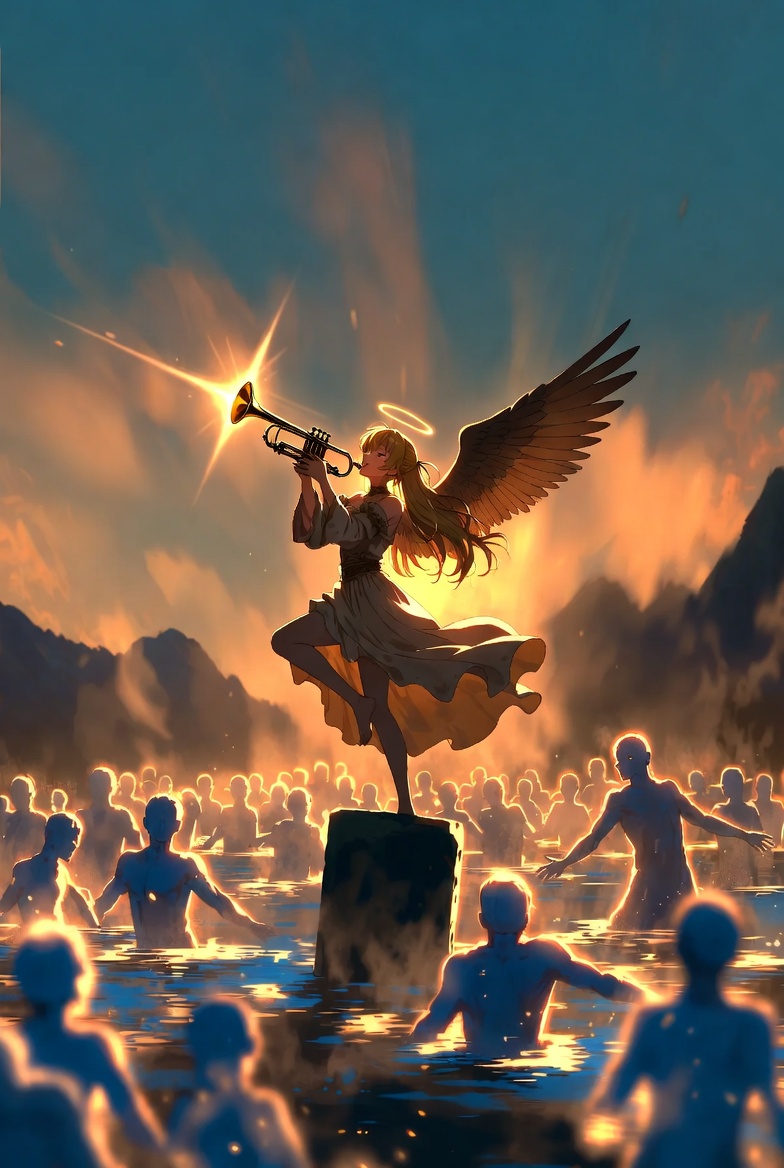
And here’s the detail that surprises almost everyone worried about the deck’s loyalties: classic tarot imagery is soaked in Christian symbolism, because it was made by and for Christian Europe. Judgement is an angel sounding the trumpet of resurrection, straight from Revelation. The Hierophant is a pope, keys and all. Temperance is an angel. The Lovers, in early decks, echoes Eden. Whatever the cards are, they are not images smuggled out of some rival camp. They’re mostly the same religious art you’d find on a cathedral wall, shuffled.
What a Modern Reading Actually Involves (And Doesn’t)
Now the part that matters most. “Is it evil” really turns on “what happens when someone does it.”
Here’s a modern reflective reading, in full. A person sits down with a question about their own life. They draw a card at random. They look at the image and ask what it stirs up. The card of endings lands, and they finally admit a chapter is over. The card of rest lands, and they notice how tired they are. They think, maybe write a line in a journal, and get on with their day. That’s the entire event. We’ve written elsewhere about why this works. The mechanism is your own mind meeting a striking image, and it runs on nothing more supernatural than the reason a good novel can make you cry.
Notice what’s absent. Nothing is summoned, consulted or petitioned. No spirits are addressed. No messages arrive from anywhere outside the reader’s own head. Nothing is worshipped. No power is asked for hidden knowledge. Our own house rules, repeated across this blog, push in exactly the opposite direction from the old fear. The cards get an opinion, not a vote. They’re a mirror, not a manager. They can’t tell your future, and anyone claiming otherwise is overreaching. The thing scripture warned about, handing your future and your decisions to an oracle, is precisely what a healthy tarot practice refuses to be.
Is there a version of card-reading that does claim to contact spirits or read fate? Yes. Corners of the practice talk that way, and if that troubles you, we’d quietly agree it should. But that’s a choice some people bring to the cards, not something the cards are. The deck in the drawer is seventy-eight pictures. What happens at the table is up to the person sitting there.
About That Card: The Devil, By Name
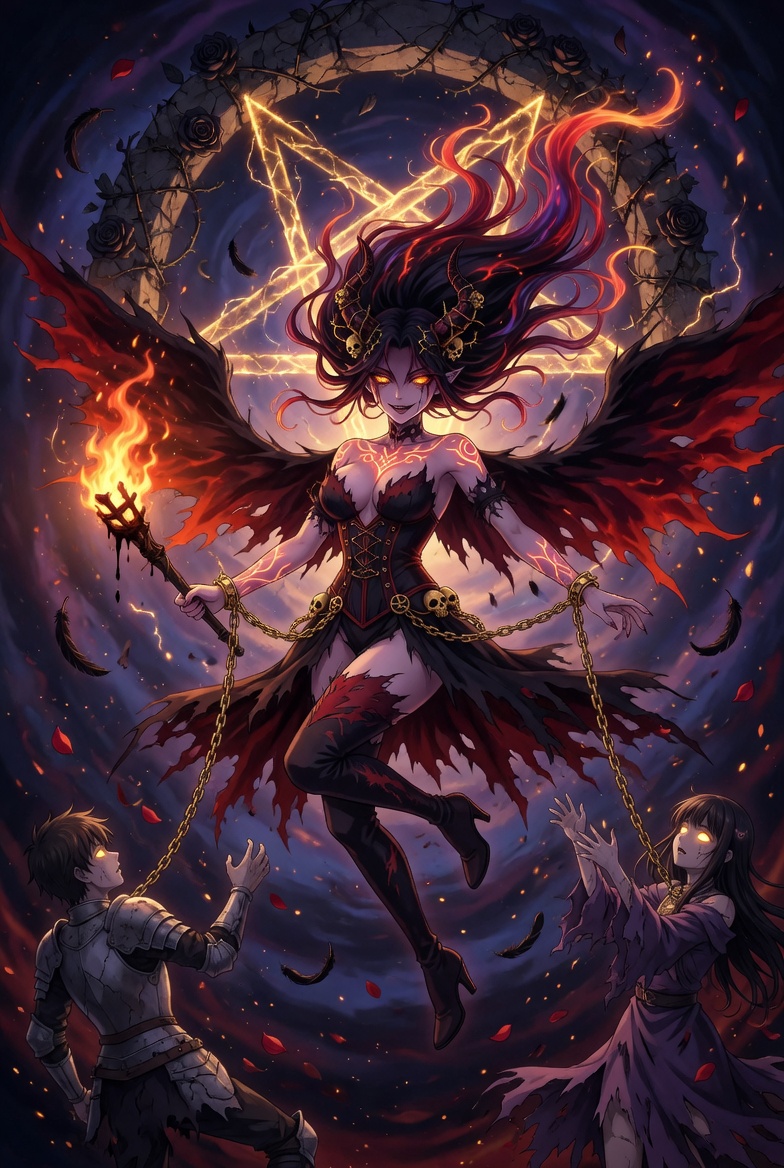
The card that does the most damage to tarot’s reputation deserves its own paragraph. Yes, the Devil is in the deck. Here’s what it’s for.
Look at the image. Two figures are chained beneath a horned beast, and the chains around their necks hang loose. They could lift them off. They don’t. The card is a sermon, and its subject is self-made chains: addiction, obsession, the habit you pretend you can quit, the relationship or grudge you keep choosing. Far from celebrating anything, it’s the deck’s sternest warning. Drawing it is about as much an invitation to darkness as a motorway sign showing a crash is an invitation to crash. Medieval churches painted devils on their walls for the same reason: to name a danger, not to recommend it.
The same goes for Death, the other card that frightens newcomers. It doesn’t predict anyone dying. It’s the card of endings and change, closer to autumn than to a funeral. The scary-looking cards are the deck’s hard truths, not its loyalties.
If You’re the Worried One (A Word for Parents and Partners)
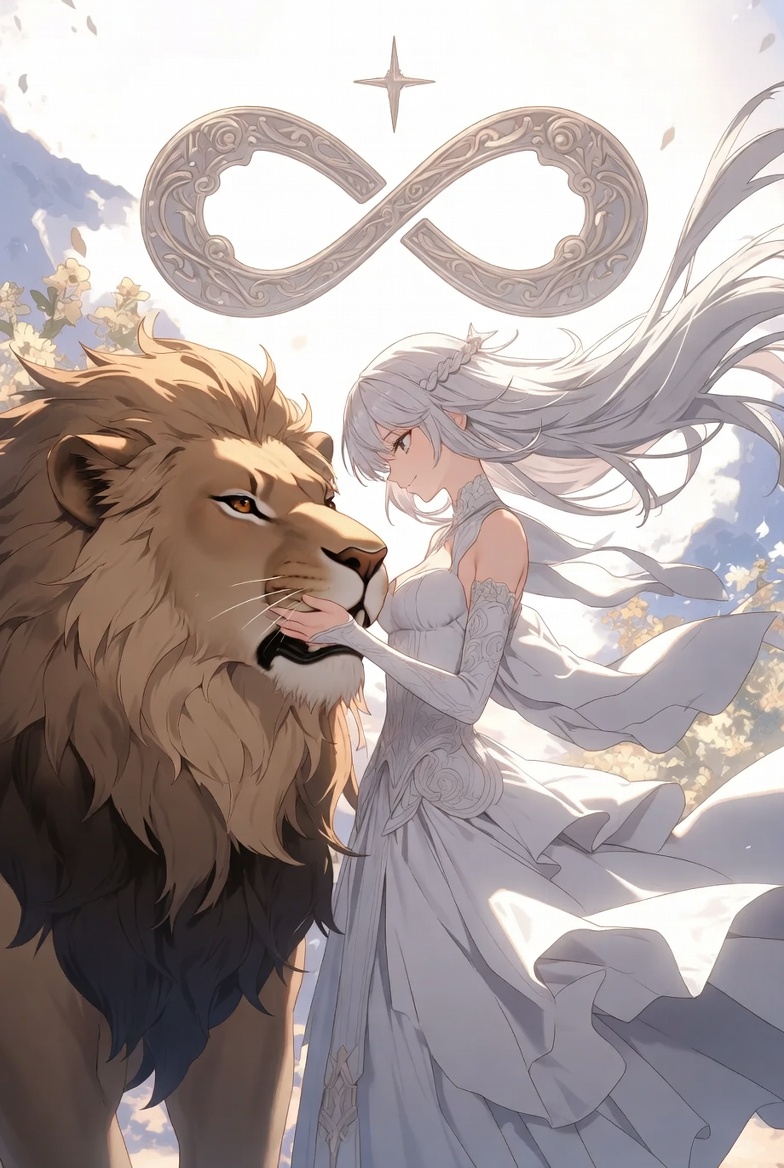
If you landed here because someone you love has taken up the cards, here’s an honest field guide. It comes from people who write constantly about the line between healthy and unhealthy practice.
What a healthy practice looks like: a few quiet minutes with a card and a journal. Reflection, better questions, some words for feelings. The person still makes their own decisions, still functions, and treats the cards somewhere between a mindfulness habit and a book club with pictures. If that’s what you’re seeing, you’re looking at journalling with unusually good illustrations. The kindest move is curiosity: ask them what today’s card was. You may be surprised how ordinary the answer is.
What’s actually worth worrying about, and we say this as a tarot site: someone who can’t make decisions without pulling cards. Someone who re-draws until they get the answer they want. Someone spending money they don’t have on readings, or treating every hard card as a doom sentence. That’s not spiritual danger. That’s dependence, and it deserves the same gentle concern you’d bring to any unhealthy habit. (Our own writing tells readers to put the deck down in exactly these cases, and our consumer guide covers the paid version of the trap, including the curse-removal scam that preys on exactly the worries this post is about.)
The fear usually imagines a door creaking open. What’s almost always actually there is a person trying to understand themselves with the tools that reached them. Meet that person, not the film version.
Can Christians (or Anyone of Faith) Use Tarot?
The most honest answer we can give: that’s between you, your tradition, and your conscience. And we mean that respectfully, not as a dodge.
Plenty of people of faith use the cards comfortably as a reflection tool. They treat the figures the way they’d treat characters in literature: mirrors for self-examination, with their prayer life untouched and their decisions still their own. Some Christians point out that examining your conscience is about as traditional a practice as exists. Others, and some whole denominations, hold that the cards’ fortune-telling history puts them off-limits, no matter how they’re used. If that’s your tradition’s position, or your own conviction, we’re not here to talk you past it. A practice meant to bring peace is worthless if it costs you yours. There is no version of this where we tell you your conscience is wrong.
What we can tell you is what’s true on our side of the table. Nothing in a reflective reading asks you to believe anything, worship anything, or receive anything from anywhere. If your conscience is comfortable with a journal, an inkblot and an honest question, the mechanics here are the same. If it isn’t comfortable, close the tab with our genuine blessing. And take the underlying instinct, reflection, with you. It works in plain prayer and plain journalling too.
The Bottom Line
Is tarot evil? The deck is a six-hundred-year-old stack of pictures. It began as a card game, borrowed most of its imagery from Christian art, and today mostly serves as a structured way to think about your own life. Nothing is summoned and nothing is worshipped. The modern practice, done honestly, is closer to journalling than to anything the horror films imagined. And the scariest cards in the box are warnings, not invitations.
The old religious concern, don’t hand your future and your choices to an oracle, was and is a serious one. The healthiest tarot practice agrees with it. Mirror, not manager. An opinion, never a vote. Your decisions, always yours. And if your faith or your conscience says the cards aren’t for you, that’s a boundary worth honouring, not arguing with.
The deck has never had any power you didn’t bring to the table. That’s the whole secret, and it’s also the reassurance.
FAQ
Is tarot evil or demonic? No. The deck began as a fifteenth-century Italian card game. Its classic imagery is drawn largely from Christian art, and a modern reflective reading involves no summoning, worship or contact with anything. It’s a person thinking about their own life with the help of a striking image. The “demonic” reputation comes from cinema and the deck’s later occult makeover, not from what the cards are or how they’re used here.
Is reading tarot cards a sin? That depends on your tradition, and we won’t pretend otherwise. The old religious bans target divination: seeking hidden knowledge of the future, and handing decisions to an oracle. A reflective practice deliberately avoids both. That’s why some people of faith are comfortable with it, while some traditions rule the cards out entirely, however they’re used. If your conscience or your church says no, honour that.
Do tarot cards open doors or invite spirits in? A reading, as practised here and by most modern readers, addresses no spirits and receives nothing from outside your own mind. You look at a picture and notice what it stirs up. There is nothing in that mechanism for a door to be part of. People who feel uneasy after readings are usually reacting to what the cards surfaced from their own inner life. That can be startling. But it came from within, not through.
What does the Bible actually say about tarot cards? Nothing directly; the deck arrived a millennium and a half after scripture. The relevant passages (Deuteronomy 18, Leviticus 19, Isaiah 47) condemn divination, sorcery and consulting mediums about the future. Whether a reflective, no-fortune-telling use of cards falls under that ban is exactly where sincere believers disagree. That’s a conversation for you and your own tradition, not a tarot website.
Is tarot dangerous in any way? Not spiritually, in our honest view. But like any reflective tool it has an unhealthy mode: dependence. Someone who can’t decide anything without the cards, redraws until they like the answer, or spirals over hard cards should put the deck down, and everything we write says so. The danger was never the cards. It’s what any comfort becomes when it replaces your own judgement.
Can I try tarot without believing in anything? Yes, and that’s exactly how we’d suggest you try it. No belief is needed for a card to work as a mirror. You react to an image, and your reaction tells you something about you. If you’re curious but cautious, one card and an honest question is the whole experiment. You stay the only authority at the table throughout.
Curious, with your conscience at ease? Pull a free online tarot reading →, no sign-up, no belief required, nothing asked of you but an honest look at one card. And if you’ve decided the cards aren’t for you, we genuinely hope the reflection habit finds you another way.
forum Comments
Loading comments…