
Every era gets its wellness vocabulary. A few years ago everything was mindfulness. Then it was dopamine. Right now, the phrase on everyone’s lips is nervous system regulation, and for once the trend is pointing at something real. The exhaustion so many people feel isn’t laziness and isn’t fixed by another productivity system. It’s a body stuck in threat mode: shallow sleep, tight jaw, brain fog, that wired-but-drained feeling of running on an alarm that never switches off.
The industry response has been predictable. Cold plunges, cortisol supplements, vagus nerve gadgets that clip to your ear, retreats that cost a month’s rent. Some of it helps. Most of it is expensive packaging around one modest truth: nervous systems settle through slow, repeated signals of safety, and those signals are mostly free.
Here’s the part nobody puts on the label. A tarot practice, the plain kind, one card and a few honest minutes, delivers several of those signals at once. Not because the cards are magic, but because of what the ritual makes your body do. If you already pull a daily card, you’ve been doing low-grade nervous system work without the vocabulary. This post gives you the vocabulary, and a five-minute version designed for the days the alarm won’t stop ringing.
What “Regulation” Actually Means (Without the Jargon)
Strip away the influencer gloss and the idea is simple. Your autonomic nervous system runs a threat dial. One end is fight-or-flight: heart up, breath short, attention narrowed to scanning for danger. The other end is rest-and-digest: the state where food digests properly, sleep goes deep, and thinking gets flexible again. The dial is supposed to move freely between them, up for the near-miss in traffic, back down when it passes.
Modern life jams the dial high. Not through real emergencies, but through a drip of small unresolved alarms: the inbox, the news, the notification, the argument you keep rehearsing. None big enough to discharge, all together enough to hold you at a low simmer. “Dysregulated” is just the word for a dial that’s forgotten how to come down.
Regulation, then, is a skill rather than a purchase or a personality trait: sending the body enough believable safety signals that the dial drops. The classics are unglamorous: long exhales, slow repetitive movement, warmth, naming what you feel, focusing on one near thing instead of scanning many far ones. Keep that list in mind, because in a minute you’ll notice something about a card pulled at a kitchen table.
The Nine of Swords: Your Body at 3am
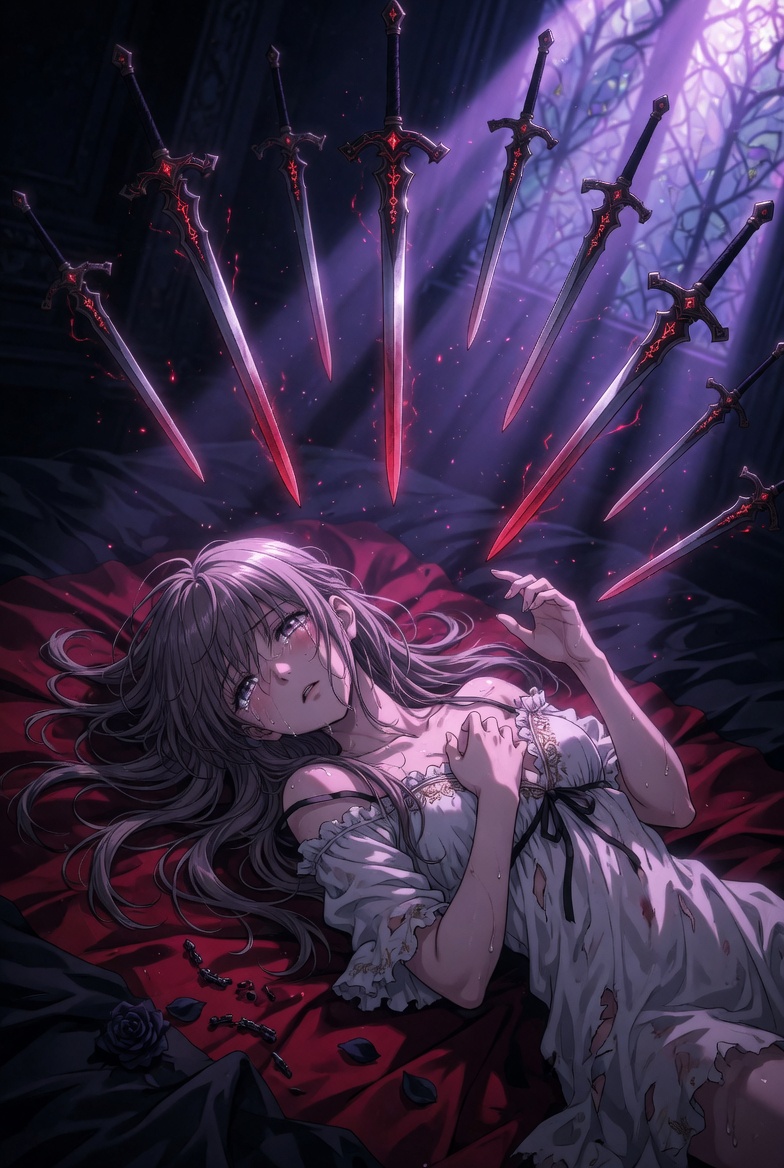
Tarot drew the dysregulated state centuries before anyone had the physiology for it. The Nine of Swords shows someone bolt upright in bed, face in hands, nine swords stacked on the wall behind them. It is the 3am card, and everyone who has ever been awake at that hour recognises it instantly.
Look at where the swords are, though, because the card hides its whole point there. They’re on the wall. Not in the figure, not falling, not even within reach. Mounted. Decorative, almost. The threats are real enough as thoughts, and completely inert as objects in the room. Nothing in the image is attacking; the attack is being staged entirely from inside, by a mind replaying the day’s alarms to a body too tired to fact-check them. The deck’s own tagline for this card says it straight: the night makes everything worse than it is.
That’s what a jammed threat dial feels like from the inside. And the card offers the first regulation move for free: seeing the state from one step outside it. “I’m in the Nine of Swords right now” is a different sentence from “everything is falling apart.” The first one has a you who is looking at the panic rather than being it. Psychologists call this affect labeling, putting feelings into words, and brain imaging studies have shown it genuinely dampens the amygdala’s alarm response. Naming the state starts turning the dial down. The card is a naming device you can hold in your hand.
The Four of Swords: The Downshift Is a Skill
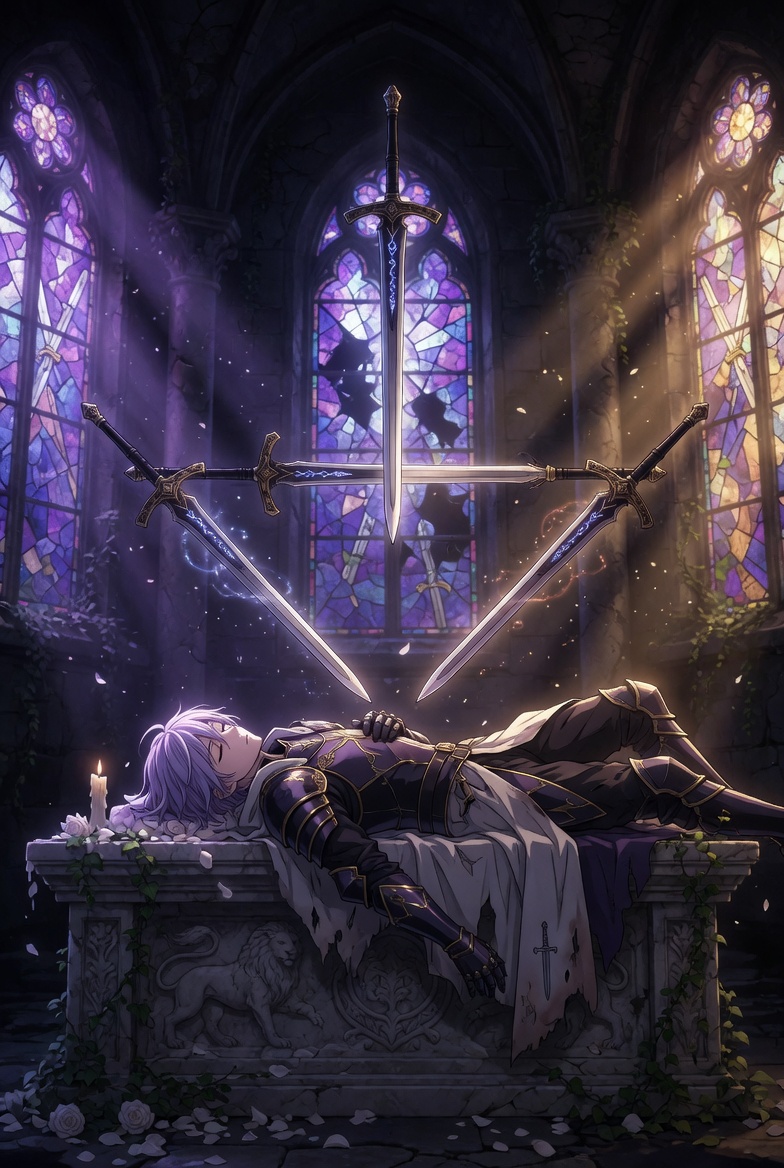
If the Nine of Swords is the problem, the Four of Swords is the prescription, and it’s a strange, striking image once you actually look at it: a knight lying flat in a chapel, armour still on, hands folded, three swords hung on the wall and one laid beneath him. Not dead. Resting. On purpose, in the middle of a war he hasn’t finished.
Every detail matters for our purposes. The armour stays on: a tactical pause, with retirement and surrender nowhere in the picture. The swords are hung up but close: the problems still exist, and he has stopped holding them for an hour anyway. The deck’s tagline calls it exactly: stillness is not weakness, it is strategy.
This is the card of the deliberate downshift, and it names the skill our culture has most completely lost. We treat rest as what happens when we run out of tasks, a leftover, a reward for the finished. The Four of Swords treats rest as a move you make while things are still unresolved, because a nervous system that only rests when everything is handled will never rest at all. There is always one more sword to hold.
When this card shows up, or when you choose it, the question it asks is physical, not philosophical: what would it look like to put the swords on the wall for one hour tonight? Phone in the other room, shoulders actually dropped, jaw actually unclenched. Not solving. Racking the weapons. The dial cannot come down while your hands are full of blades.
The Star: What Regulated Actually Feels Like
Most regulation content tells you how to escape the bad state and never describes the good one, which is like giving directions to a town no one has shown you a picture of. Tarot has the picture. It’s the Star.
A figure kneels by a pool under a wide night sky, pouring water from two jugs, one onto the earth, one into the pool. No armour anywhere in sight now. One knee on the ground, one foot resting on the water’s surface, bare, unhurried, completely unguarded. In the sequence of the Major Arcana this card comes directly after the Tower, the deck’s card of catastrophe and collapse. That placement is the whole teaching: this is what the body feels like after the alarm has finally discharged. Not triumphant. Not euphoric. Just quiet, open, and able to pour.
Notice what the figure is doing: slow, repetitive, useful motion. Water onto the garden, water into the pool, at the pace water actually moves. That’s the regulated state in one image, attention resting on one near thing, hands busy with something simple, nothing scanning the horizon. Your version might be watering actual plants, walking without a podcast, or the small ritual of shuffling a deck of cards. The content matters less than the tempo.
Keep this card somewhere you’ll see it. Not as a goal to achieve by Friday, but as a compass heading. On the bad nights, the distance between the Nine of Swords and the Star is not a personality transplant. It’s a dial, and dials turn.
The Practice: The Five-Minute Downshift
Here’s the whole thing. It’s built from the safety signals that actually move the dial, with a card as the centrepiece, and it’s deliberately small enough to do on a bad night. A physical deck or a free online tarot reading both work.
The Downshift
- Feet and exhale first. Both feet on the floor. Five breaths where the exhale is longer than the inhale, count four in, six out. The long exhale is the body’s built-in brake lever; you’re pulling it before you deal with any content.
- Shuffle slowly, or scroll slowly to your draw. The point is repetitive motion at water-pace, not speed. Thirty seconds minimum.
- Pull one card and describe it out loud before you interpret it. Three things you can literally see. “A figure. Nine swords on a wall. The swords aren’t touching them.” Description parks your attention on one near object, which is the opposite of threat-scanning.
- Name the state it touches. One sentence: “this card lands on the work worry” or “this is the 3am feeling.” That’s the affect labeling step, the one with the brain imaging behind it. Say it, don’t just think it.
- One line in a notebook, then stop. What you named, and one thing that’s true from the Star’s side of the dial: something in the room, tonight, that is actually fine. Close the notebook (or write the line in your journal here). The ritual ends on purpose, which is itself a safety signal: things around here finish.
Total: about five minutes. Done nightly, it compounds: each run teaches the dial the route down, and dials, like paths, get easier with traffic. (The Downshift sits in the evening chapter of our complete guide to tarot spreads, next to its bedtime and anti-scroll cousins.)
An Honest Note on the Science
Fair is fair: no study has tested tarot cards as a nervous system intervention, and I’m not going to pretend otherwise. What the research does support is nearly every component the practice is built from: extended exhales activating the parasympathetic brake, affect labeling dampening amygdala response, focused attention on a single object interrupting rumination, and predictable ritual reducing anticipatory stress. The card is the delivery vehicle that makes you actually do those things, the way a lead makes you actually walk. If you’d rather get the same components from breathwork and a journal, that works too. The deck’s advantage is that it’s interesting enough to return to, and a practice you return to beats a perfect one you abandon. (This post now anchors a complete guide for anxious minds: when the cards help, when they feed the loop, and a practice for every shape of worry.)
And the boundary, stated plainly: this is a practice for everyday stress, the simmer, the 3am wobble. Panic attacks that recur, anxiety that’s running your decisions, trauma responses, or a body that never comes down no matter what you do, those deserve a trained professional, a GP or a therapist, not a better ritual. A card can help you notice you’re stuck in the Nine of Swords. If you’re living there, that’s the signal to bring in someone qualified, and doing so is the strongest regulation move there is.
The Bottom Line
Nervous system regulation is the rare wellness trend that’s pointing at something true: most of us are running with the threat dial jammed high, and the fix is not more effort but more believable signals of safety. Slow exhales. One near thing to look at. A feeling named out loud. A ritual that ends.
A deck of cards happens to bundle all of those into five minutes that you’ll actually do. The Nine of Swords gives you a name for the stuck state. The Four of Swords gives you permission to rack the weapons before the war is over. The Star shows you where the dial goes when it finally turns.
You don’t need a gadget on your ear. You need a reason to sit down, breathe out slowly, and look at one thing. The cards have been that reason for a few hundred years.
FAQ
Can tarot really calm your nervous system? The card itself doesn’t; the practice around it does. A slow ritual with extended exhales, focused attention and naming your feelings hits several evidence-backed regulation levers at once, and the card is what gets you to sit down and do them. Think of it as a delivery mechanism for the boring stuff that works. We’ve since collected ten of those levers as one-minute practices, each hung on a card that remembers it for you, in Grounding with the deck.
What are the signs of a dysregulated nervous system? The common ones: shallow or fragmented sleep, a tight jaw or shoulders that won’t drop, brain fog, snappiness over small things, and that wired-but-exhausted feeling where you can’t focus and can’t rest either. If that’s your baseline rather than a bad week, it’s worth raising with a doctor as well as working on yourself.
Which tarot cards represent anxiety and calm? The Nine of Swords is the deck’s picture of night-time anxiety, a mind staging an attack the room isn’t making. The Four of Swords is deliberate rest as strategy. The Star is the regulated state itself: quiet, open, unguarded. The Moon and the Eight of Swords also map anxious states worth naming.
How long does it take to regulate your nervous system? Minutes for one downshift, months for a new baseline. A single slow-exhale practice can move the dial the same evening, and the deeper change, a system that comes down on its own, comes from small repetitions over weeks. Five minutes nightly beats an hour once a fortnight.
Is this a replacement for therapy or medication? No. It’s a daily maintenance practice for ordinary stress. Recurring panic, persistent anxiety or trauma responses need professional support, and a regulation ritual works alongside that, not instead of it.
Alarm still ringing from today? Pull a free online tarot reading →, no sign-up needed. Feet on the floor, breathe out slow, and let one card give your attention somewhere quiet to land.
forum Comments
Loading comments…