Symbols in Tarot: A Small Reference
The deck’s recurring vocabulary: lights, flowers, creatures, objects and landscapes, each symbol read once and then recognisable everywhere it appears.
How to Read a Symbol (and How Not To)
Tarot's images are built from a surprisingly small vocabulary. The same sun, rose, blindfold, mountain and chain come back across the seventy-eight cards. Once you can read that vocabulary, every card becomes partly readable on sight, including cards you have never studied. This page is the vocabulary in one place: the third of our small references, sitting beside the glossary of terms and the numbers guide.
Two honest rules before the entries. First, a symbol is a vocabulary word, never a code. The blindfold does not "mean" one fixed thing the way a road sign does. It marks a theme, and the card and question around it finish the sentence. The most useful symbol in any reading is simply the detail your eye snags on, because your attention was the last shuffle. Second, decks translate. The entries below say where the classic Rider-Waite tradition puts each symbol, because that tradition is tarot's shared reference language, and our own card pages describe it entry by entry. Your deck, ours included, may move a symbol, redraw it, or trade a dog for a wolf. The meaning travels with the symbol wherever your deck has planted it, and every entry is written to survive the move.
Part One: Lights
Tarot is obsessed with illumination: what kind of light a scene happens under tells you how much of it can be trusted.
The sun#
Direct light: clarity, life, things seen as they are. A sun in the frame marks honesty on offer, warmth earned, or daylight arriving on something hidden. Even on hard cards, a rising sun in the background is the tradition’s promise that the scene can be survived.
Moonlight#
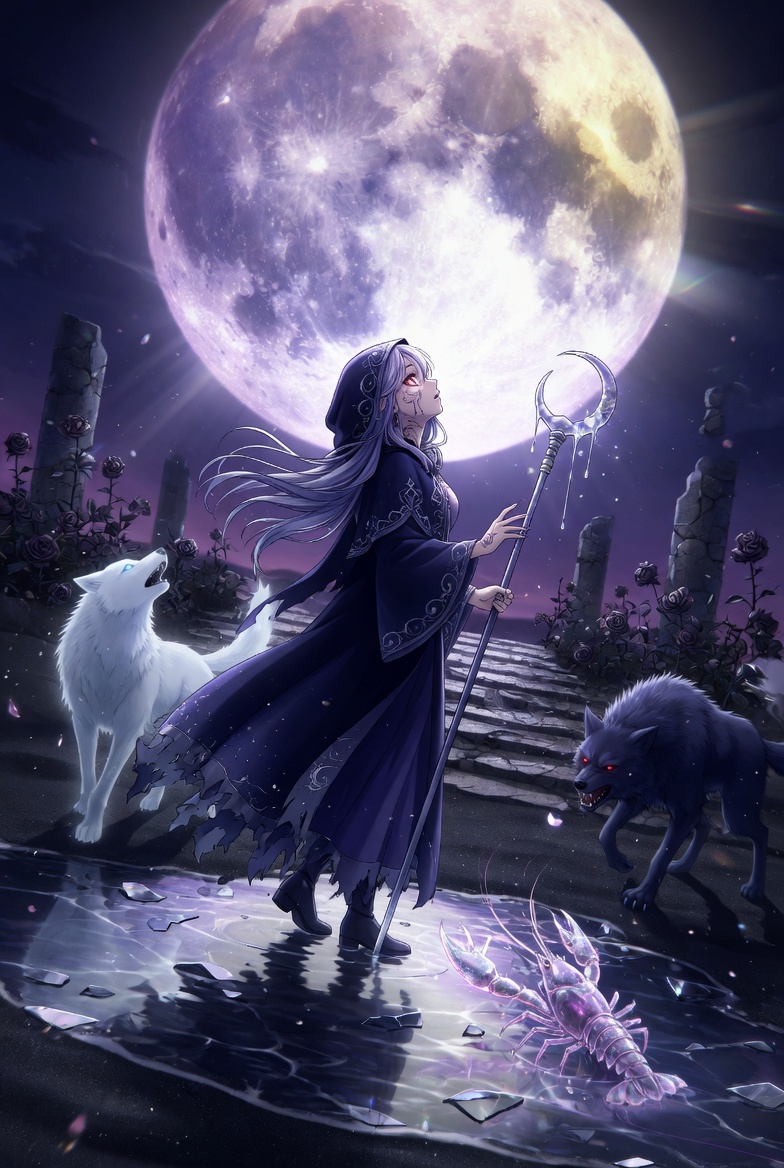
Borrowed, partial light: intuition, imagination, and their shadow side, distortion. Moonlight marks scenes where you are working from half the facts and filling the gaps yourself. A crescent hanging over a card is a quiet caution: some of what you see here is you.
Stars#
Distant, steady light: hope, guidance, a bearing to steer by. Stars mark what you navigate by rather than what you can reach today. Crowns of stars stretch the idea to authority over time and cycles: rule measured in seasons, never in evenings.
The lantern#
Carried light. The tradition puts a six-pointed star inside the Hermit’s lantern: wisdom that is ancient but portable. A lantern lights one step at a time and belongs to whoever carries it. It marks self-knowledge, deliberate searching, and light used rather than just admired.
Part Two: Flowers and Growing Things
Plants mark what is being cultivated, and the tradition is precise about species.
The rose#
Desire and passion when red; a clean motive when white. The white rose in the Fool’s hand at the journey’s start returns on Death’s black flag near its end. Same innocence, carried all the way through. One flower quietly stitches the whole Major Arcana together.
The lily#
Knowledge, clear thought, intention without appetite. The tradition plants lilies beside roses around the Magician and on the Hierophant’s followers. Desire and understanding grow in the same bed, because the craft needs both.
The sunflower#
The soul turned toward what feeds it. Sunflowers track the light without effort or strategy, which is why they bloom on the deck’s happiest card: joy as orientation rather than achievement.
The laurel wreath#
Victory and completion, worn or wrapped around the scene. The World’s wreath forms an oval the tradition reads as the cosmic egg: an ending shaped like a beginning. A wreath marks something genuinely finished, which tarot treats as rare and worth crowning.
The garden#
Tended nature: plenty, with work and time in it. Walled gardens add privacy and self-possession; the Nine of Pentacles’ estate is the tradition’s finest example. A garden marks what flourishes because somebody looked after it, as against what merely grew.
Part Three: Creatures
Animals carry the instincts: each one is some part of your nature, shown at a particular degree of wildness or training.
The dog and the wolf#
The tamed and untamed sides of your instinct, and the Moon fields both at once, howling together. A dog alone (nipping at the Fool’s heels) is house-trained wisdom trying to warn you. A wolf alone is instinct with no interest in your plans. Together they say: whatever this is, both halves of you are responding to it.
The lion#
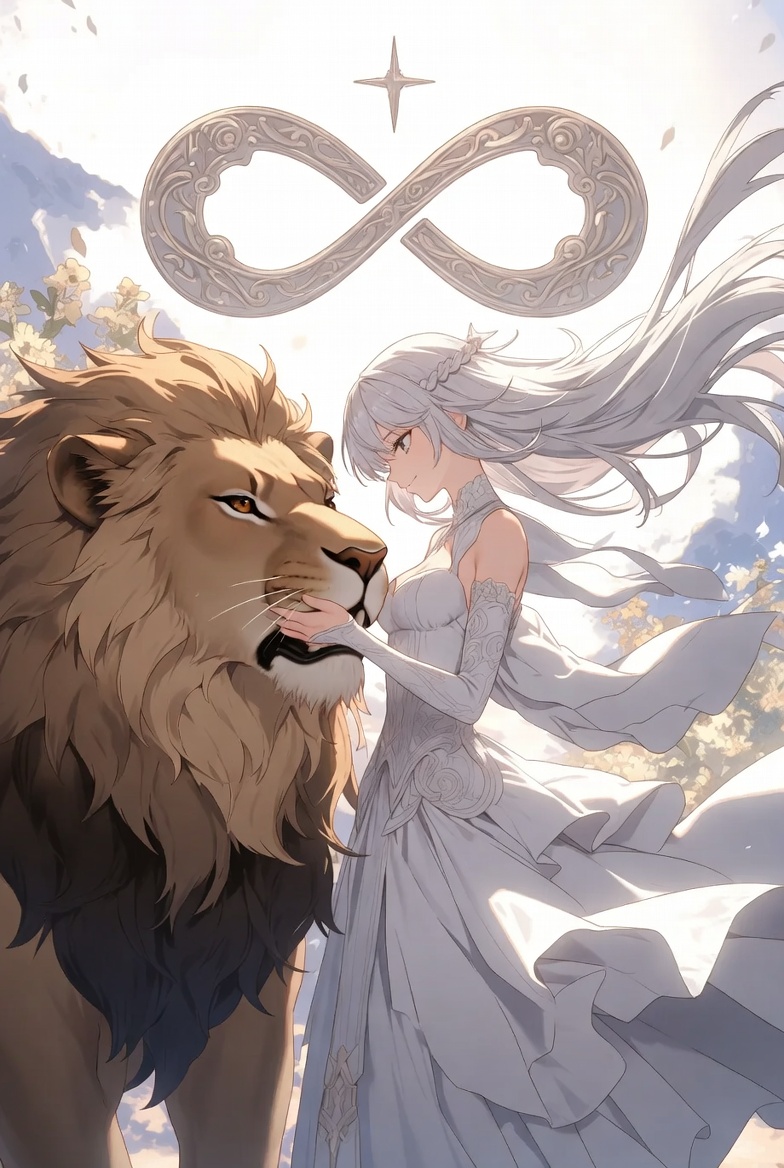
Raw solar power: appetite, courage, force. The tradition’s definitive lion yields to a gentle hand on the Strength card, closing its mouth without a rope in sight. A lion marks strength present in the situation; who is handling it, and how, is the reading.
The horse#
Power in motion, coloured by its rider’s errand. White horses carry pure purpose: they bear Death without stopping and the Sun’s child with joy, the same steed on opposite errands. A horse marks momentum. Something is being carried somewhere, and the card says what.
Birds#
Messengers between levels: thought, spirit, news. The dove descends with blessing. The ibis watches from the Star’s tree as wisdom’s bird. The hooded falcon on the Nine of Pentacles is wildness trained by patient skill. A bird marks something arriving from a higher view, or returning to one.
The snake#
Transformation and the knowledge that costs something: the skin shed, the garden complicated. On the Wheel it descends as the cycle’s downward arc. A snake marks change that slides in low, and the old tangle of desire and wisdom that no deck has ever untied.
The crayfish#
The deep mind beginning to surface: the armoured, ancient thing rising out of the pool at the bottom of the Moon. It marks something from far down arriving at the waterline of awareness. Older and stranger than the daylight mind, and climbing anyway.
Part Four: Objects and Marks
Made things mark made situations: what people constructed, chose, wear, or measure with.
The crown#
Authority, and the self-image that comes with it. Worn steadily, a crown marks earned rule. Falling from the Tower, it marks the self-image that thought itself permanent meeting the lightning. Where a crown sits in the picture, and how securely, is half its meaning.
The blindfold#
Refused sight, and the tradition is pointed about it. The Two of Swords’ blindfold is self-tied, and the Eight of Swords’ cage of blades has gaps everywhere. A blindfold marks information that is available but not being looked at. That is a choice, wearing the costume of a condition.
Chains#
Bindings, and the deck’s most famous ones hang loose: the Devil’s chained figures could lift the loops off. Chains mark arrangements kept past the point of choosing. Habits, bargains and comforts hold exactly as tightly as they are held. Look at the fit before assuming the lock.
Keys#
Access to what is locked: teaching, initiation, the way in. The crossed keys at the Hierophant’s feet open the conscious and unconscious in the tradition’s reading. Keys mark that the door in question has an opening; whoever holds them decides whether it gets used.
The scales#
Weighing: consequence, fairness, the balance of deeds. Justice holds them level and pairs them with a double-edged sword, truth cutting in both directions. Scales mark a situation being measured, and the honest question of what you have put on each pan.
The infinity symbol#
The lemniscate: endless flow available to whoever can channel it. It hangs over the Magician (will applied outward) and over Strength (will applied inward), the same mark on two kinds of mastery. It signals that the energy in the scene is renewable; only the skill of handling it is rare.
Part Five: The Landscape
The background is never idle: where a scene happens tells you what stage of the work it depicts.
Mountains#
The long tasks and high standards on the horizon: achievement measured in climbs. Behind the Emperor they read as ordered and conquered. Behind the Hermit, they are where he already went. Mountains mark difficulty with a summit, which is the encouraging kind.
Water#
Feeling and the deep mind, in every state the weather allows. Still pools of turned-away emotion. Rivers crossed into calmer thought. The open sea of the depths themselves. Temperance keeps one foot in and one foot out, which is the tradition’s advice about feeling in general. Wherever water sits in a card, the feelings are there.
The path#
The way through, visibly incomplete: paths wind toward crowns, cross between towers, and leave the frame unfinished. A path marks that the situation is a journey rather than a verdict, and that the next stretch is walkable even when the destination is out of the light.
Pillars#
Opposites, built in stone. The High Priestess sits between a black pillar and a white one, borrowed from Solomon’s Temple, and Justice inherits the pair. Pillars mark a doorway between opposites, with the seat of wisdom placed exactly between them rather than at either extreme.
Towers#
Built boundaries: the edge of the known, the structures that watch the road out. The Moon’s twin towers gate the path into the dark; the Tower proper is the boundary-structure lightning finds. Towers mark the limits of the current map, defended or crumbling as the card requires.
The cliff edge#
The threshold of the unknown, and the tradition’s reading is deliberately kind: under the Fool’s next step it is an invitation, never a trap. A cliff marks the point where the ground you know runs out, which is where every journey in the deck technically begins.
Using the Vocabulary (One Honest Caution)
At the table, symbols work best as a second pass. First describe the card like a witness, and notice which detail your eye keeps returning to. Then, if you want it, look that detail up here and let the entry sharpen what you already noticed. Run the passes in that order. A symbol dictionary opened before your own noticing turns the reading into homework, and the whole craft of this site runs the other way: your reaction first, the tradition second, as seasoning.
And hold the vocabulary lightly, for the tradition's own reasons. These meanings were assigned by artists and occultists, then refined by a century of use. They earn their keep as craft, never as law. A rose is desire because generations of readers found the fit apt. That's the same kind of truth the correspondences carry, and the same light grip applies.
The first sibling: tarot’s words defined honestly, querent to clarifier:
A small glossary of tarotarrow_forwardThe second sibling: the nine roots under the Major Arcana’s numbers:
Numbers in tarot: a small referencearrow_forwardEvery card’s full page, with its own symbolism read in detail:
The card libraryarrow_forwardPut the vocabulary to work: pull a card and notice which detail your eye snags on first:
Pull a free readingarrow_forwardSeventy-eight cards, a few dozen words of visual vocabulary between them. Learn the lights, the flowers, the creatures, the objects and the landscape once, and every card you ever meet will already be half-read by the time you ask what it means, which is exactly how a language is supposed to work.