The Four Suits: How the Minor Arcana Is Organised
Wands, Cups, Swords and Pentacles: what each suit governs, how the numbers One to Ten tell the same story four ways, and the two-axis grid that reads any card on sight.
The Grid Beneath the Deck
The Major Arcana gets the fame, but the Minor Arcana is where the deck lives with you: fifty-six cards of work, love, worry, money, arguments, recoveries and ordinary Tuesdays. And those fifty-six are not a crowd to memorise. They are a grid: four suits, each running Ace to Ten plus four court cards. Once you can read the grid, you can read a Minor you have never studied.
Our beginner's guide compresses the whole trick into one line: suit tells you the department, number tells you the stage. A Five of Pentacles is some kind of struggle (five) in the material department (Pentacles), and you just read a card on sight. This article is that line given the full reference treatment: each suit's territory, temperament and failure mode, and the ten-stage story the numbers tell identically in all four departments.
One image to hold while we go. The World, the deck's final card, carries four figures in its corners: one for each element, which is to say one for each suit. The deck's own summary of a complete life is all four departments, present and speaking to each other. Most of us run one or two loud and leave the others on read. The grid is also a check for exactly that.
(The suits map onto the deck in your kitchen drawer, too: Cups became Hearts, Pentacles became Diamonds, Swords became Spades and Wands became Clubs, a family tree we've traced properly in our history of where tarot comes from.)
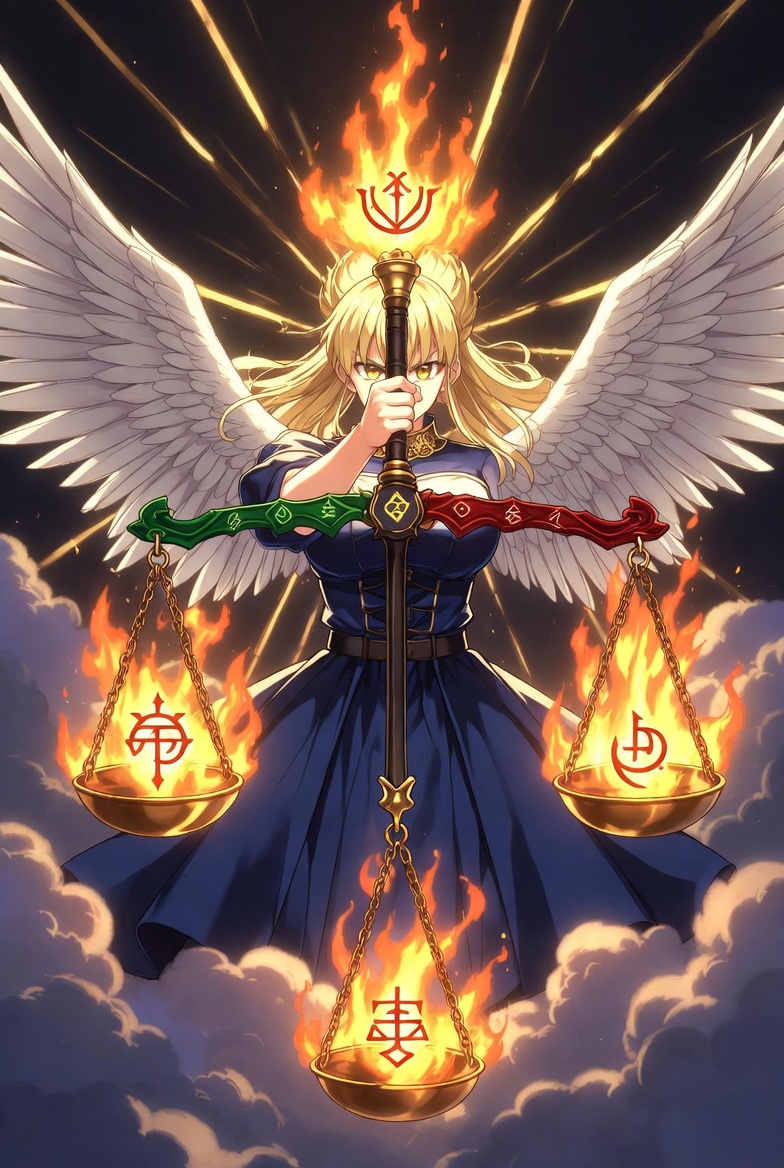
Wands: Fire, and the Life of Doing
Territory: energy, will, work, ambition, creativity, the projects you are driven to make happen. Wands is the suit of aliveness in motion. Its element is fire for a reason: it spreads, it burns fuel, it goes out if unfed, and it does real damage when it gets away from you.
Temperament: the fastest suit. Wands situations ignite, travel and change quickly; a Wands-heavy reading describes a life at speed.
The arc in miniature, straight from the cards' own taglines: the Ace is the spark before the flame; by Three the ships have left the harbour; Five is everyone fighting for the floor; Six is the comeback won; and Ten is the suit's honest ending, you have carried this long enough, the fire become a burden of your own ambitions.
Which names the failure mode. Wands fails by burning: too many commitments, scattered projects, the temper that torches a room, and burnout, the suit's signature injury. When Wands cards crowd a reading, the question is rarely "do I have energy". It is usually "what is this energy burning as fuel". Landmarks worth knowing: the Ace (pure ignition), the Eight (everything moves at once), the Ten (the load). The whole card-by-card tour lives in our card library.

Cups: Water, and the Life of Feeling
Territory: emotion, relationships of every kind, joy, grief, imagination, the inner weather. If it happens in the heart, it is filed under Cups. Its element is water: it flows, it fills whatever shape holds it, it runs deeper than it looks, and it cannot be gripped.
Temperament: slow and continuous. Feelings do not sprint; they seep, swell and recede. Cups situations develop like tides rather than fires.
The arc: the Ace is the heart open for the first time; Two is two people, one current; Three is joy shared and multiplied; the middle cards do the suit's hard work (Four's unnoticed offered cup, Five's two cups still standing after loss, Seven's beautiful options none of them real yet); Eight is the suit's bravest card, walking away; and Ten is this is what it was all for.
The failure mode is drowning gently. Fantasy over reality (the Seven's specialty). Nostalgia running the present (the Six's shadow). Feeling so much about a thing that no card of any other suit gets a word in. When Cups flood a reading, the question is whether the feeling is being felt or lived in.
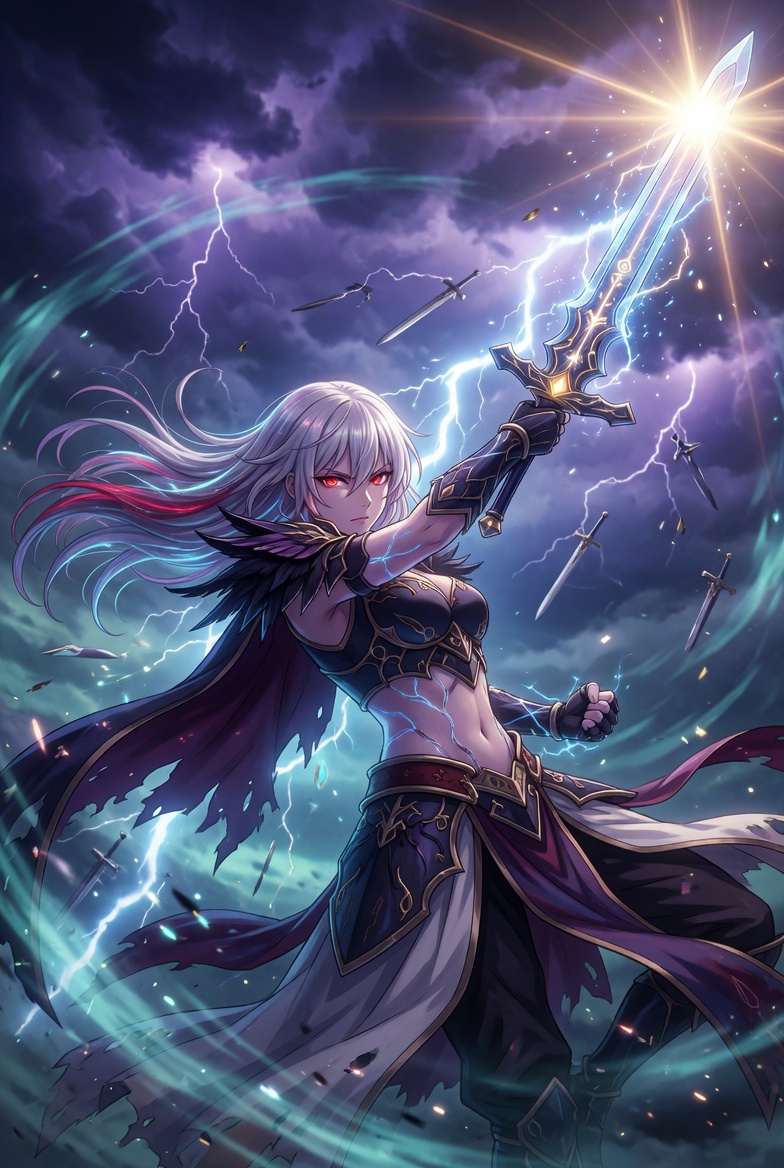
Swords: Air, and the Life of the Mind
Territory: thought, truth, decisions, conflict, communication, everything that happens between your ears and in the words between people. The element is air: invisible, everywhere, and capable of becoming a storm.
Temperament: sudden. Thoughts arrive whole, verdicts land in an instant, and a single sentence can rearrange a year.
Read the arc and notice something: the Ace is the truth, sharp and clean, and nearly every card after it costs something. Three is the heart learning what the mind refused to admit. Five is winning in a way that was losing something else. Eight is the cage made of your own certainties, Nine is the night making everything worse than it is, and Ten is the deck's most theatrical rock bottom, redeemed by its own sunrise.
This is why Swords has the deck's scariest reputation, and the honest reading of that reputation is the suit's whole lesson. The deck is telling you where most human suffering actually happens. Not in events; in the thinking about events. The failure mode is the mind turned on its owner: rumination, cruelty, the argument rehearsed forty times. And the suit's quiet mercy cards, Four's stillness-as-strategy and Six's moving away from the storm, are the deck teaching the mind to stand down. Swords-heavy readings almost always ask one question. Is this true, or is it just loud?
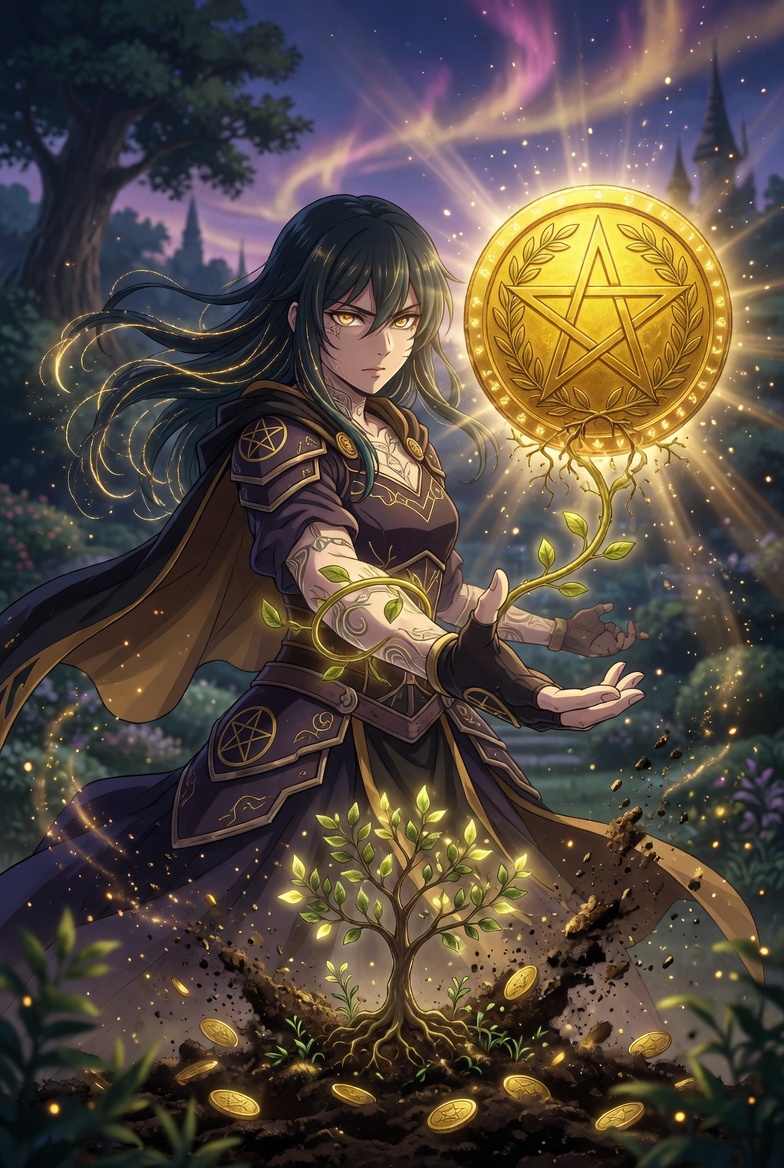
Pentacles: Earth, and the Life That Can Be Touched
Territory: money, work as craft, the body, home, health, the material facts of a life. Pentacles is the suit of everything you can point at. Its element is earth: slow, solid, steadily building, and indifferent to how you feel about it.
Temperament: the slowest suit, and proudly so. Pentacles runs on seasons and interest rates; nothing in it happens overnight, which is precisely its promise.
The arc is the deck's most patient story: the Ace says the ground beneath your feet is real; Three is good work done together; Seven leans on the hoe and says the harvest is not yet, but it is coming; Eight masters one thing and masters it again; Nine stands in a garden she built entirely herself; and Ten is the suit's benediction, enough, passed forward, wealth become legacy.
The failure mode is grip. The Four holds so tightly nothing can grow. The Five forgets that the light through the window is real. Work becomes hoarding, caution becomes fear, and the body gets treated as the last item on the list. Pentacles-heavy readings usually ask whether you are building something or just clutching it.
The Numbers: One Story, Told Four Ways
Here's the second axis, and the reason the grid works. Ace to Ten is a single arc, the life cycle of anything, and each suit tells it in its own department. Learn the ten stages once and you've learned forty cards.
Ace: the gift
Pure, undirected potential in the suit’s territory: a spark (Wands), an opening heart (Cups), a clean truth (Swords), solid ground (Pentacles). Aces are offers, not outcomes; every one of them still has to be taken.
Two: the pair
The gift meets a second force: a world of options in the hand, two people in one current, a decision held in balance, two commitments juggled. Twos are about relationship and choice, including the choice being avoided.
Three: the first result
Something real now exists and involves others: ships leave the harbour, joy is shared, the heart learns a hard truth, good work is done together. Threes are proof of concept, sweet or sore.
Four: the pause
Stability, and its price. Rest and homecoming at best (the Wands celebration, the Swords strategic stillness); stagnation and grip at worst (the unnoticed cup, the hoarded coins). Fours ask whether the stillness is chosen.
Five: the wound
The arc’s low point in every suit: the fight for the floor, the spilled cups, the hollow victory, the cold outside the window. Fives are conflict and loss, and each one hides its consolation in plain sight; two cups still stand, the light is real.
Six: the recovery
After the wound, exchange and movement: the comeback, the past offered kindly, the boat leaving the storm, generosity flowing both ways. Sixes are the deck insisting that low points have exits.
Seven: the assessment
A standing-back stage: defending the high ground, options that are not yet real, an honesty audit, the farmer judging the harvest. Sevens ask what is actually working, and they reward the reader who answers slowly.
Eight: the craft
Committed movement: everything in flight at once, the brave walk away, the self-made cage confronted, mastery repeated until it is mastery. Eights are about momentum and discipline, and about which one you are actually in.
Nine: the weight of nearly
The arc almost complete, and heavy with it: the last stand, the full cup and the wish granted, the 3am mind, the garden built alone. Nines are culmination as it actually feels: proud, tired, and slightly haunted.
Ten: the completion
The end of the line, in both senses: the load carried too long, the family at the rainbow, the theatrical rock bottom with its rising sun, the wealth passed forward. Tens close the arc and hand the Ace of the next one its cue.
The Majors run a different number system entirely, reduction and nine recurring roots, and it has its own small reference:
Numbers in tarot: a small referencearrow_forwardReading the Grid Together
Now the axes combine, and every Minor becomes readable on sight. Department times stage: the Five of Pentacles is the wound stage in the material department. The Eight of Cups is the craft stage in the feeling department, which is why its mastery looks like leaving. You are never reading card fifty-three of seventy-eight. You are reading a coordinate.
Three refinements complete the machine. First, suits interact. Fire and air feed each other, water and earth nourish each other, fire and water clash, air and earth grind. Those frictions are half the meaning when suits share a table, and our combinations guide runs that system properly. Second, Majors outrank Minors. When a Major lands among suit cards, it names the big theme, and the Minors tell you which rooms of your life it is standing in. Third, the courts are the who of the grid: sixteen characters organised by the same suits, with their own complete guide.
One more layer for the curious, because our deck is built on it. In the Golden Dawn system this site inherits, the thirty-six numbered cards from Two to Ten map onto the thirty-six decans of the zodiac: ten-day slices of the year, which is what our tarot calendar quietly runs on. The grid, it turns out, is also a clock.
No cards needed: name the suit that has run this week, doing, feeling, thinking or tending. Then ask what the quietest suit would say if you dealt it a card. One honest line on each; the neglected department is usually the reading.
Learn by neighbourhood
Read one suit Ace to Ten in our card library in a single sitting, as one story. Twenty minutes per suit, four sittings, and the grid stops being theory; you will feel the same arc wearing four costumes.
Suit tells you the department. Number tells you the stage. Everything else the deck has to say is commentary on those two facts.
The who of the grid: all sixteen court cards, each as a posture, a person, an energy and a line of advice:
Court cards: the complete referencearrow_forwardHow suits feed and fight when cards land together, with the famous pairs worked through:
The combinations guidearrow_forwardOr watch the grid deal you a live coordinate: one free card, any department, any stage.
Pull a free readingarrow_forwardFour departments, ten stages, sixteen characters, one grid. The Minor Arcana was never fifty-six things to memorise; it was two questions to ask of any card: where in my life, and how far along. The deck has been this organised all along. Now you are in on it.