Every decent instrument comes with a spec sheet, and the spec sheet is mostly a list of what it doesn’t do. A thermometer won’t weigh you. A map won’t drive the car. Nobody calls these failures; they’re the shape of the tool. Tarot has a spec sheet too, and the strange thing about our corner of the internet is how rarely anyone writes it down.
So here it is. Five questions arrive at tarot tables constantly that the deck cannot answer, and the reason is mechanical rather than mystical: a reading runs on what’s already in the person at the table, which means a mirror is the wrong instrument for anything that lives outside you. For each of the five, this post covers why the cards can’t reach it, what the question underneath usually is (that part is nearly always askable), and the door where the real answer lives. We’ve scattered these honesty paragraphs across dozens of posts; this is all of them, promoted to a pillar.
Health: “Is This Serious? Will I Get Better?”
The deck holds seventy-eight pictures and zero diagnostic equipment. No card, no combination of cards, no reader however gifted can see a lump, a blood result, or the inside of your chest, and a reading that frightens you about your body is a failed reading regardless of what any book says a card “can mean”. We hold that line when reading for others, and it holds twice over when you’re reading for yourself at 1am with a symptom and a search history.
The question underneath is almost always fear asking to be held, and fear is genuinely tarot’s department. The honest move: book the appointment first, then, if you want the cards, pull one about the waiting. “What do I need while I wait for Thursday?” is a real question with a real answer in you. “Is it cancer?” belongs to your GP, to NHS 111 if you’re unsure how urgent it is, and to nobody’s deck, ours included. (The waiting itself now has a complete daily practice of its own.)
Pregnancy: “Am I? Will I Be?”
A three-pound test from any pharmacy outperforms every tarot reader who has ever lived, and it’s not close. The deck cannot see a hormone. And the harder version of this question, the one asked through months of trying, deserves better than cardboard too: fertility has actual medicine, actual timelines and actual support, all of which start at your GP.
What the cards can hold is the part no test measures: the hope-and-dread cycle of the two-week wait, the grief of another single line, the question of what you’re building your life around while this is uncertain. Those are mirror questions, and the mirror works on them. The verdict is biology’s, and biology answers in its own handwriting.
Legal and Money Verdicts: “Will I Win? Should I Sign?”
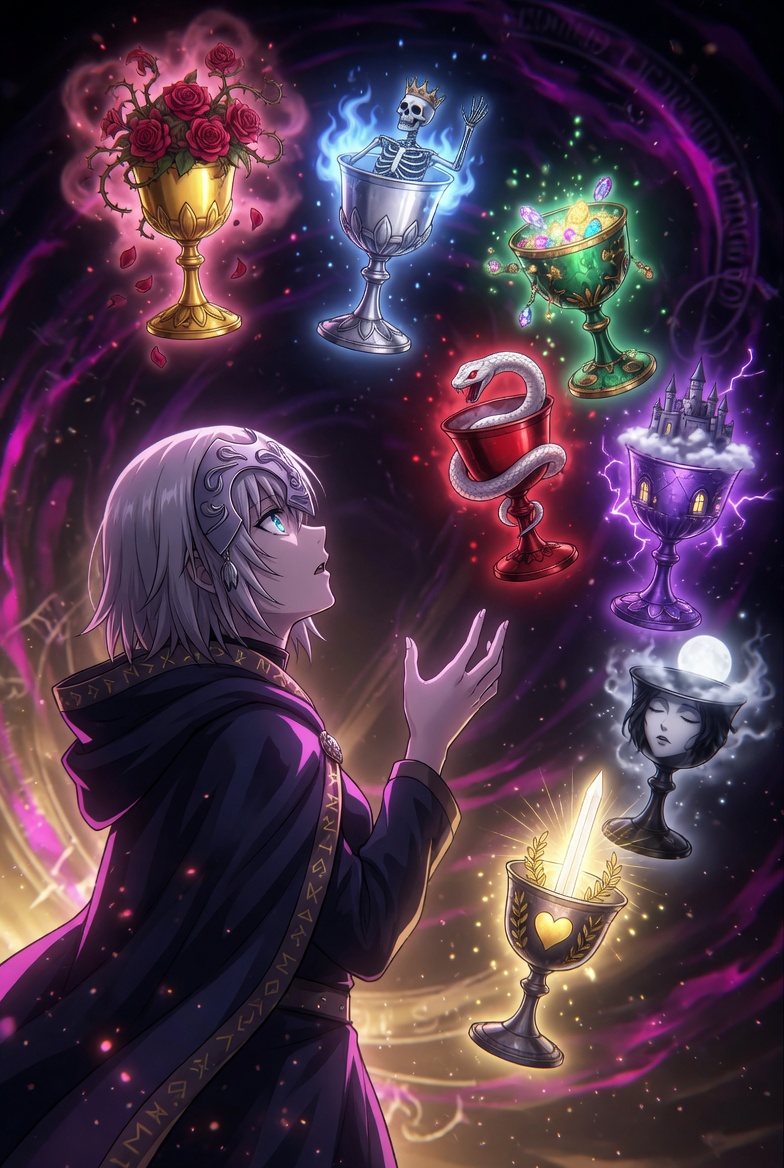
Courts run on evidence, contracts run on their actual clauses, and neither consults your spread. The Seven of Cups is the patron of this whole section, tagline doing the work: all of it is possible, none of it is real yet. A card can show you seven glittering outcomes; it cannot read the paperwork.
We drew this boundary in the career post and it generalises: cards for clarity, professionals for the outcome. What the deck can do is show you which way you’re leaning and what the lean is made of, fear, fantasy, or something sturdier, which is honestly useful the night before you call the solicitor. The call itself: a solicitor for anything with real stakes, and Citizens Advice for the free first pass at almost everything, from tenancy to employment to debt. A reading is not legal advice, and any reader who lets you treat it as some is showing you a red flag.
Other People’s Minds: “What Is He Thinking? Is She Lying?”
This is the most-asked unanswerable in tarot, and we’ve given the love version its own post: the deck reads the person at the table, and the person you’re asking about isn’t at it. Pull cards about your ex and you’ll get a beautifully accurate picture of your feelings about your ex, wearing his face. That picture has real uses. Mind-reading is not among them.
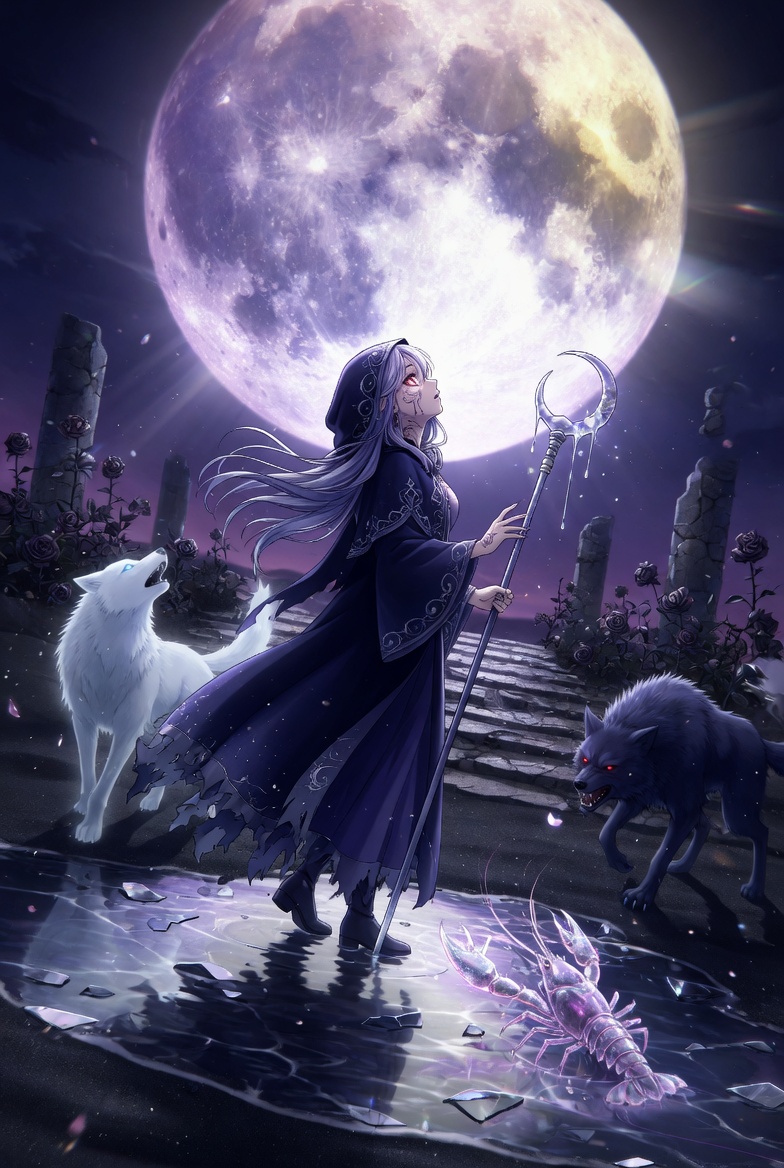
The Moon explains the trap: where information is missing, your own hopes and fears pour in to fill the gap, and moonlight is very convincing at 1am. The question underneath “what are they thinking” is usually “why haven’t I asked them”, and that one has a genuinely uncomfortable, genuinely useful answer in you. The door here is the least glamorous referral on this page: the conversation. Ask the person. If asking feels impossible, the cards can work on why that is, which turns out to be the reading worth having.
Death: “When Will I Die? When Will Someone I Love?”
No. Not the deck’s, not anyone’s, and we’ve written the full honest treatment of the card everyone fears: Death’s tagline in our deck is the end is the beginning in disguise, and it marks transformations, endings of chapters, the clearing of ground. It does not schedule funerals, and neither does any spread ever devised. Anyone selling you a date is running the scam ladder, and the fear that made you ask is the product they’re selling back to you.
And because this question sometimes arrives carrying something heavier: if it comes from grief, Cruse Bereavement Support (0808 808 1677) exists for exactly that weight. If it comes from your own darkness, Samaritans are on 116 123, free, at any hour, tonight included. A deck of cards is a fine mirror and a terrible lifeline, and knowing the difference is part of loving the practice honestly. For the hard stretch itself, our gentle manual for hard seasons gathers what helps, what to leave alone, and the real doors in one place.
Why the “No” Is the Feature
Notice what the five have in common: each one asks the mirror to be a window. Health, biology, courtrooms, other minds, the calendar of mortality, all of them live outside the person holding the cards, and our accuracy post sorted the whole question into drawers for exactly this reason: what’s about you is checkable and often startlingly useful; what’s about the world beyond you is where accuracy quietly leaves the room.
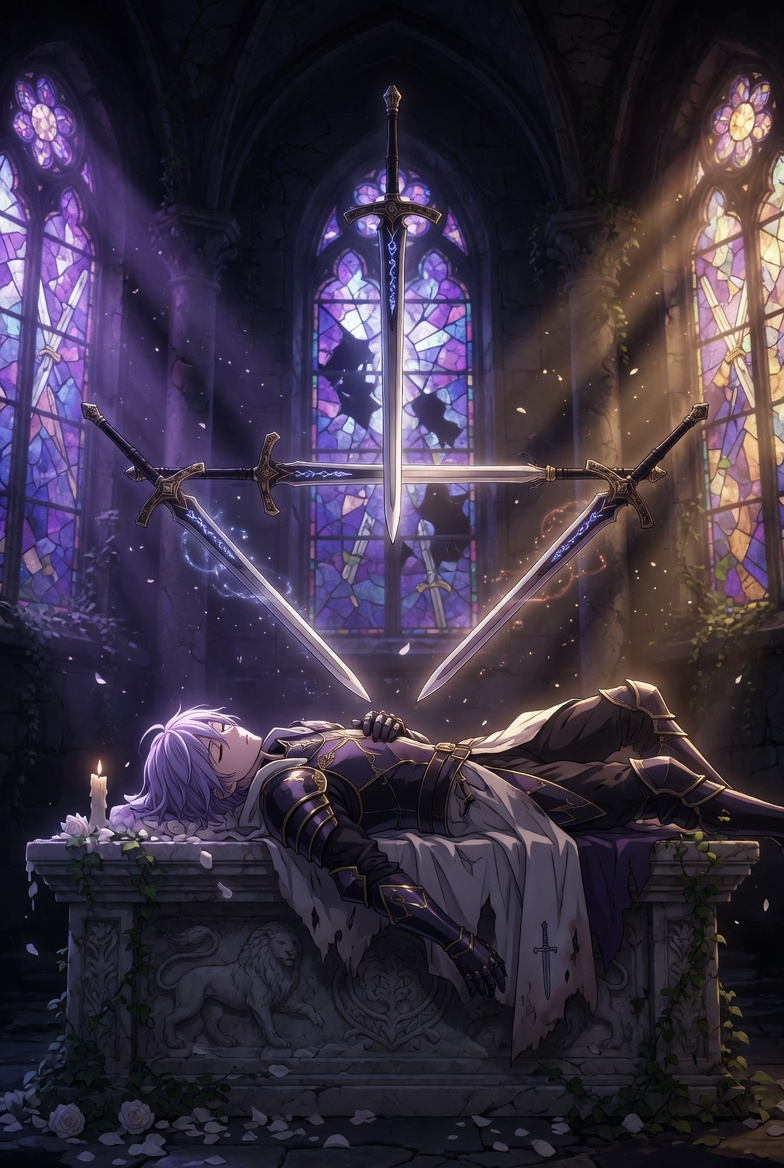
Which is why this list is a feature. A practice that claims everything can be trusted with nothing. The moment tarot admits what it can’t do, the thing it can do, showing you your own material with unusual clarity, stops being a consolation prize and starts being the point. The Four of Swords fronts this post deliberately: its knight has put every sword down, and his tagline is the whole ethic in nine words. Stillness is not weakness. It is strategy.
The Practice: Sorting the Question
Next time one of the five arrives in your hands, and it will, don’t shame it away; sort it. Three lines, one minute:
Journal line: The question I keep bringing to the deck is ___. The person or place that can actually answer it is ___. The part that’s mine, and askable, is ___. Write it in your journal ›
The third blank is where the reading lives. “Is the lump serious” becomes “what do I need while I wait”. “Will I win the case” becomes “what is my lean made of”. “What is he thinking” becomes “what am I afraid to ask”. The craft of that translation has its own full post, and it’s the single most useful skill in the practice.
The Bottom Line
Tarot can’t diagnose, test, litigate, mind-read, or schedule death, and every honest reader will tell you so before you ask. What it can do is hold the fear, the lean, the unasked question and the grief while the real-world door does its work: the GP, the test, the solicitor, the conversation, the helpline. Use both. They were never in competition.
The deck answers the question that’s yours. The rest have addresses, and now you have them.
FAQ
Can tarot predict health problems? No. Cards carry no diagnostic information, and a reading that scares you about your body is a failed reading, whatever the book says. Take symptoms to your GP or NHS 111, and if you want the cards involved, ask them about handling the wait, which is a question they can actually work on.
Can tarot tell me if I’m pregnant? No. A pharmacy test answers in minutes what no deck can see at all. Where the cards genuinely help is the feelings around the question: the waiting, the hoping, the grief of trying. The verdict itself belongs to a test and, for anything ongoing, your GP or midwife.
Can tarot answer legal or financial questions? Not the outcomes. Courts and contracts don’t consult spreads, and a reading is not legal advice. Cards can show you your own lean and what it’s made of before you decide; the decision’s facts belong with a solicitor, or Citizens Advice for a free first pass.
Can tarot tell me how someone else feels about me? No, and this is the most-asked version of the problem: a reading runs on the person at the table, so cards about an absent person return your feelings wearing their face. The reliable source for another person’s mind is that person. The cards can help with why asking feels so hard.
Can tarot predict when someone will die? No. The Death card marks endings and transformations, never literal deaths on a schedule, and no honest reader anywhere claims otherwise; anyone selling you a date is running a fear scam. If the question comes from grief or darkness, Cruse (0808 808 1677) and Samaritans (116 123) are the real doors.
Got a question that survived the sort? Pull a free online tarot reading →, ask the version that’s yours, and let the mirror do the one job it’s genuinely brilliant at.
forum Comments
Loading comments…