
You found the deck in their room. Or the TikTok history full of card readings. Or they mentioned their “moon card” at dinner as if that were a normal thing to say. Now you’re here, typing questions into a search bar. That probably makes you one of two parents. The alarmed one, whose upbringing filed tarot somewhere near ouija boards. Or the baffled one, who just wants to know what this is and whether it costs money.
Both of you deserve a straight guide. And we should say up front who’s writing it: a tarot site. We publish card readings and run a reading app, so we have a view, and we’ll keep declaring it as we go. What we won’t do is sell you anything, or tell you your instincts are silly. Some of the worries that brought you here are worth having. The job of this page is to sort them from the ones that aren’t.
First, the Numbers: You Are Not Raising an Outlier
Start with scale, because it changes the whole picture. Surveys of young people put interest in tarot and divination at around half the generation. That includes Springtide Research Institute’s work on 13-to-25-year-olds. A fair slice practise regularly, rather than just once at a sleepover. We’ve written up the research separately, and the headline for a parent is simple. This is not fringe behaviour, and not a warning sign in itself. Statistically, it’s closer to having a Spotify account.
The same research points at why. This generation is growing up amid shaky institutions, endless feeds, and a genuinely uncertain future. Tarot offers three things that mix starves them of: a quiet, structured moment. Words for feelings. And a sense of meaning they get to build themselves. You might not meet those needs this way. But you’ll recognise the needs.
What They’re Actually Doing Up There
Here’s a typical session, with no mystique. Your teenager shuffles a deck of 78 picture cards. They draw one or a few. They look at the images, and think or write about what the pictures might say about their life. The card of a figure carrying too many sticks lands, and they think about their coursework load. The card of the sleepless figure lands, and they admit they’re worried about Friday. That’s the practice. The machinery underneath is ordinary psychology: a vague image invites you to project what’s on your mind onto it. That surfaces what’s on your mind. A journal prompt does roughly the same job.
Notice what’s missing from that description, because it’s the part horror films skip. Nothing is summoned, contacted or worshipped. A modern tarot practice involves no spirits and asks for no beliefs. We’ve written a whole piece for people worried about the spiritual side, and it takes the religious concerns seriously rather than sneering at them. The short version: the fear has real roots in history. But the thing most young people actually do with cards is much closer to journalling than to a seance.
Why It Appeals to Them (Some of This Will Reassure You)
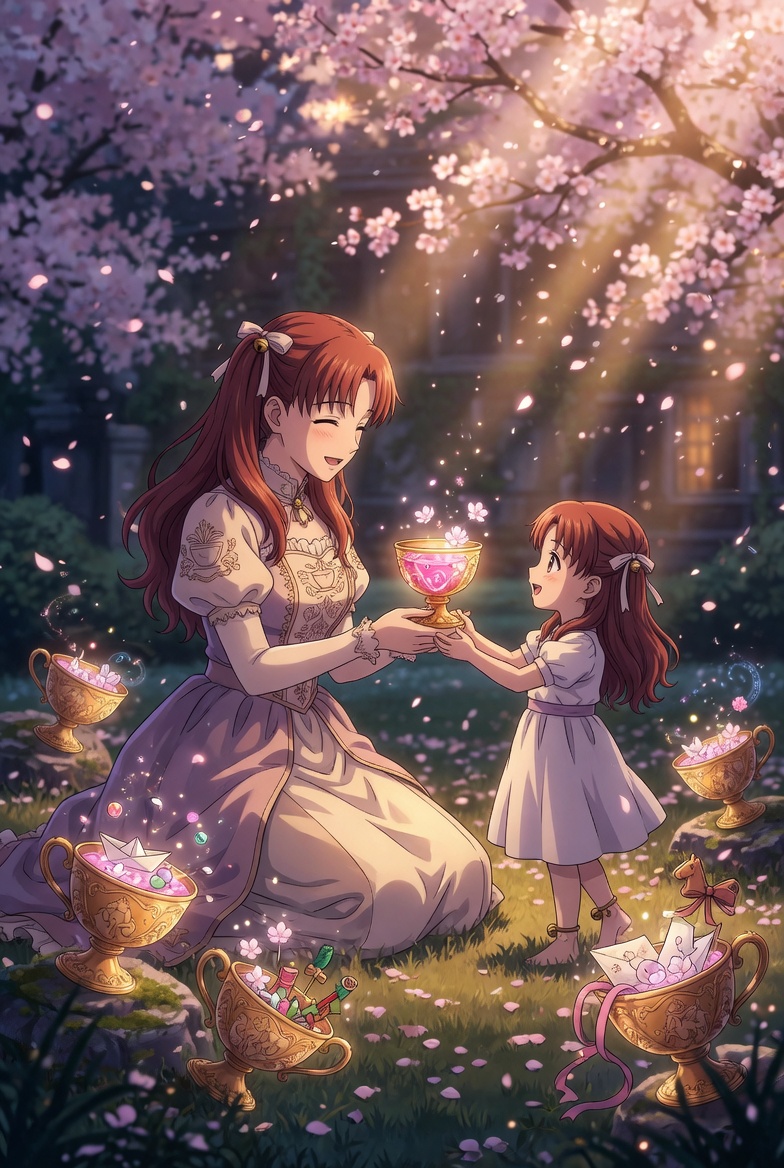
It’s an identity lab. The teenage project is working out who you are. A deck of 78 characters is a remarkably safe place to run that project. Try on the brave card, the quiet card, the ambitious card. See what fits. Past generations did this with song lyrics and posters. The furniture changes; the project doesn’t.
It hands them words for feelings. A fifteen-year-old who can’t say “I’m anxious about everything and can’t tell which worry is real” can point at a card of a figure awake among swords and say “that one”. Naming a feeling is the first step in managing it. The deck is, whatever else it is, a box of names for feelings.
It has an off switch. This is our favourite point for a worried parent, and it matters. Compare it with what your teenager would statistically be doing instead: scrolling a feed built to never end. A deck of cards stops. You draw a card, you think about it, and there’s no autoplay, no algorithm, no stranger in the comments. Half an hour with cards and a journal is half an hour the phone didn’t get.
And it’s social and creative. The decks are art. Friends read for each other. It comes with history, symbols and a community. As teenage obsessions go, it sits comfortably next to fantasy novels and album lore. And well upstream of several alternatives.
The Faith Question, Respectfully
If your concern is religious, we won’t try to talk you out of your convictions. An honest guide has to say it: scripture’s warnings about divination are real, and they make sense within the faiths that hold them. Two things are worth knowing alongside that. First, what most young people do with cards involves none of what those warnings target. No powers are petitioned. No hidden knowledge is sought from anywhere except their own head. Second, and practically: calling the cards wicked is the fastest way to make them both irresistible and invisible. Share your values, and keep the conversation open. The full faith-respectful piece is here, and it was written to be shareable with a worried grandparent too.
When Not to Worry
Green flags, so you can stop reading here if they describe your house. Curiosity about the cards’ history and art. Reading with friends. Journalling alongside. Treating readings as interesting rather than binding. The deck living among other hobbies, not replacing them. That’s a teenager using a reflection tool the way it’s built to be used. The right parental response sits somewhere between “fine” and “quietly pleased they’re reflecting at all”.
When to Pay Attention
Four patterns are worth acting on. Note that every one of them is really about something underneath the cards.
Money leaving. Free decks and free apps are the normal world here. Paid readings are different, especially from online readers who found them. There’s a well-worn scam that starts with a cheap reading and “discovers” a curse that costs more and more to lift, and teenagers are not exempt. Any spend beyond a deck or a small app subscription deserves a conversation. And any reader telling your child to keep payments secret is a matter for you, the bank, and possibly Action Fraud. Immediately.
Decisions outsourced. Watch for the cards moving from “interesting” to “in charge”. If choices about friends, school or plans wait on a reading, that’s dependence in a mystical costume. Lend them our own house rule: the cards get an opinion, never a vote.
Distress after readings. A teen who spirals after a “bad” card, or fears a death card literally, needs the honest fact every good tarot source repeats: the scary-looking cards don’t predict anything. A reading that frightens someone is a bad reading, full stop.
The mood underneath. Most important of all: the cards are usually a surface, not a cause. A teenager pulling cards nightly about the same dread is telling you about the dread, not the deck. Watch the underlying weather the way you would with any habit: sleep, friendships, appetite, joy. If those are sliding, the conversation you need has nothing to do with tarot. And you don’t have to have it alone. Your GP is a starting point. YoungMinds runs a helpline for parents on 0808 802 5544. Childline (0800 1111) is there for your teenager directly.
How to Talk About It

The deck itself supplies the parenting advice, on the card called Strength. A figure calms a lion with bare hands and no force at all. Its tagline is gentleness is the greatest power, and that’s the whole strategy.
The single best move available to you: ask them to pull a card for you. One question, honestly meant, about your own week. You’ll learn more in five minutes of being read for than in five weeks of monitoring. They’ll register that you took their interest seriously. And you’ll likely find the session is mostly them asking you thoughtful questions. Because that, it turns out, is what a reading is.
Beyond that: ask what they like about it before you say what you fear about it. Put boundaries where boundaries belong, which is money and bedtimes, not beliefs. And skip the mockery entirely. Ridicule doesn’t end a teenage interest. It just ends your view of it.
Where We Stand
Declared plainly, once more: we run a tarot site. Our whole editorial line is the version of this practice you’d want your teenager to meet. Reflection rather than fortune-telling. Honest-limits sections in every post. No fear-selling. And a standing rule that the cards never get a vote. We’d rather a parent understood this thing than feared it. Nothing in this guide needs your teenager to come anywhere near our site to be useful.
The Bottom Line
Your teenager has joined roughly half their generation in picking up a reflection practice wearing mystical clothes. Most of what happens with those cards is identity work, feeling-naming and quiet. It competes for time with an endless scroll that offers none of those. The real risks are specific and watchable: money to strangers, decisions outsourced, distress unaddressed, and a low mood using the cards as its stage. Watch for those four, talk gently, and let the rest be what it is.
Ask for a reading. The lion’s mouth closes softest under a gentle hand, and you might just meet your own kid in the cards.
FAQ
Is tarot safe for teenagers? The practice itself, drawing cards and reflecting on them, is about as safe as journalling, and shares most of its machinery. The real risks sit around the edges: paid readings from strangers (a known scam pattern operates there), leaning on readings for decisions, and distress the cards surface but can’t treat. All three are visible to an attentive parent, and all three have simple responses covered above.
Isn’t tarot occult? Should a religious family allow it? The word occult literally means “hidden”, and the cards’ spooky reputation owes more to cinema than to what a modern practice involves. That practice is reflection on picture cards, with nothing summoned and nothing asked of any power. Faith-based concerns still have real roots and deserve respect, and we’ve written a full honest piece on exactly this question. Whatever you decide as a family, decide it in conversation. A ban without a conversation mostly just relocates the deck.
Should I take the cards away? For an ordinary interest, we’d gently advise against it. You’d be confiscating one of the few teenage habits with a built-in off switch and a journalling habit attached, and teaching them to hide the next interest. Taking things away makes sense only where the real problem lives, such as spending on outside readers. Even then, the fix is the money conversation, not the cardboard.
My teenager is spending money on tarot readings. What do I do? Take it seriously and act calmly. Find out who is being paid, and for what. A subscription to a reading app is one thing. Escalating payments to an individual reader is another entirely. If there’s any mention of curses, blockages or secrecy, it’s a known fraud pattern: stop the payments, involve the bank, and report it. Frame it as protecting them from a scam that catches adults too. Because it does.
Can tarot harm my teenager’s mental health? The cards themselves don’t create distress. But they can surface it, stage it, or in bad hands make it worse. A teen spiralling after readings, or reading obsessively about one fear, is showing you distress that exists anyway and needs ordinary support: a conversation, a GP, YoungMinds’ parents helpline (0808 802 5544). Used the way most young people use them, with curiosity and a journal, the evidence we have puts the practice on the helpful side of neutral.
Want to know exactly what your teenager is looking at? Pull one free card yourself, no sign-up, and see the whole thing in two minutes: try a free online tarot reading →. Then go ask them for a proper one.
forum Comments
Loading comments…