
Here’s an experiment you’ve already run a hundred times without meaning to. You open an app to check one thing. Forty minutes later you surface, slightly nauseous, holding eleven opinions you didn’t have before, angry at a stranger, worried about a country you couldn’t place on a map this morning. And the one thing you opened the app to check? Still unchecked.
Nobody plans that. It happens because the feed is built to keep you moving, and moving is the opposite of noticing. Every scroll is a small bet that the next thing will be the thing that satisfies, and the bet never pays out, because the feed’s whole business is making sure you’re never quite done.
Tarot is a strange candidate for fixing this, and I want to be upfront that it isn’t a cure. But a deck of cards has one property that no app will ever offer you: it stops. You pull a card, and then there is no next card unless you choose one. No autoplay, no infinite scroll, no algorithm learning which of your anxieties keeps you on the page. Just one image, sitting there, waiting for you to have a thought of your own about it.
That property turns out to be worth a lot. This post is about using it: how a short tarot practice can interrupt the spiral, help you take stock of what’s actually in your head versus what was put there this week, and ground you in where you are rather than where your feed is dragging you.
The Feed Is Doing Your Thinking For You
Let’s name the problem precisely, because “I’m on my phone too much” isn’t quite it.
The problem is that the environment you marinate in shapes what you think about, and the feed is an environment designed by people whose job is engagement, not your peace of mind. Outrage travels further than nuance. Fear holds attention longer than calm. Comparison keeps you scrolling in a way contentment never will. None of this is a conspiracy; it’s just what the metrics reward. But live in it long enough and your inner weather starts matching it. You feel behind, under threat, and vaguely furious, without any event in your actual life to explain it.
The sinister part is how quietly it happens. Nobody sits you down and hands you a worldview. It arrives one seven-second clip at a time, and because you never chose any single piece of it, you never notice the whole thing assembling. You just wake up one day anxious about everything and sure the world is ending, while your actual Tuesday, the one with the coffee and the commute and the people who love you, sits there unexamined.
This isn’t fringe worry anymore. Governments have started treating social media overexposure as a genuine public health question: Australia has moved to keep under-16s off the platforms entirely, and the UK is now weighing similar restrictions. Whatever you make of banning teenagers, notice what the debate concedes, that heavy exposure to these feeds changes how a mind feels and functions. The under-16s get a law proposed on their behalf. The rest of us are left to manage the same exposure ourselves, with the same nervous systems and no minimum age to hide behind.
Reflection is the antidote, and reflection is exactly what the feed is built to prevent. You cannot take stock of your thoughts while new ones are being poured in at the top. You have to stop the pour first.
The Seven of Cups: A Portrait of Your Feed
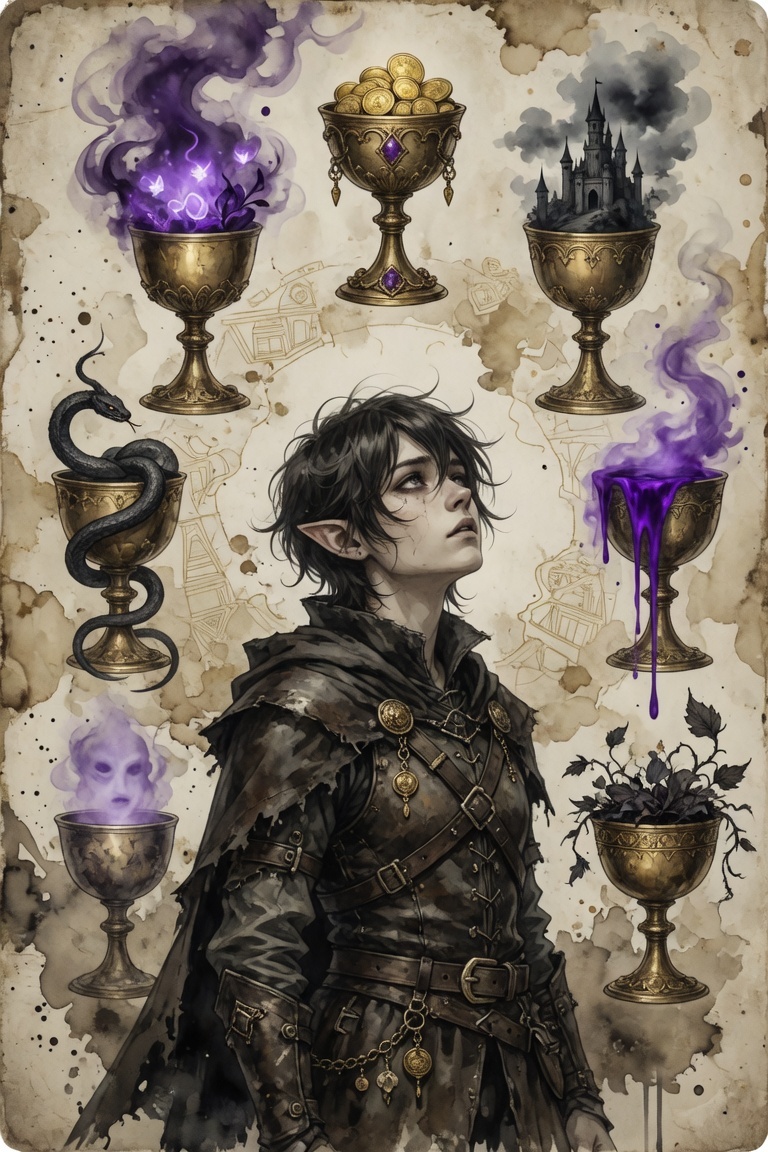
Tarot has been describing the feed since long before the feed existed. Look at the Seven of Cups. In the classic image, a figure stands in front of seven floating cups, each one holding something shiny. A castle. Jewels. A laurel wreath. A dragon. All of it hovering in cloud, which is the card’s quiet joke, because cloud is not ground. Nothing on offer is real yet. It’s all preview, all promise, all trailer and no film.
The figure isn’t choosing. That’s the detail that matters. They’re consuming the options, endlessly, and the consuming has replaced the choosing. Sound familiar? The Seven of Cups is what it feels like to scroll: seventeen lives you could be living, twelve products that would fix you, nine opinions you should apparently have, and underneath it all a low hum of paralysis, because a person built to handle a village’s worth of input is being handed the whole world’s.
When this card turns up in a reading, the classic advice is: pick one cup and let the others go. For our purposes the advice is even simpler. Notice that you’re standing in the cloud gallery at all. The first skill of getting out of the spiral is recognising the spiral while you’re in it, and the Seven of Cups is a picture you can hold in your mind for exactly that moment. Oh. I’m in the cups again.
The Eight of Swords: The Spiral Itself

If the Seven of Cups is the feed, the Eight of Swords is what an hour in it does to you. A figure stands blindfolded, loosely tied, surrounded by a fence of swords. It looks like a prison. Then you look closer: the bindings are slack, the blindfold could be shrugged off, and the swords have a gap in them wide enough to walk through. The cage is real in its effects and imaginary in its construction, which is the most honest description of a doomscroll spiral I’ve ever seen.
Because that’s the thing about the 2am scroll, isn’t it? At no point are you enjoying it. You’re not even choosing it, in any meaningful sense. You feel trapped in it, and the trap is made of nothing. There is no lock. Your thumb could stop. The phone could go face-down on the nightstand. Every part of the exit is physically trivial and yet somehow unavailable, because the blindfold, the belief that you can’t stop, that you need to see the next thing, is doing all the work the walls can’t.
The Eight of Swords asks one question: who tied you up? And the uncomfortable, liberating answer is usually: nobody, recently. The feed engineered the habit, sure, and the habit deserves real respect as an opponent. But tonight, in this moment, the swords have a gap in them. The card exists to remind you the gap is there.
The Hermit: Curating Your Inputs On Purpose
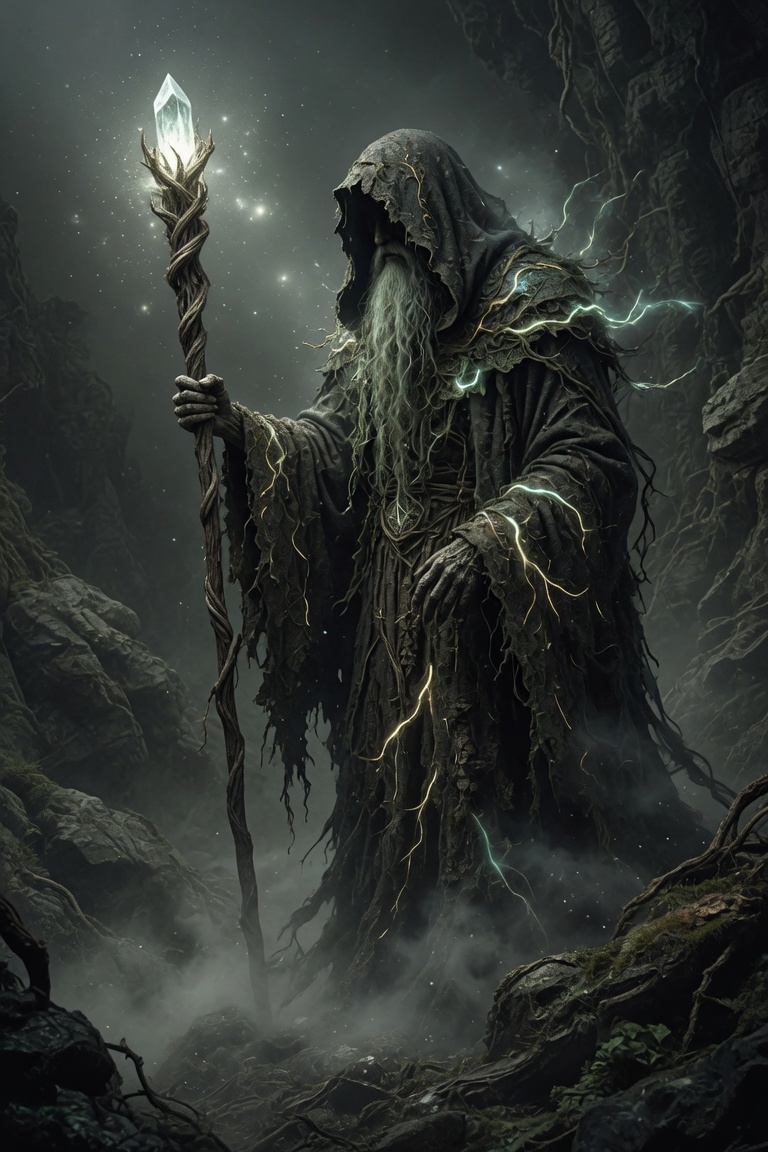
So what does the alternative look like? Tarot’s answer is the Hermit, traditionally drawn as a cloaked figure alone on a mountain, holding up a lantern with a star in it. It’s easy to misread this card as loneliness or aloofness, the guy who deleted all his apps and won’t shut up about it. That’s not what’s happening in the image. (And if what sends you to the feed most evenings is loneliness itself, that deserves better than a scroll and now has its own post: company that isn’t a feed, with the return ticket built in.)
Look at the lantern. The Hermit didn’t climb the mountain to escape light; he climbed it because down in the crowd, everyone’s torches blur together and you can’t tell which light is yours. Up here, one lamp, one line of sight. The Hermit is the card of curated input: choosing what you look at, and looking at it long enough to actually see it.
That’s a radical act now. The default is to let the algorithm curate for you, and the algorithm’s taste runs to whatever spikes your pulse. The Hermit’s practice, translated out of the mountaintop imagery, is embarrassingly practical: fewer inputs, chosen deliberately, examined slowly. One good essay instead of ninety posts about the essay. One conversation with a friend instead of the ambient roar of ten thousand strangers. One card, even, instead of an endless deck of other people’s crises.
You don’t have to move to a mountain. You just have to notice that your attention is a lantern, and right now you may be pointing it wherever the loudest voice tells you to. (We’ve since given the Hermit a full reading of his own: what the solitude is actually for, and the return ticket that keeps it healthy.)
The Practice: A Nightly Un-Spiral
Here’s the actual system, and it’s deliberately tiny, because it has to compete with a phone and it will lose any fight that takes longer than five minutes.
When you catch yourself mid-spiral, or better, at the moment you’d usually start one (in bed, on the sofa, in the queue), pull one card. A physical deck if you have one; a free online tarot reading works too, and has the advantage of already being on the phone that was about to eat your evening. Then run the card through three questions.
The Anti-Spiral Check-In
- What’s actually mine? Looking at this card, what’s a thought or feeling I can trace to my own real life, today, this week? Not the world’s. Mine.
- What was fed to me? What am I currently worried about, angry about, or comparing myself to that I did not carry into this week myself? Where did it come in?
- Where am I, really? Right now, in this room, in this body, what is the honest state of things? Not the trajectory of civilisation. This actual evening.
Journal prompt to go with it: tonight I felt behind or under threat about ___, and the evidence from my own life for that feeling is ___. Write the second blank honestly. It’s often empty, and seeing it empty on paper does more than a week of screen-time guilt. Write it in your journal › (The evidence check now leads the practice menu in the complete anxious-minds guide.)
That third question is the grounding one, and it’s where tarot quietly outperforms the feed at the feed’s own game. Both hand you an image. But the feed’s image is about somewhere else, someone else, some worse future. The card’s image is a mirror: it only means anything in reference to your own life, so reading it forces you back into your own life. You cannot interpret the Hermit’s lantern without asking where your attention has been pointing. The card is a door that only opens inward.
Where You Are vs Where You’re Being Taken
There’s a bigger version of this practice worth doing once a week or so, because the daily spiral is a symptom and the weekly drift is the disease.
Ask it plainly: is the direction of my inner life being set by my life, or by my inputs? If you feel more anxious this month than last month, did your circumstances get worse, or did your feed? If you’re suddenly dissatisfied with your home, your body, your relationship, your income, is that your own honest assessment arriving on schedule, or did you just watch four hundred posts by people whose job is being enviable?
The Signal Check (three cards, once a week)
- My actual position. Where I genuinely stand right now, the view from my own window.
- The current I’m in. What my environment, digital and otherwise, is pulling me toward. Name the pull.
- The next deliberate step. One move that’s mine, chosen on purpose, in a direction I picked.
Both the Check-In and the Signal Check are collected, alongside every other spread we teach, in the complete guide to tarot spreads.
The point of the middle card is that a current you can name loses most of its power. Drift only works while it’s invisible. The moment you can say “my feed is making me feel poor and behind, and my actual life this week contained no new poverty and no new behindness,” the spell breaks, or at least loosens. You’re allowed to log back in afterwards. You’ll just be swimming with your eyes open.
If the spiral you know best is the bedtime one, the phone-lit ceiling at midnight, there’s a version of this built specifically for closing the day in tarot before bed.
And a note on the Four of Swords, the deck’s card of deliberate rest, because it belongs here even without a picture: sometimes the answer to “what should I do about all this input” is not better input. It’s silence. A walk without a podcast. A bath without a video propped on the taps. The nervous system does its filing in the quiet, and if you never give it quiet, the backlog becomes that free-floating dread you’ve been blaming on the news.
What This Won’t Do
Honesty corner. A tarot card will not fix a compulsive relationship with your phone, and if your scrolling feels genuinely out of your control, or the anxiety it produces is persistent and heavy, that’s a conversation for a professional, not a deck. Tarot here is a pattern-interrupt and a reflection tool: a way to stop the pour for five minutes and hear yourself think. It’s a good wedge. It is not the whole door.
It also won’t make the feed less engineered. The cups will still be floating there tomorrow, shinier than ever. The practice isn’t about winning against the algorithm once; it’s about having somewhere to stand, a small nightly ritual of asking what’s mine, what was fed to me, and where am I really. Do that often enough and you develop the thing the feed most fears: a self that checks in with itself before it checks the phone.
The Bottom Line
The scroll spiral runs on one trick: it keeps you moving so you never notice where you are. A card works because it stops. One image, no next thing, and a question the feed will never ask you: what does this mean in your life?
Use the Seven of Cups to recognise the cloud gallery. Use the Eight of Swords to remember the gap in the fence. Use the Hermit to point your lantern on purpose. And once a week, check whether your inner weather belongs to your life or your inputs, because those are two different climates, and only one of them is yours to live in.
The feed tells you where the world is going. A card asks where you are. You need the second question more.
FAQ
Can tarot really help with doomscrolling? As a pattern-interrupt, yes. A card gives your attention somewhere to land that doesn’t refresh, and the reflective questions it raises pull you back into your own life. It works alongside, not instead of, the practical stuff: notifications off, phone out of the bedroom, and honest limits.
Which tarot cards relate to social media and overwhelm? The Seven of Cups (endless shiny options, none of them real yet) and the Eight of Swords (a mental trap with an exit you can’t see) are the core pair. The Hermit models the alternative: fewer inputs, chosen deliberately. The Four of Swords covers what no feed will ever sell you, which is rest.
Isn’t pulling a card on my phone just more screen time? Technically yes, and it’s still different in kind. The spiral is passive and endless; a one-card reading is chosen, finite, and ends with a question about your own life. Two minutes of reflection that closes itself beats forty minutes that never does. If you have a physical deck, better still.
Why are governments looking at restricting social media for under-16s? Because the evidence keeps pointing the same way: overexposure to algorithmic feeds is linked to anxiety, poor sleep and low mood, and young minds get the worst of it. Australia has legislated an under-16 ban and the UK is considering its own restrictions. Adults aren’t immune to the mechanism, though, which is why building your own off-ramp, whether that’s tarot, journaling or a phone in another room, matters at any age.
What if the card I pull makes me more anxious? Sit with why before you scroll past the feeling, because that reaction is information about you, not a forecast. A card that lands hard is usually naming something the feed was helping you avoid. If what comes up feels too big, that’s a signal to talk to someone qualified, not to pull again.
About to open the app you always open? Open this one instead: pull a free online tarot reading →, one card, no sign-up, and ask it what’s actually yours tonight.
forum Comments
Loading comments…