
There’s a message on your screen right now, or there was recently, or there will be by Thursday. It’s addressed to the person who did the thing. It is precise, devastating, and complete. Your thumb is over Send, and every cell in your body is voting yes.
This post is about the next ten minutes, because the next ten minutes are where relationships live or die. Not the argument itself: the gap between drafting the message and sending it. Most people don’t have anything standing in that gap. Here’s the case for putting one card there.
Why Anger Wants You to Send It Now
First, the honest mechanics, because anger runs a very specific con. The message feels perfect because you’re angry, not despite it. Anger narrows your attention onto the offence, cranks your certainty to maximum, and stamps URGENT on the whole package. That urgency is a feature of the state you’re in. It is not a fact about the situation. Nothing about the situation requires a reply in the next ninety seconds, but the chemistry does its best to convince you otherwise.
And the chemistry is short-lived, which is the useful part. The hot surge of anger crests and starts falling within a couple of minutes, as long as you don’t keep feeding it. That’s the catch: rereading their message is feeding it. Every reread relights the fuse, which is why you can stay furious for an hour over a text you received in eight seconds. The pause practice below is built around exactly this: stop rereading theirs, finish writing yours, and let one card hold you still while the wave does what waves do.
One thing this post is not: an argument for swallowing it. Some anger is a delivery van with a real grievance in the back. The point of the pause is not to cancel the delivery. It’s to make sure the parcel arrives without the van driving through their front wall.
The Knight of Swords: The Send Button on Horseback
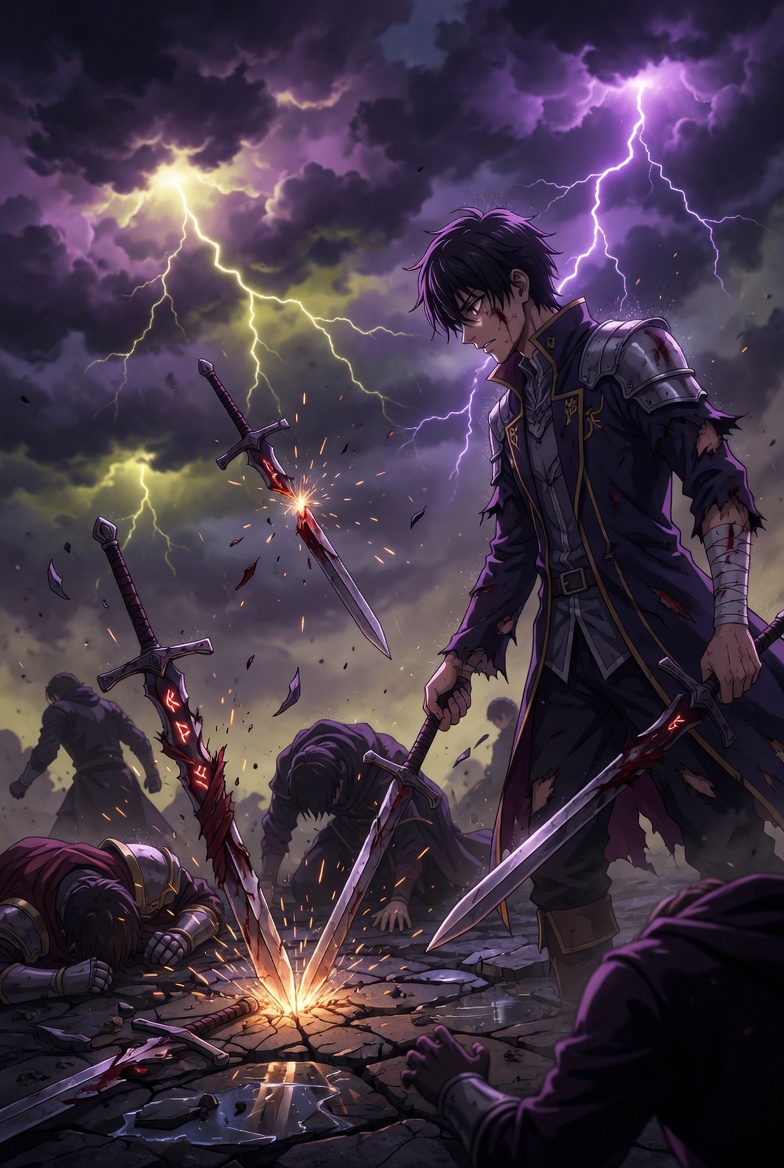
Look at this post’s card, because the deck drew your portrait years ago. The Knight of Swords is all speed: a rider at full gallop, storm behind him, blade out in front. Maybe your deck shows the lightning, maybe just the charge, but every version agrees on the essentials: maximum velocity, minimum steering. And his tagline is the scariest part, because it’s the exact inner monologue of the angry draft: he has thought it through, he has decided.
That’s what anger feels like from the inside. Decided. Thought through. The Knight isn’t wrong about his point, and neither, probably, are you. He’s wrong about the speed and the volume, and at that speed the point doesn’t survive the delivery. Nobody has ever read a message from a horse at full charge and responded to its content. They respond to the hooves.
The Five of Swords: What Winning Costs
Now the card for the morning after. The Five of Swords shows a battlefield when the fighting has stopped: someone technically won, and look at the place. The tagline is the whole card: winning this way was losing something else.
This is where the perfect message lands. And it is perfect: you’ll win the exchange. The message was sharper than anything they’ll manage back, because you wrote it at the peak of the state that writes sharp things. But the Five asks the only question that matters at the point of sending: what does the field look like afterwards? You can be completely right, land every blow, and stand in the wreckage of something that took years to build and eight seconds to crack. The message wins the argument. You wanted something else, and it’s worth finding out what, which is the card’s job below.
The Practice: One Card Before Send
Ten minutes, one card, and one rule to swear by before you start: nothing sends in the same hour it was drafted. Not because your anger is wrong. Because your aim is better after the wave passes, and the message will still be there. So will the person.
- Write it all. Every word, full heat, nothing held back. But write it in your notes app, never in the reply box, where a slipped thumb sends it and a typing indicator starts negotiations early. The writing itself is the anger doing something useful: it’s the delivery van being loaded, and loading it costs nobody anything.
- Put the phone down and breathe out slowly, five times. The long exhale is the body’s own off-switch for the surge, and it has its own sixty-second practice in our grounding reference. Do not reread their message while you do this. Theirs is the fuse.
- Pull one card. Physical deck or a free draw. The card isn’t a verdict on the argument. It’s a stranger at the table, and you’re about to explain the situation to it, which changes the situation.
- Ask the card three questions. What do I actually want to happen after they read this? (Winning the exchange is not an answer; what do you want them to do?) Which line in my draft is the point, and which lines are just the anger enjoying itself? And what would I keep if I could only keep one sentence?
- Find the Queen’s version. One sentence, maybe two: the true thing, at walking pace, with a request in it instead of a wound. Then decide, and all four exits are honourable: send the short version; schedule the conversation for tomorrow, in person, where tone survives; send nothing, because the draft turned out to be the whole delivery; or take it to the journal, where the unsent archive keeps the best writing you’ll never send.
The journal line: What I drafted, full heat: ___. What I actually want to happen: ___. The one sentence worth sending: ___. Write it in your journal ›
The Queen of Swords: The Version That Gets Heard

The deck keeps the target two cards along from the Knight, in the same suit, holding the same sword. The Queen of Swords isn’t calmer than the Knight because she cares less. Her tagline says the opposite: she sees clearly because she has seen everything. In our deck’s art the storm is still in her sky. It’s just behind her, clearing, and the sword is raised without being swung.
That’s the version of your message worth sending: the same steel, held still. “When you cancelled without telling me, I felt like an afterthought. Next time, tell me.” No adjectives doing violence, no case file of 2019 offences, one true thing and one request. Messages like that get answered. The Knight’s version gets defended against, which is why the same grievance sent at two volumes produces two entirely different relationships.
And notice what the Queen’s version required: all of it was in your original draft somewhere, usually in one sentence near the end, after the anger had worn itself out on the earlier paragraphs. The draft wasn’t wasted. It was the mine. The pause is just the sorting.
What This Won’t Do
The pause serves ordinary anger: the flare, the bad day, the friend who was thoughtless. Three honest edges to it.
If the same person keeps producing the same anger, week after week, the drafts folder is trying to tell you something no single message will fix. Recurring anger is data about a pattern, and the second pass, the review habit built for unsaid and unsent things, is a better tool for patterns than one more Tuesday text.
If your anger frightens you, arrives out of proportion, or the people around you have started managing themselves around it, that deserves more than a card between you and the send button. Your GP is a real door, and Respect runs a confidential phoneline (0808 802 4040) for anyone worried about their own behaviour in a relationship. Asking is the strong move, not the weak one.
And if the messages you’re afraid of are the ones arriving, if you’re drafting carefully because their anger punishes the wrong word, that isn’t an anger problem on your side at all, and no pause practice fixes it. Refuge’s line is 0808 2000 247, any hour.
FAQ
Can tarot really help with anger? The card doesn’t absorb anything; the pause does the work, and the card is what makes you actually take the pause. Anger’s urgency fades within minutes when it isn’t fed, so any ritual that holds you for ten minutes beats sending at the peak. A card happens to be a very good ten-minute ritual: it interrupts, it asks questions, and it doesn’t argue back.
Which tarot card represents anger? The Knight of Swords is the charge: right about the point, wrong about the speed. The Five of Swords is the aftermath: the win that cost the relationship. The Queen of Swords is the goal: the same truth at walking pace. And a hot Tower moment, the day something genuinely collapses, has its own post for the fear side of big feelings.
Should I send the angry text? Not within the hour you drafted it; that’s the whole rule. After the wave passes, run the three questions: what do I want to happen, which line is the point, what survives if only one sentence survives. Send the survivor, or have the conversation in person. If nothing survives the questions, the draft was venting, and venting belongs in the journal, which never screenshots anything.
Isn’t holding it in unhealthy? I thought you’re supposed to express anger. The practice expresses everything: you write the full message, heat included, and the writing is the expression. What changes is the audience. The research on venting is clearer than the folklore: rehearsing rage tends to keep it warm, while naming the grievance and making a request tends to resolve it. Spend the anger on the draft. Spend the clarity on the send.
What if I already sent it? Then send the follow-up the Queen would write: own the delivery without abandoning the point. “I said that with more temper than I meant to. The thing underneath is real, and I’d like to talk about it properly.” An apology for the volume, never for having a grievance, repairs most ordinary damage, and does it faster the sooner it arrives. (And the full aftermath, from cool-down to the first move, now has its own post.)
The draft can wait an hour. The card can’t even tell the time: pull one free → and ask it the first question, what do I actually want to happen?
forum Comments
Loading comments…