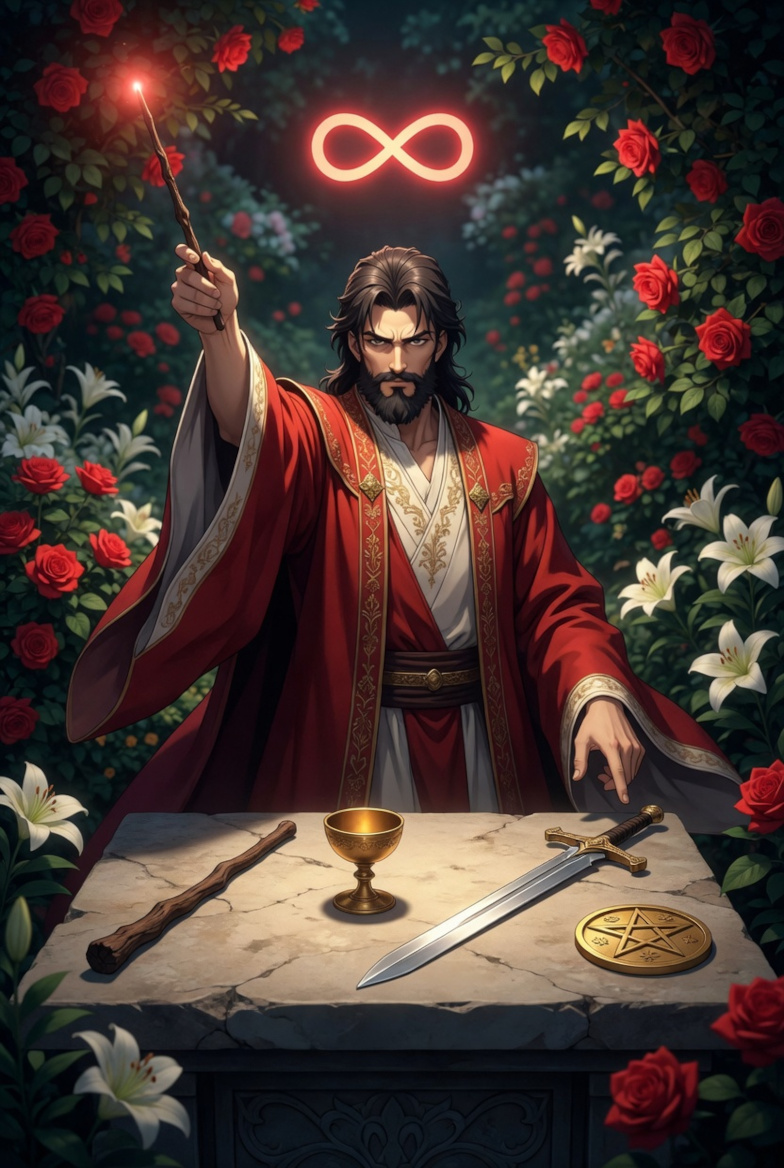
There’s a fight happening in tarot right now, and it’s a proper one. Researchers who went looking for readers to interview about AI this year found that most of the community wouldn’t even talk to them; the majority of people they approached refused, many citing AI itself as the reason. Meanwhile, quietly, a growing number of readers pull their cards by hand and then type the spread into a chatbot to help untangle it, and a generation that grew up asking phones for everything is asking them about the Tower reversed.
We should lay our cards on the table, so to speak: we have skin in this game. 78Paths built an AI reader, Fia, who offers interpretations on our site alongside the classic deck meanings. So you might expect this post to be a sales pitch dressed as an essay. It isn’t, partly because we think the honest version is more useful, and partly because building an AI reader taught us more about what AI can’t do in a reading than any critic ever could. The community’s fight is real, both sides are holding a real piece of the truth, and the answer to “can AI read tarot” turns out to be a genuinely interesting: it depends what you mean by read.
The Argument, Stated Fairly
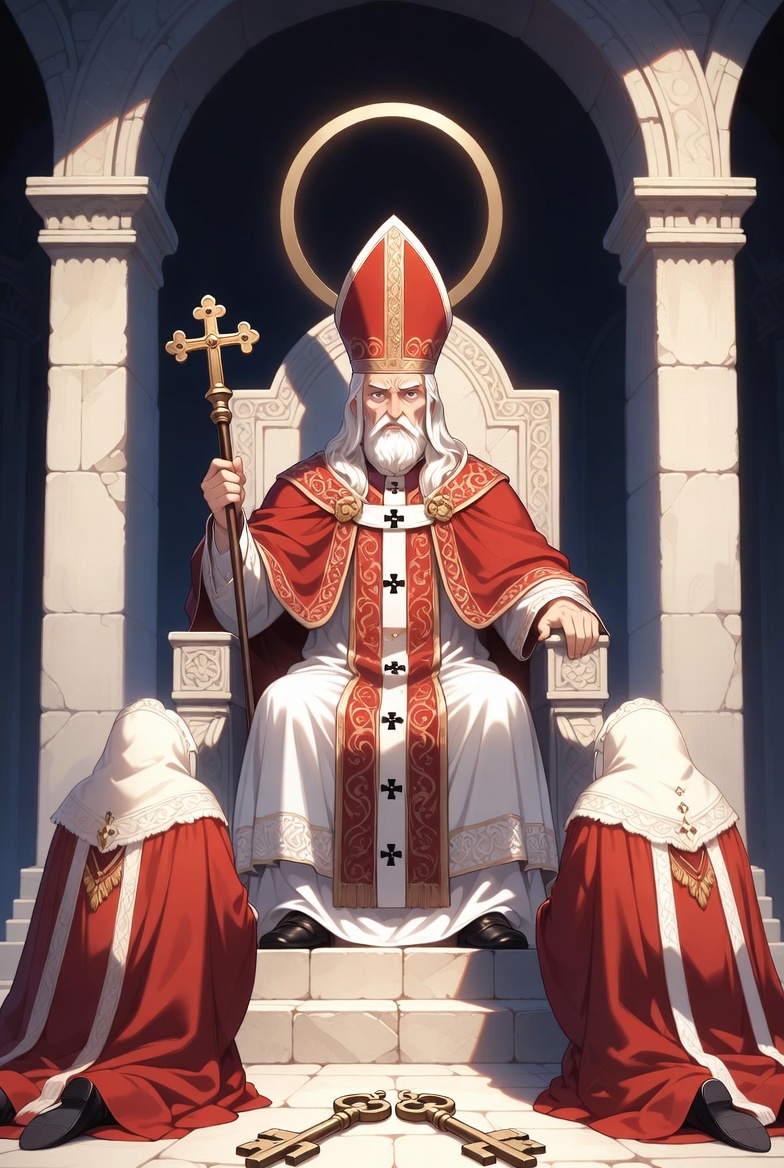
The traditionalist case deserves to be stated properly, because it’s not (as it sometimes gets caricatured) mere gatekeeping. The card for this corner is the Hierophant, keeper of the sacred made into ritual, and his objection runs like this: a reading is a practice, not a retrieval. The shuffle, the pause, the physical turn of the card, the reader’s felt sense of the moment, these aren’t packaging around the real product; they are the product. Outsource the interpretation to a text engine and you keep the vocabulary while quietly deleting the practice. Worse, you train yourself to receive meaning passively, the way you receive a search result, when the entire point was to make meaning actively.
The other side’s case is just as real. The researchers who did get readers to talk found something more nuanced than laziness: experienced readers using AI to manage self-doubt, to generate a second perspective on a spread they were too close to, to ask “what am I not seeing here?” Some used it precisely to challenge their own assumptions. And for beginners, a patient explainer that never sighs at a basic question is a genuine gift. The truth is that tarot has absorbed new tools before: printed guidebooks were once a scandal, online readings were once not “real” readings. The Hierophant has objected to every one of them, and the practice survived each time by working out which parts were sacred and which parts were just familiar.
So who’s right? Both, once you split the question properly.
Interpreting Isn’t Reading (Split the Question)
Here’s the split that dissolves most of the argument. There are two different jobs hiding inside the word “read.”
Job one: knowing what the cards mean. Symbol systems, traditional meanings, how the Five of Cups shifts when it lands beside the Sun. This is knowledge, and at knowledge, modern AI is frankly excellent. It has read more about tarot than any human alive, it never has an off day, and it can explain the Moon to a newcomer at 2am with perfect patience. Pretending otherwise is denial.
Job two: connecting a card to a life. This is the actual reading, and as we’ve written before, the mechanism that makes tarot work runs entirely on the person holding the question. The card is ambiguous on purpose; your reaction to it, what it snags on, which situation your mind runs to, is the material. That job cannot be outsourced, not because AI isn’t clever enough, but because the material physically isn’t in the machine. It’s in you. An AI can hand you seven fluent paragraphs about the Hermit, and not one sentence of them knows that your chest tightened when you saw the lantern.
Put the split back together and the answer writes itself. Can AI interpret cards? Yes, remarkably well. Can AI do your reading for you? No, and it never will, for the same reason nobody else can feel your feelings. The danger isn’t that AI does the job badly. It’s that its fluency tempts you to skip your half of the job entirely, and your half is the half that works.
What the Machine Is Genuinely Good At

Credit where due, from people who’ve watched the logs. The hours tell a story: a meaningful share of AI readings happen in Nine of Swords territory, the 2am stretch when no human reader is awake, when the friend you’d normally call needs to be up at six, and when the alternative isn’t a better reading, it’s an hour of doomscrolling. An AI reader is there, instantly, for the price of nothing, and judges no one.
That last part matters more than the availability. People ask a machine the questions they’re embarrassed to ask a person: the petty ones, the shameful ones, the fourth reading this week about the same ex. You can argue they should feel safe asking humans, and you’d be right, and meanwhile they don’t, and the machine catches the questions that would otherwise go nowhere. Add perfect recall of the symbol system, endless patience for beginners, and a talent for reframing a muddled question into a clear one, and you have something genuinely worth having on the table.
What you don’t have is anyone home. Which brings us to what we learned building one.
What Building Fia Taught Us
Three design decisions ended up defining her, and each one is really a belief about where the line sits.
First: Fia never chooses your card. This was the earliest and firmest rule. The draw on 78Paths happens in a separate system, deliberately random, seeded with genuine entropy, and the AI receives the card only after it has landed. She interprets what fate dealt; she has no hand in dealing it. Ask her to just pick a nice card and she’ll decline with a raised eyebrow. It would have been trivial to let the model select a thematically satisfying card for your question, and it would have quietly broken the entire practice, because a card you (or your algorithm) chose is an illustration, not a mirror. If you take one question to any AI tarot tool, make it this: who draws the card? If the answer is the AI, you’re being told a story, not given a reading.
Second: the deck comes first. If Fia ever fails mid-reading, the site falls back to the traditional card meaning, not to an apology screen. That’s an engineering detail with a philosophy inside it: the AI is a layer on top of tarot, not a replacement for it. The card, the tradition, your reaction: load-bearing. The eloquent paragraph on top: optional.
Third: she reads, she doesn’t predict. Fia is built to treat a reading as reflection, in line with everything this blog stands for. Ask her a plain mundane question and she’ll answer it plainly before drawing, rather than mysticising your laundry. She frames cards as angles on your situation, not verdicts on your future. We did this because the alternative, an AI confidently narrating your fate in fluent prose, is exactly the failure mode the traditionalists fear, and they’re right to fear it. Fluency is not wisdom, and a machine that sounds certain about your future is a machine lying with good grammar.
And an honest limitation from the build logs: the thing we could not give her is the thing the researchers’ skeptics kept pointing to. A chatbot’s interpretation arrives clean, complete, and ready to believe, and that’s precisely its weakness. A human reader, or your own slow puzzling, produces friction: the pause, the “hm, that doesn’t fit,” the argument with the card. That friction is where the reflection happens. Fia’s best readings are the ones where the seeker argues back.
So Is It Cheating?
The question the community is really fighting over, underneath the think-pieces, is this one. And the answer depends entirely on which job you hand over.
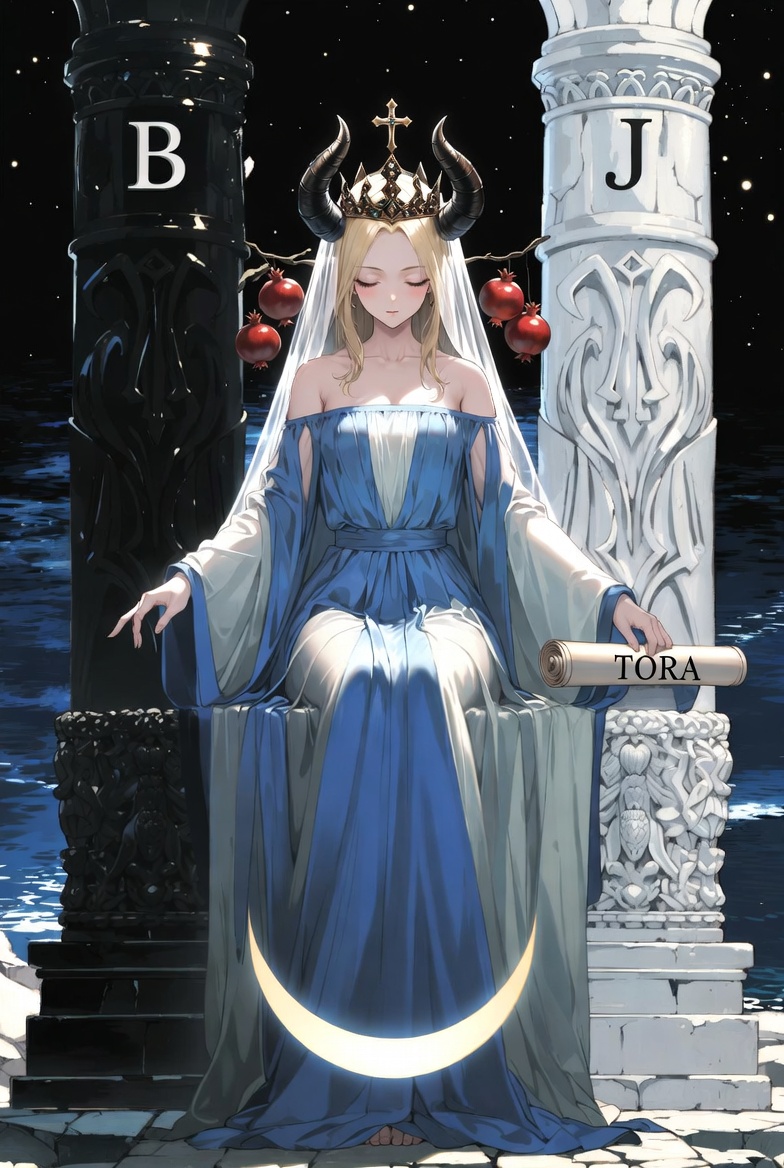
Using AI the way the thoughtful readers in those studies do, as a second opinion, a symbol dictionary, a challenger of your assumptions, a patient teacher, is not cheating, any more than owning a guidebook is cheating. The High Priestess, the deck’s keeper of what you know without knowing why, is not threatened by a reference library. Her domain was never information. It’s the felt sense, the snag, the thing in you that recognises the card before your vocabulary catches up. No model has access to that, so no model can take it from you.
Using AI to skip your own noticing, though, pasting in a question, receiving a verdict, feeling briefly soothed, deciding nothing, is a different transaction. Nothing was read; something was consumed. The machine didn’t cheat you. You cheated the practice, and the practice, being a mirror, will simply show you nothing until you come back to it.
The line, then, in one sentence: let AI inform your reading; never let it replace your noticing. Everything healthy about AI at the tarot table lives on one side of that line, and everything the traditionalists rightly fear lives on the other.
The Bottom Line
Can AI read tarot? It can interpret cards brilliantly, explain the tradition patiently, and keep you company at Nine of Swords o’clock, and it cannot do the one thing a reading actually is: notice what a card touches in a living person. That part was always yours, is still yours, and stays yours no matter how good the models get.
We built Fia to sit on the right side of that fact: never dealing the card, never outranking the deck, never pretending reflection is prediction. Whether the wider industry holds that line is worth watching, and worth asking about of any AI tool you try.
The machine knows the cards. Only you know where they land. A good AI reader respects the difference; a good seeker insists on it.
FAQ
Can AI actually read tarot cards? It can interpret them: modern AI knows the symbol system deeply and explains card meanings fluently. What it can’t do is the reading itself, which happens when a card connects to your lived situation through your own reaction. That material exists only in you, so the AI’s role is informant and thinking partner, not oracle.
Is an AI tarot reading accurate? Its card knowledge is broadly accurate; its application to your life is only as good as what you bring and how honestly you engage. Be wary of any AI reading that sounds confidently predictive: fluency isn’t foresight, and a machine narrating your future with certainty is overreaching, however good it sounds.
Is using AI for tarot cheating? Using it as a guidebook, second opinion or patient teacher: no, that’s a tool, and tarot has absorbed new tools for centuries. Using it to skip your own reflection entirely, question in, verdict out, nothing noticed: that defeats the practice, though “cheating” undersells it; it’s more that nothing actually happened.
Will AI replace human tarot readers? Unlikely. It will replace the information layer (meanings, symbols, spread mechanics), which was never the scarce part. What people seek from a good human reader, presence, being witnessed, a felt read of the moment, is precisely what a text engine lacks. Expect AI to become the reference shelf, not the reader.
What should I look for in an AI tarot reading tool? Three things, from people who built one: the AI should not choose your card (a genuinely random draw is what makes it a reading rather than a story); it should frame cards as reflection, not fortune-telling; and it should leave room for your reaction instead of handing down verdicts. If it fails those, it’s a content generator wearing robes. For the practical side (how to ask, what to keep, what to throw back, and privacy), we wrote an honest manual for reading with an AI.
Want to see where we drew the line? Pull a free online tarot reading →, no sign-up needed. The deck deals; you notice; and if you meet Fia along the way, argue back. She’s at her best when you do.
forum Comments
Loading comments…