
The evenings close in. Dark by late afternoon. The mornings feel heavier, and the dip is the same one you noticed last year. You still have the day to get through. The same hour that felt fine in June now asks more of you. You wonder if a small card practice could help with any of it.
In the southern hemisphere the dark months run roughly May to August, and everything here applies then. Clocks change in late October in Europe and early November in North America. Some places do not change them at all.
Tarot does not treat seasonal depression, and this post will not pretend it does. Some people hope a card will brighten the season. It will not. What a card can do is give you a reason to stand at the window while the kettle boils. The heavy lifting in these months is done by daylight, movement, people, sleep, and, where needed, a doctor. A card does none of that. It can be the hook: a two-minute ritual that gets you into the morning light and gives the day a first small shape. The deck also offers a way to tell rest from retreat, and room to keep winter as a slower season on purpose.
Winter Blues, or Something More?
A slower, flatter season is common and human. Seasonal affective disorder (SAD) is a type of depression with a recurring seasonal pattern. In its winter pattern, symptoms start in late autumn or early winter and lift in spring and summer, lasting about four to five months of the year. It is linked to changes in daylight hours. It is a real medical condition, and it is separate from the stress some people feel around the holidays.
Common signs include low mood, losing interest in things you usually enjoy, being more tired and sleeping more than usual, eating more than usual (often craving carbohydrates), difficulty concentrating, and pulling away from people. The US National Institute of Mental Health has its own word for that last one: feeling like “hibernating”.
Treatments exist and are effective: light therapy, talking therapies such as cognitive behavioural therapy (CBT), and antidepressants. Light therapy means sitting in front of a very bright light box (10,000 lux) for about 30 to 45 minutes, usually first thing in the morning.
If the low mood is there most days and getting in the way of your life, see your doctor. Treatments exist and they work.
What Actually Helps (and Where a Card Fits)
The everyday advice from the NHS is plain. Get as much natural daylight as you can and go outside in the daytime every day. Get regular exercise. Stay in contact with friends and family. Keep up your usual activities. Go to bed and wake up at the same time every day. These do the work. None of them need a deck.
The hard part of that list is doing it on a dark morning, when the bed is warm and the sky is still grey. A small winter blues ritual is a good way to make a habit stick, because the first minute is the one that usually fails. Light therapy is something to ask a doctor about if the low mood has a clear seasonal pattern. A card can be the reason you are already standing in the brightest place you have when the day starts. That is the whole division of labour for a winter tarot practice: daylight, movement, people and sleep do the work, and the card gets you into the first of them.
The Window Draw
The Window Draw is the daily practice. Each morning, as soon after waking as you can, go to the brightest window you have, or step outside. Turn one card in the daylight. Look at it for a minute. Say or write one line. Stay in the light for the length of a cup of tea. The card is the reason to go to the window. The light is the point. On mornings when the deck feels like too much, go to the window anyway.
The journal line: This morning’s light: ___. Today’s card: ___. One warm thing I’ll tend today: ___. Write it in your journal ›
Stand where the light actually falls. A kitchen window over the sink is enough. A front step is better if you can face the cold for the length of the tea. If the card you turn is one you dislike, name one thing in the picture and stay at the window anyway. A fur collar. A candle. The colour of the glass. You do not have to like the card for the light to count. One pull is hygiene. Many pulls a day is a checking habit, and the anxious-minds guide already covers why that checking does not help. On the days you can take the card on a walk, the older piece “Go Outside. Look at Something.” is the companion: a short walk and real attention to the ordinary world. The card can ride in a pocket. The looking is the point.
Three Cards for Wintering
Our Queen of Pentacles carries the tagline “Abundance is something she tends, not merely holds.” In our deck she sits in a dark green robe with a thick fur collar, on a throne overgrown with white roses and ivy. Low gold sunlight slants in past heavy curtains. A rabbit sits in her lap under her hand. A black cat is asleep at her feet among pomegranates, figs and grapes. One hand rests on a large gold pentacle beside her. She is dressed for the cold and sitting in the one patch of light. She is the card of tending: keeping the house, the body and the people warm through a lean season.
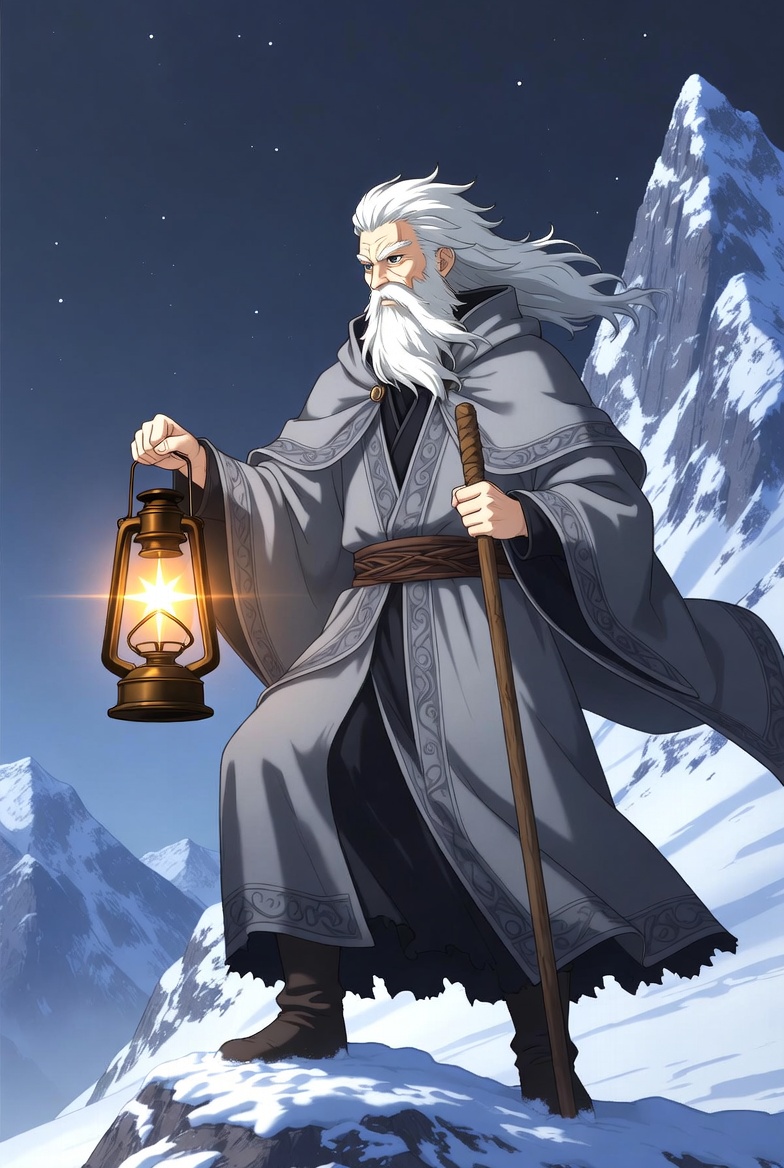
The Hermit’s line is “The light you carry is for yourself first.” Ours is an old man with white hair and beard in grey robes, standing on a snowy mountainside at night under a few stars, a staff in one hand and a lantern in the other, a small star of light burning inside it. This is a winter picture already. The lantern lights one step. He went up the mountain on purpose and he can come down. Solitude with a return ticket: chosen solitude has a way back to people built in. Isolation does not.
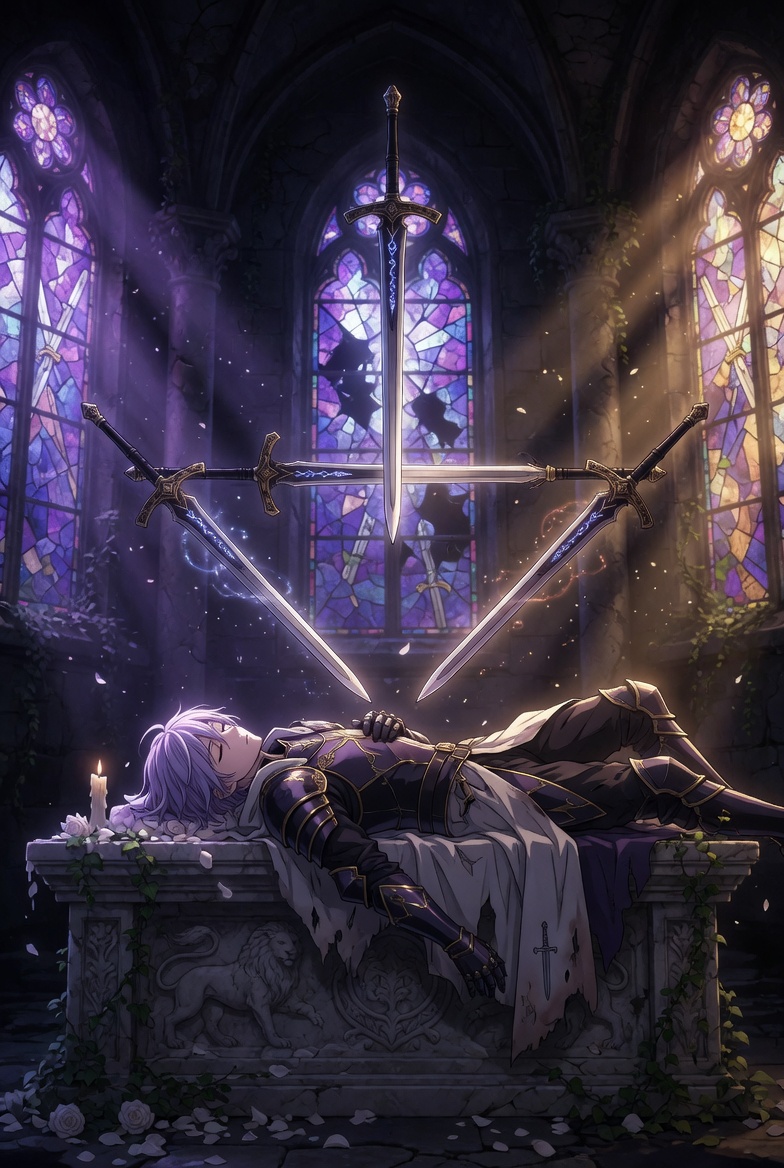
The Four of Swords says “Stillness is not weakness. It is strategy.” In our deck a knight in dark armour sleeps on a stone plinth in a ruined chapel, a single candle burning at his head, light falling through purple stained glass, swords hanging in the air above him. Rest taken on purpose, in a place with light still coming in.
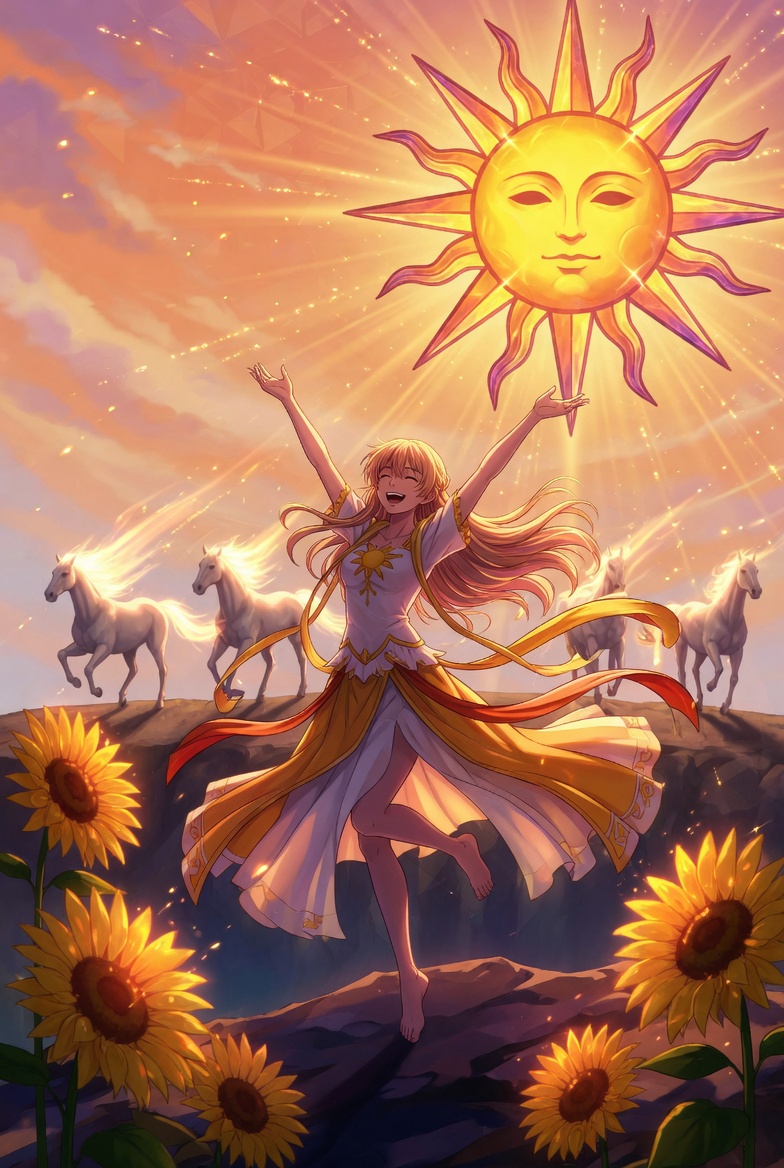
Then there is the Sun: “Joy that needs no permission.” Ours shows a laughing figure dancing barefoot under a huge sun with a face, sunflowers in the foreground, white horses running behind. This is the card we all want in January, and a picture of the sun is the one thing in the deck that cannot stand in for the real one. Go and stand in the real one.
The Winter Keep
The Winter Keep is a three-card spread, laid once at the start of the season and again whenever the weeks start to blur. Once a month is plenty.
- What can rest: what you’re allowed to let lie fallow until spring.
- What stays lit: the one thing that must not go out (a person, a habit, a piece of work).
- What to tend: one small, warm, real thing for this week.
A plain example from an ordinary week. Someone turns the Eight of Cups for what can rest: the extra evening project can wait until the light returns. The Three of Cups for what stays lit: the weekly call with an old friend does not get dropped. The Ace of Pentacles for what to tend: soup on Sunday, and enough of it for tomorrow. All of that was already in the week. The spread only names it, so the weeks do not blur into one long grey stretch. This is the winter tarot spread the rest of the post is pointing at. Lay it when the season turns, and again when you notice you have stopped noticing the days.
Rest or Retreat?
Wintering is rest you chose, with a way back. Withdrawing is the “hibernating” sign from the health list. A plain test: does this rest leave me more able to see people, or less? Did I choose it, or did it just happen? Is there a return date on it?
The Hermit went up on purpose and can come down. Chosen solitude has a way back built in. Isolation does not. A practice that replaces people is failing, which is the rule from the loneliness post, and it holds harder in the dark months than in June. Put one fixed appointment with another human in every winter week, and keep it. A walk, a call, a meal. The date matters more than the size of the plan. If the week keeps slipping, the rest has started to look like retreat.
The Evenings
The long dark evening is where scrolling moves in. The before-bed post and the evening wind-down routine cover that ground. Use them.
What the Cards Can’t Do Here
A deck of cards is a fine mirror and a terrible lifeline. A deck can’t treat depression, replace light, or tell you whether this winter will be better than last. If the low mood is most days, see your doctor. If the dark feels dangerous, a crisis line in your country will answer, free, at any hour: in the US and Canada, call or text 988; in the UK and Ireland, Samaritans on 116 123; in Australia, Lifeline on 13 11 14; anywhere else, Find A Helpline lists free lines by country. If something hard is also happening in your life, the hard-seasons manual is the piece for that.
The Bottom Line
In the dark months the heavy lifting is done by daylight, movement, people, sleep and, where needed, a doctor. A card does none of that. It can be the hook that gets you to the window, and a way to keep the season as a slower one on purpose.
Winter is a season to keep. Take the card to the window. The light does the rest.
FAQ
Can tarot help with seasonal depression? It can’t treat it. It can anchor the habits that help: morning light, a steady wake time, one small thing tended. If the low mood is there most days, see your doctor.
What tarot card represents winter? No single one. In our deck the Hermit stands in the snow, the Four of Swords rests with light still coming in, and the Queen of Pentacles tends the house through the cold. Many traditions tie Pentacles and earth to winter, as a convention.
Is it the winter blues or SAD? A slower season is common. SAD is a medical condition with a pattern: low mood, loss of interest, more sleep, more eating, trouble concentrating, pulling away. If it is there most days and getting in the way of your life, see your doctor.
What’s a good tarot spread for winter? The Winter Keep. Three positions: what can rest, what stays lit, what to tend. Lay it at the start of the season and again when the weeks blur. Once a month is plenty.
What should I do when the clocks go back? Move the morning light earlier in your day. Start the Window Draw that week. Keep your wake time steady. Clocks change in late October in Europe and early November in North America. Some places do not change them at all.
Does this work in the southern hemisphere? Yes. Your dark months are roughly May to August. The same practice applies then.
What is the one warm thing to tend this week? Pull a free online tarot reading → and ask it.
forum Comments
Loading comments…